

A Closer Look at Matsuya Ginza
LED Illumination of the Building Facade
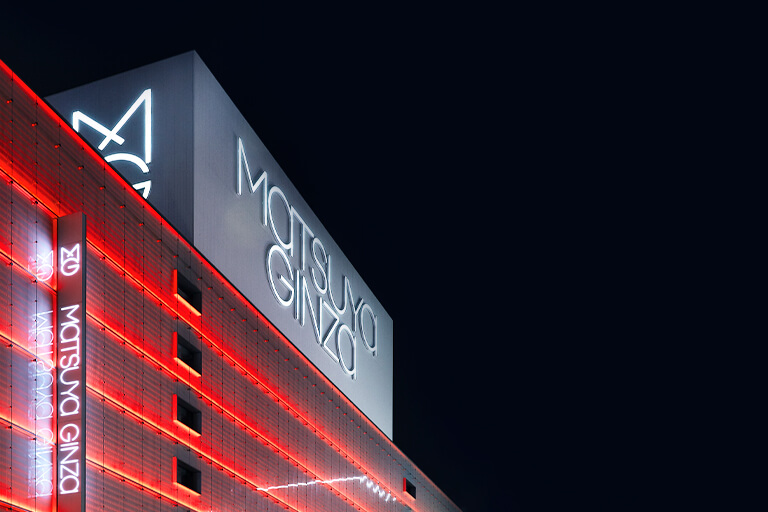
Introduced partially in 2001 and fully completed by September 2006, Matsuya Ginza’s facade is adorned with LED lighting. Employing the three primary colors of light—red, green, and blue—it is capable of displaying up to 16.7 million colors and a variety of captivating dynamic patterns.
Stretching across an entire block of Ginza Street (approximately 120 meters), this facade ranks among Japan’s largest glass surfaces.
Today, it stands proudly as a landmark illuminating the nights of Ginza from dusk until 10 PM.
Space of Ginza (SOG)
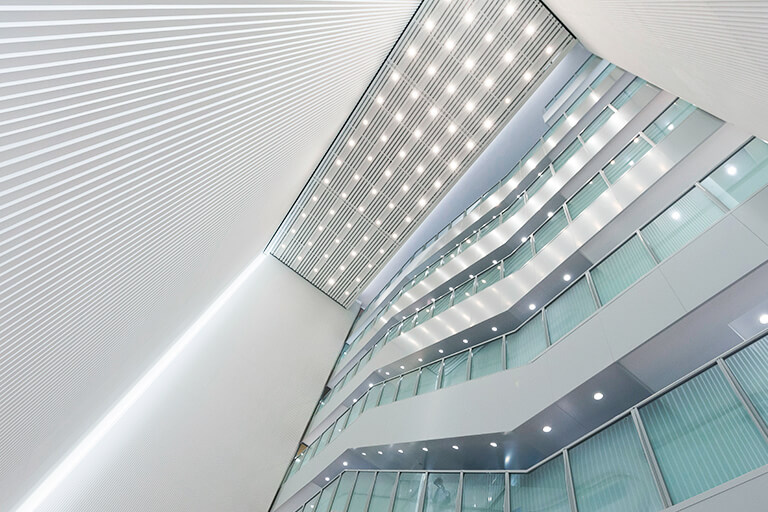
Since its establishment in 1925, Matsuya Ginza’s central atrium has become a defining feature, soaring through seven floors with a ceiling height of approximately 25 meters. The adjacent escalator, completed in 1956, gained fame as the “Sky Ribbon,” the largest suspended escalator in Asia.
For more than fifty years, the renowned “Hyakusan-kai” (Hundred Umbrellas Festival) has been held annually during the rainy season at the Space of Ginza (SOG), where hundreds of umbrellas unfold like a magnificent public art display.
Ryūkō Fudōson (Ryūkō Fudō Myōō)
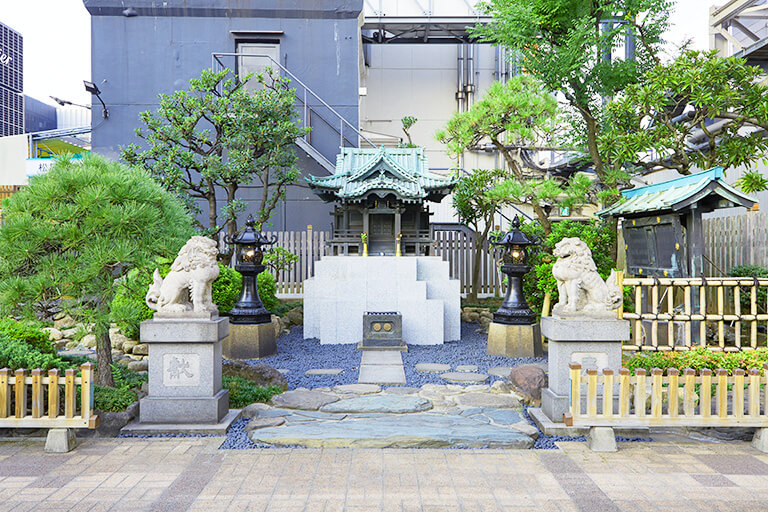
Since 1929, Ryūkō Fudōson, enshrining the deity Fudō Myōō brought from Kōyasan Ryūkōin, has been respectfully housed on the rooftop of Matsuya Ginza.
The shrine building was designed by Yasutaro Aike, the architect renowned for Heian Shrine and Kanda Myōjin. The name "Ryūkō," meaning "dragon light," resonates phonetically with the word for "fashion trend," and is believed to bring special blessings to those in the fashion industry.
Siddham Characters of the Four Heavenly Kings
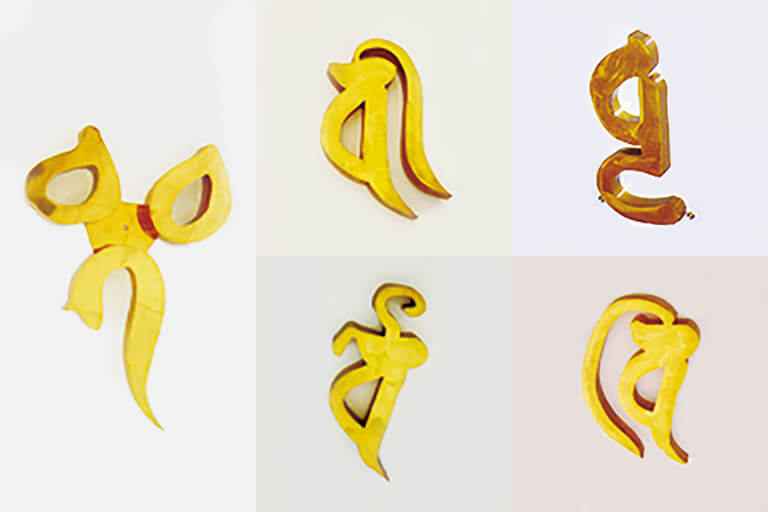
During the major expansion of Matsuya Ginza in 1964, Siddham characters symbolizing the Four Heavenly Kings—Jikokuten, Kōmokuten, Zōjōten, and Tamonten—were inscribed on the four corners of the first-floor ceiling as a spiritual safeguard for our customers. Though the original plan included statues at each entrance, the Siddham inscriptions were ultimately chosen. The character for Jikokuten, guardian of the East, is located in a staff-only area behind the security office and is not accessible to the general public. These sacred inscriptions were penned by Kiyomizuya Kanshu, the chief priest of Sensō-ji Temple.
Furthermore, in the 2001 renovation, an additional Siddham character representing Taishakuten was placed on the ceiling directly beneath the rooftop Ryūkō Fudōson shrine.