



Others|Others
Aoi Yamada Encounters the Handcrafts of Mashiko. Creating with Hands, Dancing, and Connecting with the World.
Performing artist Aoi Yamada, who has long felt drawn to the beauty of handcrafts, spent a day in Mashiko, Tochigi Prefecture, ahead of the upcoming “Ginza Handcraft Market” to be held from Wednesday, September 17 to Tuesday, September 23 (national holiday). Her visit included stops at "SOSAKUBAG", a workshop weaving with kōzo; "Sōsaku Kōbō Akutsu", a studio run by a family of potters; and "pejite", a select shop. She also explored the "Shoji Hamada Memorial Mashiko Reference Collection", deeply connected with the Mingei (folk craft) movement. “I have always admired creating with one’s own hands,” says Aoi. What did she feel upon encountering the stories of these makers? Through the words of accompanying writer Yume Nomura and the diary-like photo record by ITO, Aoi’s husband, we bring you a glimpse into that day.
Weaving landscapes and colors: SOSAKUBAG’s kōzo bags
Saturday, June 28, just before 7 a.m. On a clear and refreshing morning, from the window of the car that came to pick her up near her home, Aoi Yamada’s smile could be seen, glowing in the morning sun. At the wheel was her husband, ITO, who would also be photographing the day.
“Good morning!”
It was about a two-hour drive from Tokyo to Mashiko in Tochigi Prefecture. While the Ginza Handcraft Market gathers the works of around 100 artisans, craftspeople, and designers from across Japan, today was about meeting those based in Mashiko together with Aoi.
“Here, if you’d like,” she said, handing over an egg sandwich. The bright yellow of the egg and the fresh green of the cucumber reflected the shifting sunlight with each mile. Aoi often posts photos on Instagram of the bento she makes for her husband. Cooking, she believes, is surely one of the most familiar forms of handcraft in daily life.
“I like things where I can see the person behind them. I feel a special attraction to handcrafts.”
Aoi is a dancer. But many of the places where she dances are not theaters or stages—they are on the street, at fishing ports, inside shops, and other corners of everyday life. Perhaps her dance, born from responding with her body to the character of each place, shares something with the local handcrafts she is about to encounter. After leaving the highway, the fields stretched out before them. Aoi opened the window, looking comfortable as the wind brushed past.

“Wow, it’s so spacious. Beautiful. So blue. This is my first time in Mashiko. It kind of reminds me of Nagano, where I’m from.”
Mashiko Town, Haga District, Tochigi Prefecture. Situated at the northern edge of the Kanto Plain, the town is widely known for the “Mashiko Pottery Fair,” first held in 1960, and for Mashiko ware. It is also the place where potter Shoji Hamada—one of the founders of the Mingei (folk craft) movement alongside Soetsu Yanagi and Kanjiro Kawai in 1926—established his base, and today it attracts many craft artists beyond ceramics as well.
“Hello! It’s hot, isn’t it? Thank you for coming all this way.”
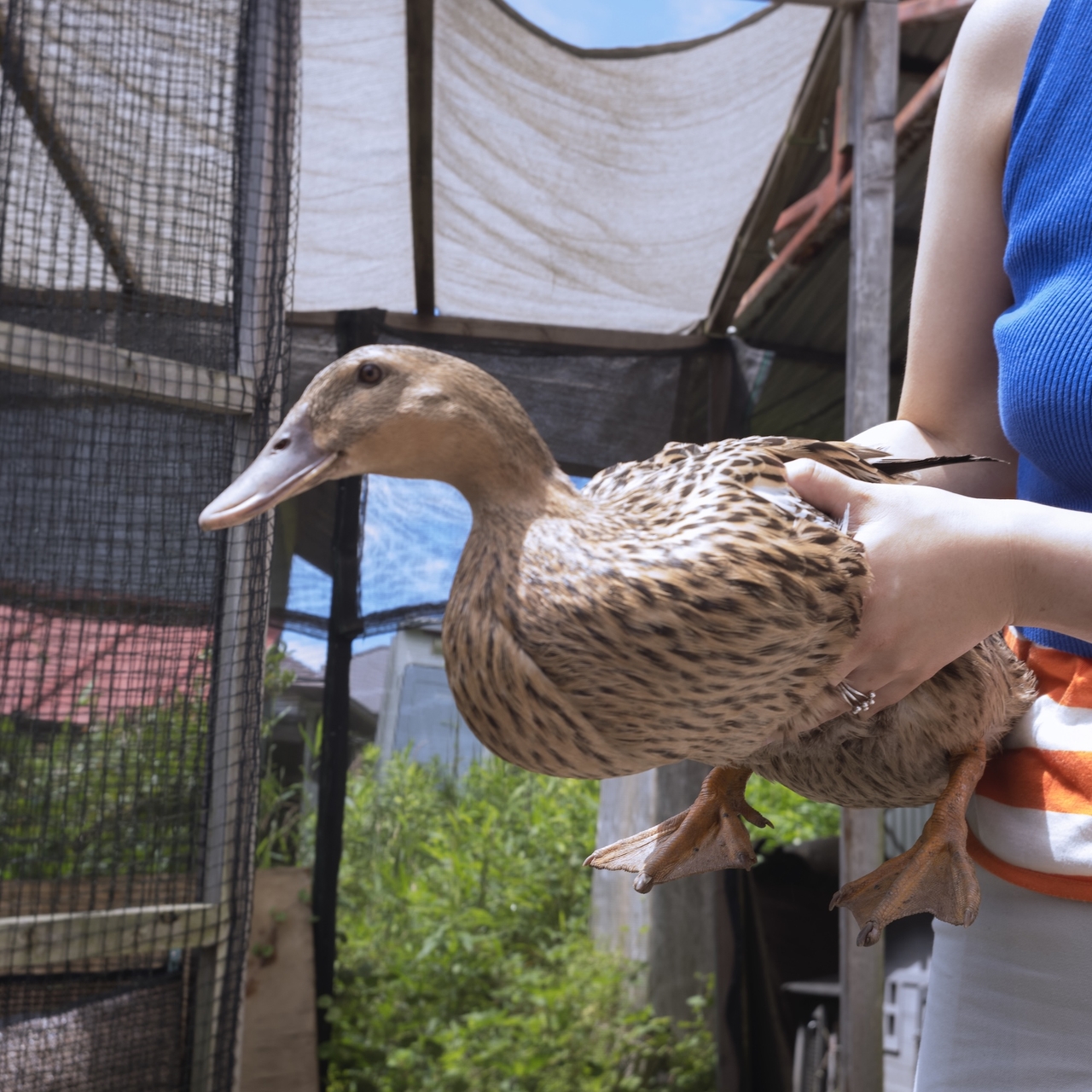
The first to welcome them with a smile were Sosaku Okumura, who creates bags from kōzo (paper mulberry), under the name “SOSAKUBAG,” and his wife, washi artist Saki Okumura. Echoing nearby was the sound of their pet duck, Kona-chan (5 years old). It seems that in Mashiko, many people keep ducks, geese, or goats.
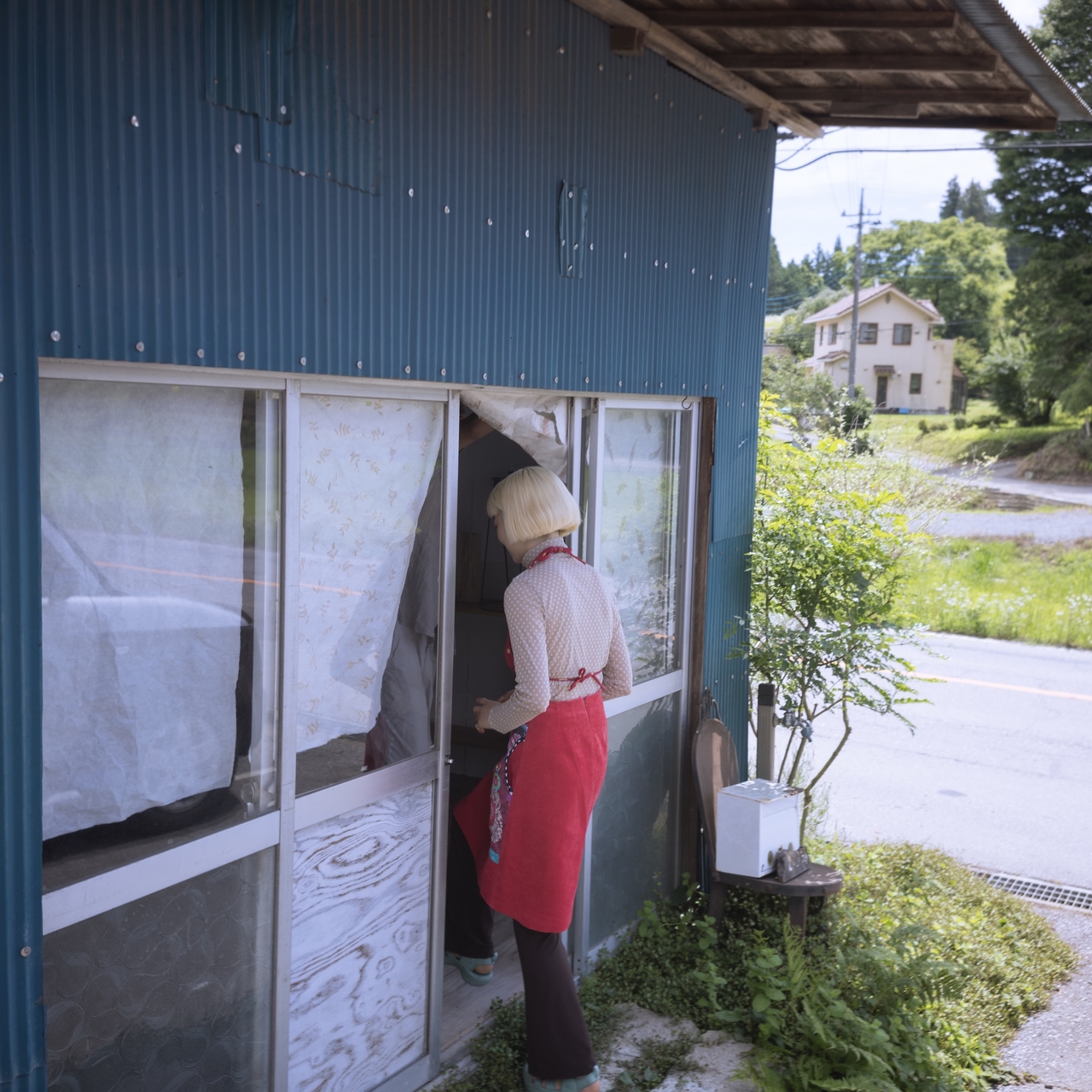
After setting down our bags, we were invited straight into the atelier. The space had a high roof and stretched deep toward the back. It had originally been used as a vegetable processing plant.
In the white-toned space, exposed pipes and wooden beams created a comfortable atmosphere, while colorful bags woven from textured materials were cheerfully displayed in a row. Aoi pointed to a vivid shade that looked like a blend of pink and purple.
“Wow… so cute. I really love this color.”
“This is dyed with a material called lac, which comes from a scale insect. It’s the secretion produced when the insect feeds on tree sap.”
“Are all of these dyed with natural dyes?”
“Some are natural dyes, while others use chemical dyes. Each has colors that can or cannot be achieved. Natural dyes tend to fade easily, so you can enjoy the way the colors shift over time. Chemical dyes, on the other hand, allow for brighter, more vivid shades.”
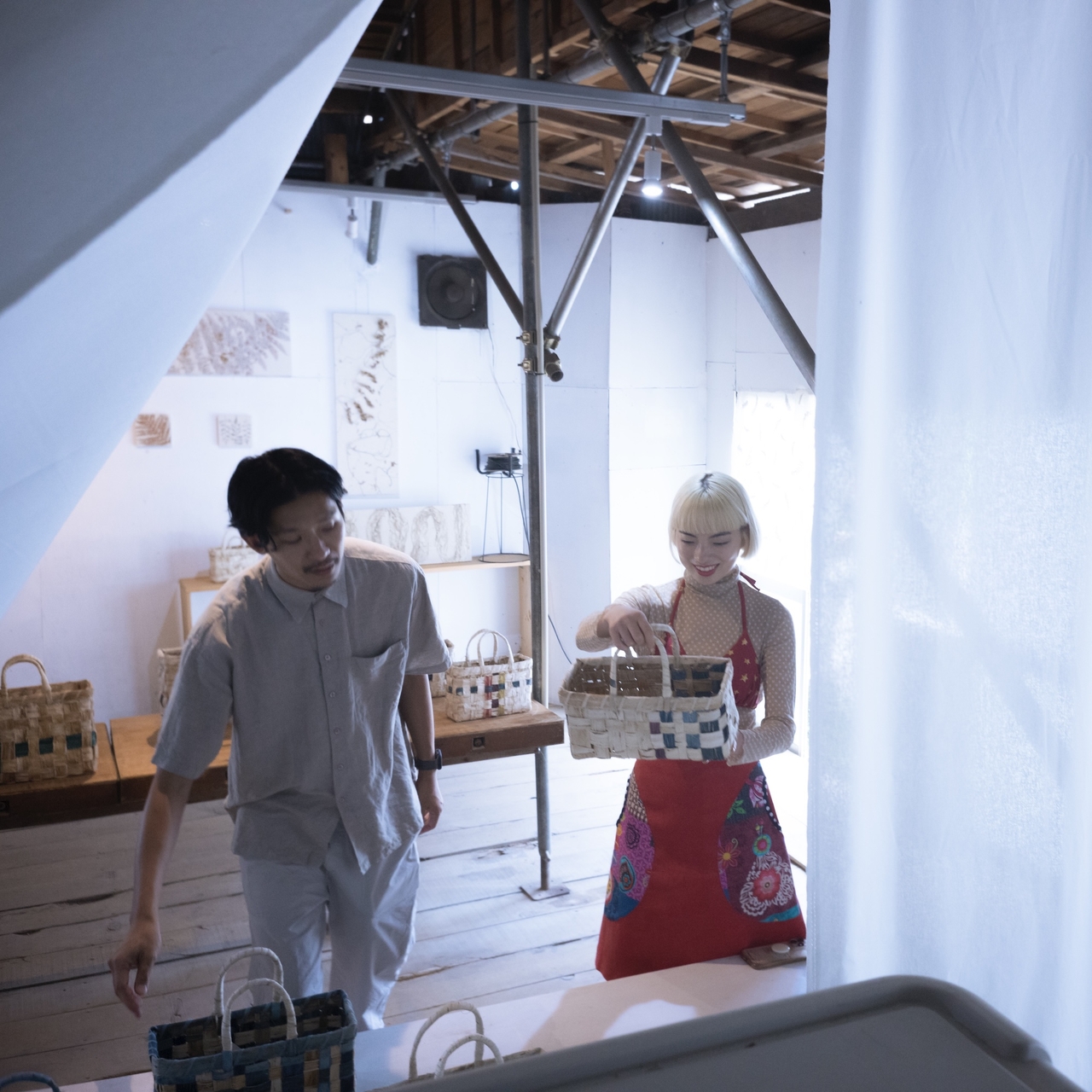
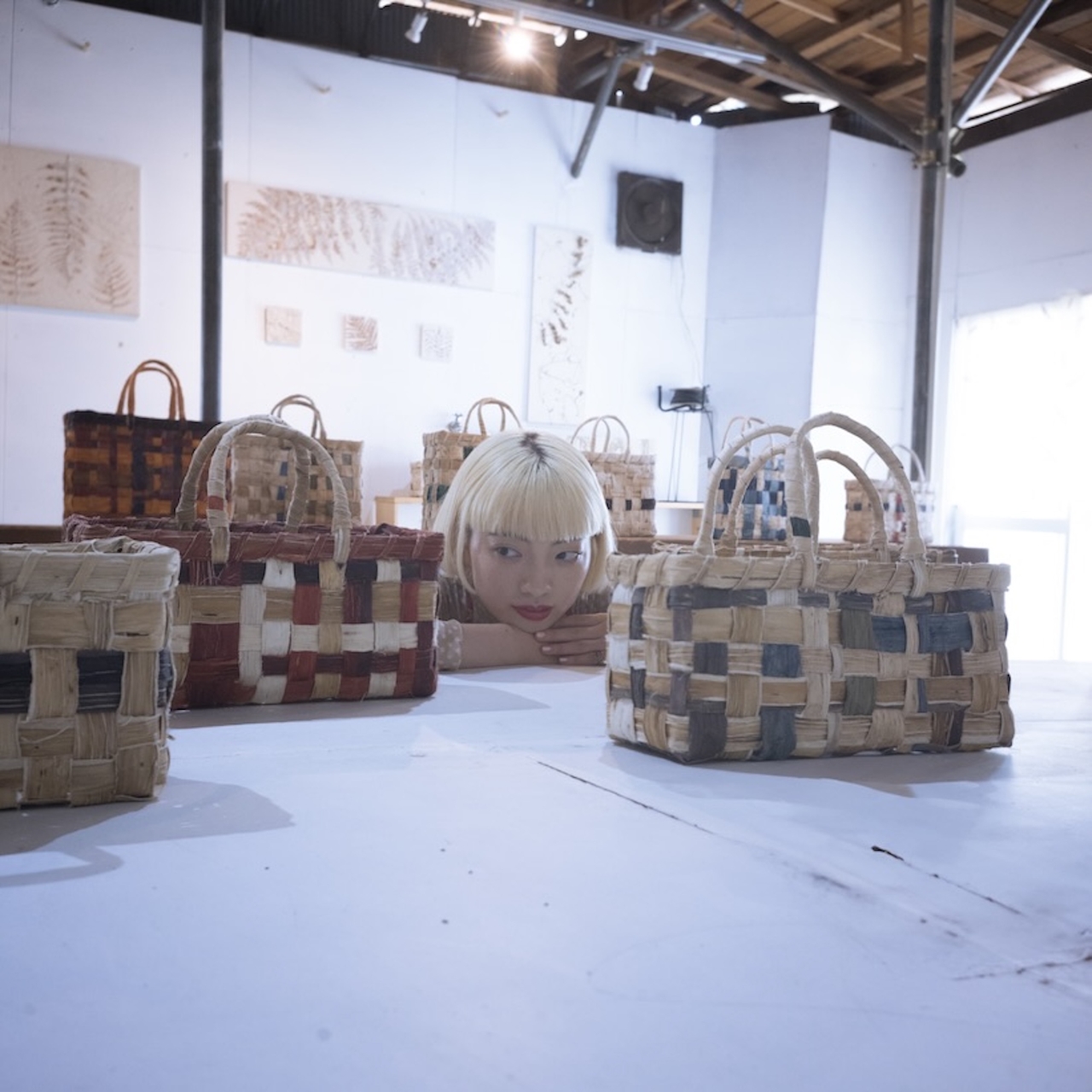
With a pleased smile, Sosaku said, “The defining feature of the bags I make is the color.” Just as he described, the hand-dyed SOSAKUBAGs in the atelier dazzled with their vivid hues, each carrying a presence so striking it would be impossible to forget after a single glance. Because the strips of kōzo bark are wide, the woven patterns resemble block checks—modern in appearance, despite being made from natural materials. They are the kind of bags that feel like something out of a dream, the type you fall in love with at first sight.
“Shall we try weaving a little?”
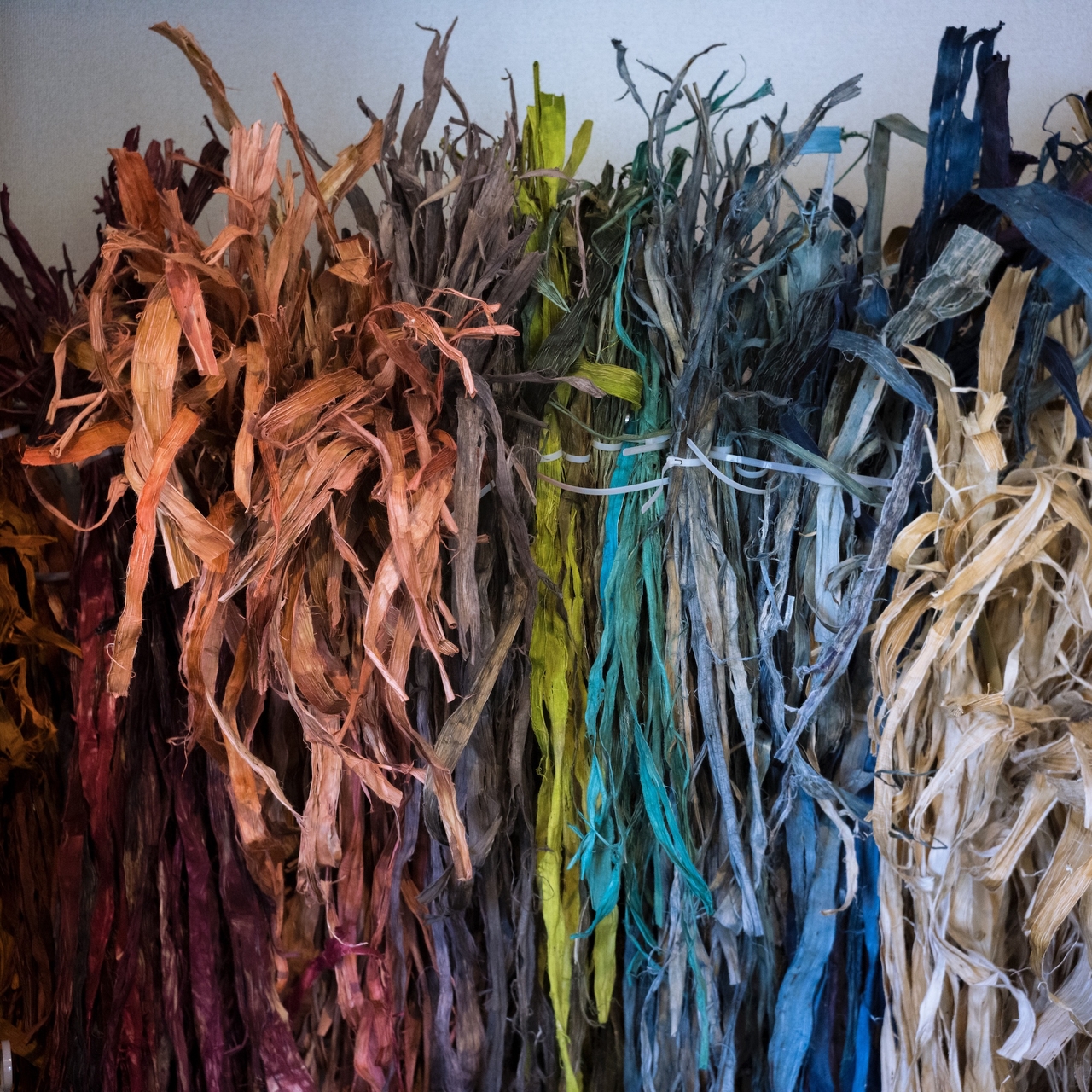
It seemed that the second floor of their home was used as a weaving space. Inside a walk-in closet, strips of kōzo bark in red, orange, yellow, yellow-green, blue, and many other colors were stored, hanging neatly as if on display. It felt almost like colorful tropical plants were growing inside the closet.
“Try to imagine what kind of bag you’d like to create, Aoi. Then, please choose whichever colors you like from here.”
“Too many to choose from…!” Aoi laughed, though she quickly and joyfully began picking colors by instinct. She chose a pink with a hint of purple, turquoise blue, and yellow-green...
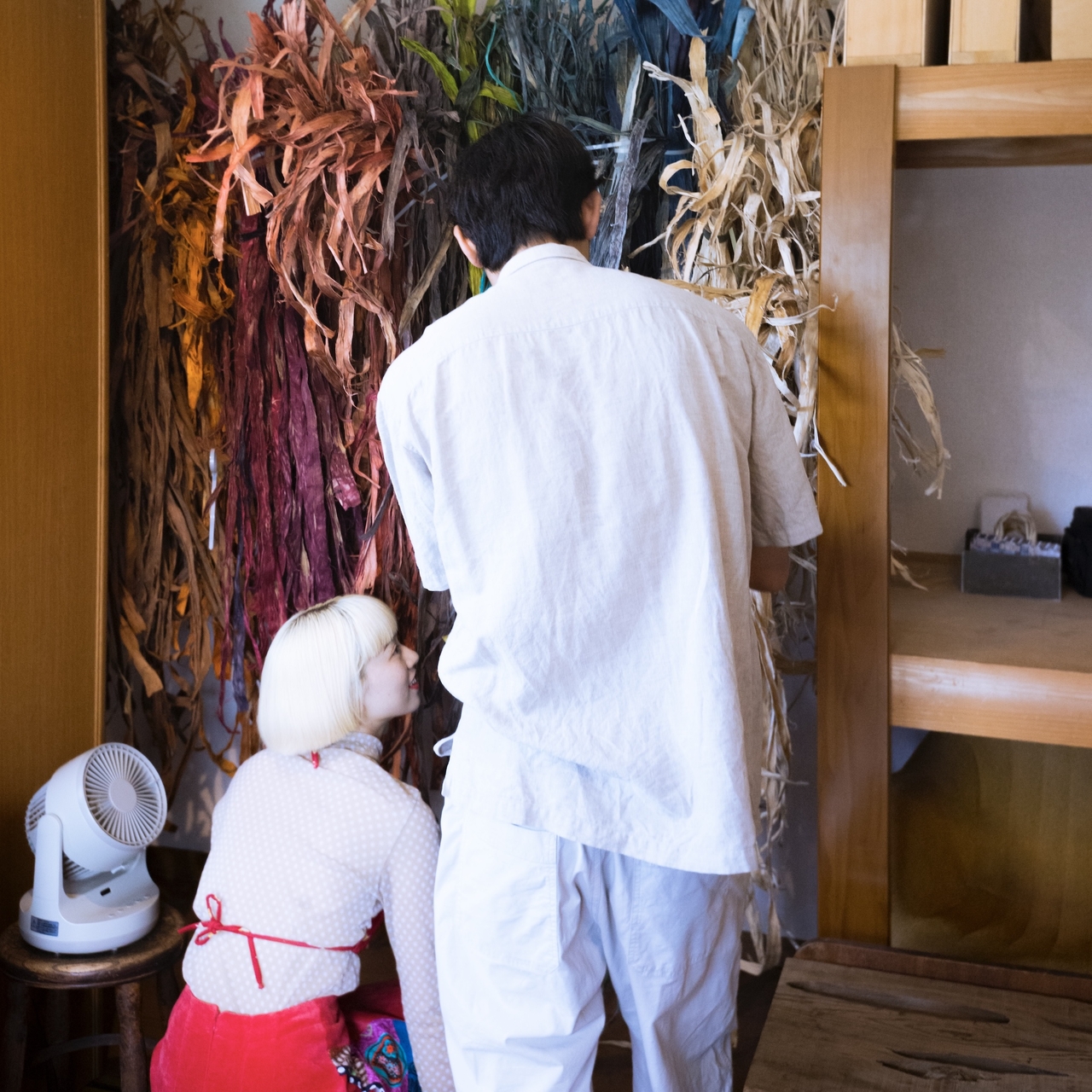
“You really like red, don’t you, Aoi? With SOSAKUBAG, the colors that people want actually differ depending on the region. In colder areas, vivid colors like light blue, yellow, and red tend to be popular. Personally, I like blue, but since I grew up far from the sea, I think I have this kind of yearning for it. Maybe that’s why I’m drawn to colors that aren’t naturally around me.”
“That’s so interesting. It’s kind of like with food—you choose the nutrients your body lacks, right? I really like combinations of reddish purples or pinks with green. That reminds me, I once met someone who kept ten parrots. He was actually a concrete worker. Since he was always surrounded by gray at work, seeing the parrots gave him so much comfort. I just remembered that story.”
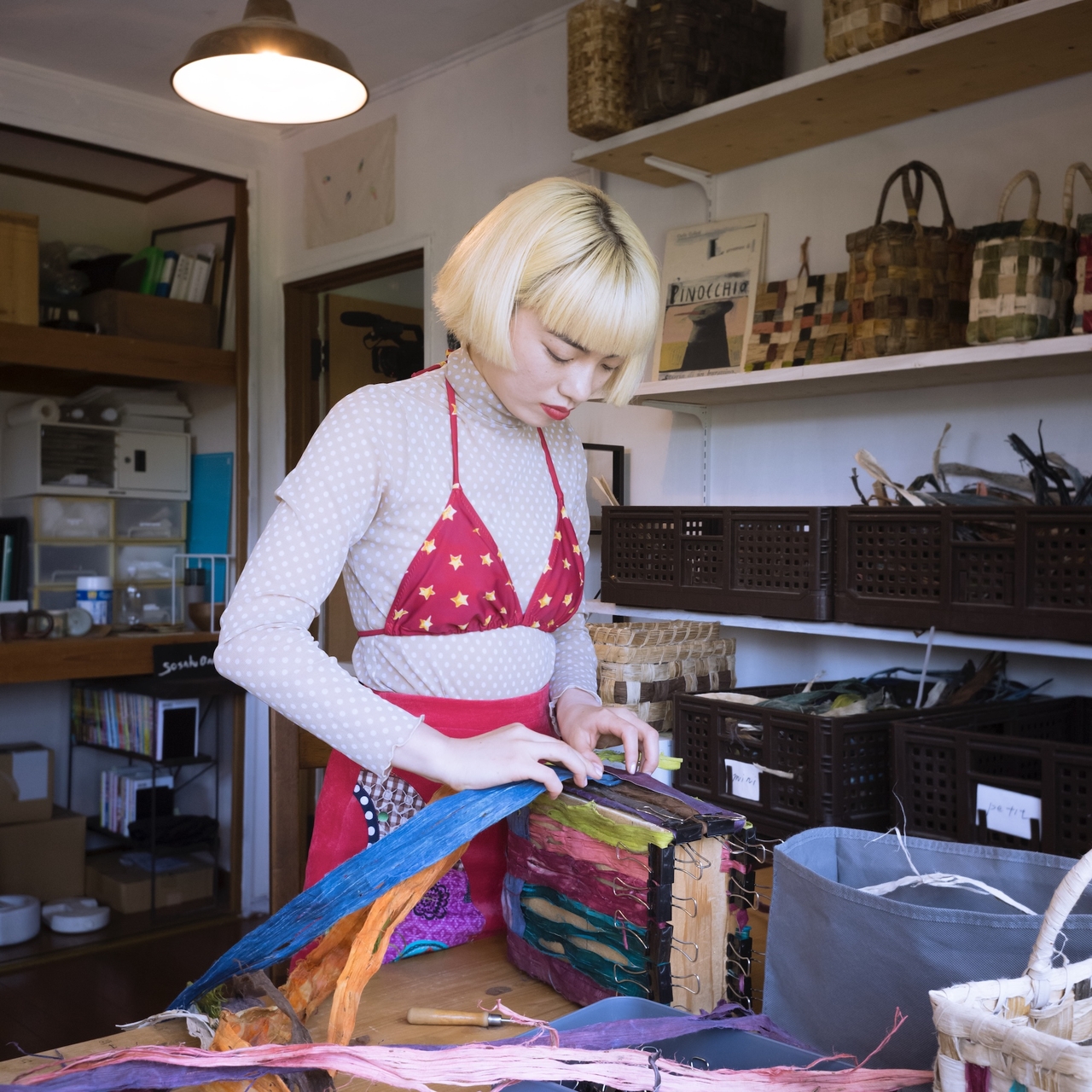
“You might risk injuring yourself if you don’t wear gloves, but you can really enjoy the texture that way,” Sosaku said. Without hesitation, Aoi chose to weave with her bare hands, putting her strength into each movement.
Although Sosaku now speaks with joy and pride about his craft, he told us that it took a long journey before arriving at SOSAKUBAG.
“As a child, I wanted to be a novelist or a film director, but I ended up working at a printing company in advertising. After that, I tried many different jobs—fireworks craftsman, writer, and so on. My father was a certified traditional metal craftsman, and my mother worked in kimono dyeing, so I think I always had this underlying desire to create something myself. I also had this thought that I wanted to live a life doing something together with my wife that only the two of us could do.
But whether it was through writing or film, I could never quite express myself the way I wanted, and I was too quick to lose interest to stick with anything. Then one day, I realized that kōzo, the raw material for washi paper—my wife’s work—was always close at hand. When I tried weaving with it, I kept going until the sun went down. That was something I had never experienced before.”
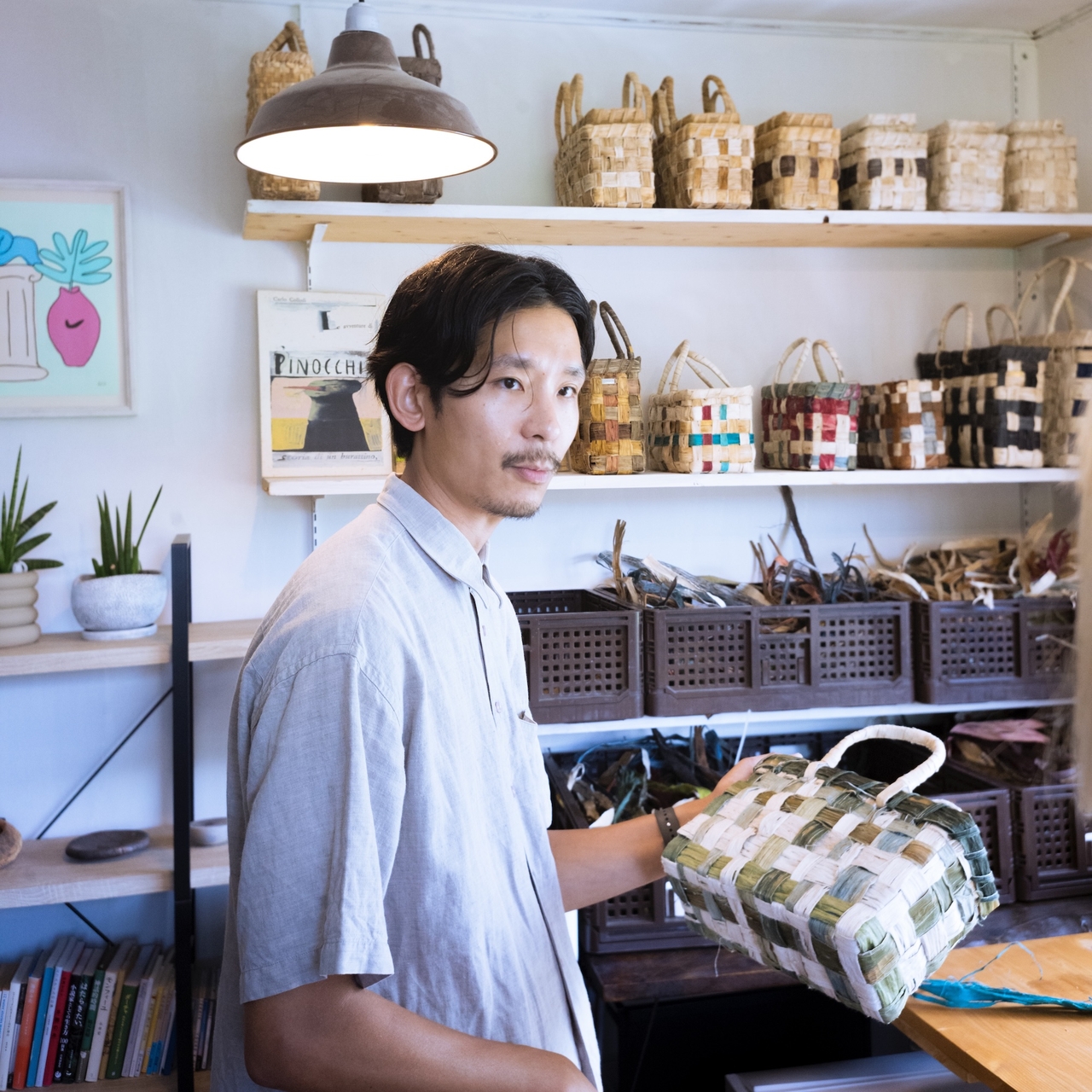
When he first began weaving, Sosaku made the kind of neatly crafted, fine-meshed bags that people typically imagine when they hear the words “woven basket bag.” But one day, an image of the colorful bags that would later become SOSAKUBAG suddenly came to him. “It really was like a revelation,” he says. From that moment, it took another three years to turn the vision into reality. He immersed himself in studying how to handle kōzo as a material and how to refine his dyeing techniques, until finally he completed a bag he was truly satisfied with.
What had started out quietly, as little more than a hobby, soon spread by word of mouth—“I’d like one too,” friends and acquaintances would say—and he began to be invited to exhibitions. From there, in what he describes as “like a stroke of fortune,” his work found its way to exhibitions and events across Japan.
Sosaku says the idea “came down to him,” but most things, in truth, are continuous threads. That is why SOSAKUBAG feels like the fruit of his persistent search—for self-expression, for a way of life—woven together with his steady efforts and heartfelt wishes.
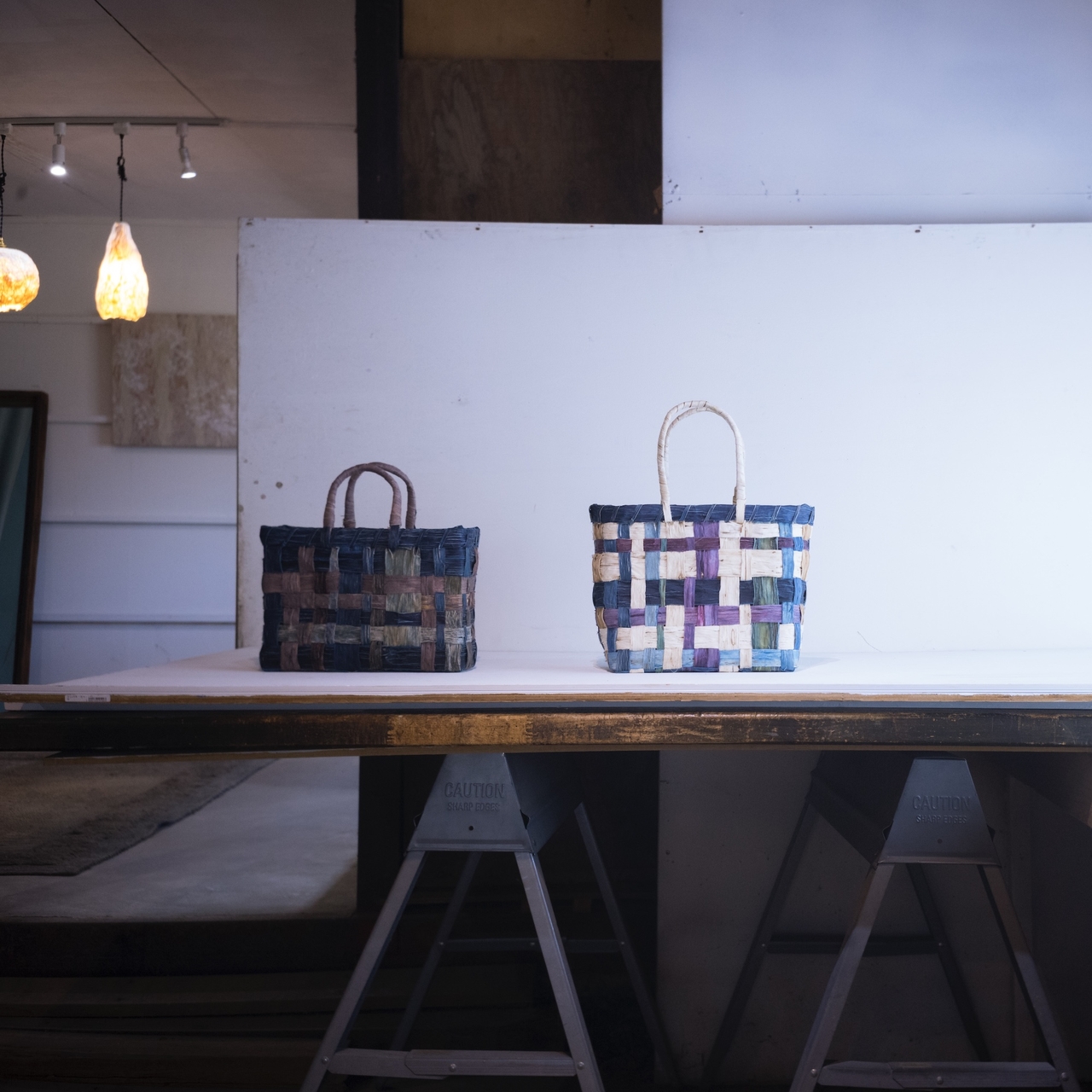
SOSAKUBAG also offers maintenance. “Sometimes a bag will carry the scent of incense from someone’s home. Each person uses it in their own way, but whatever the way, it makes me happy,” Sosaku says.
“In Mashiko, during the season of fresh greenery, the leaves catch the light and turn silver.”
The way he spoke—carefully sharing that the fresh green of this land he had finally arrived at shines silver—was filled with tenderness. Looking at the colorful bags born from such a full heart, one can’t help but think: the frustration of wanting to become something but not being able to; the discouragement of not doing things well; the importance of not erasing those experiences but holding them close, still keeping the heart open. To dive into new worlds, never giving up on searching for what feels true to oneself. The SOSAKUBAGs that Sosaku creates seem like companions for the moments when people set out to meet their own precious feelings and landscapes.
“I’ll finish up Aoi’s bag and send it to you. It would make me so happy if you could bring it to the Handcraft Market.”
“I’m really looking forward to it.”
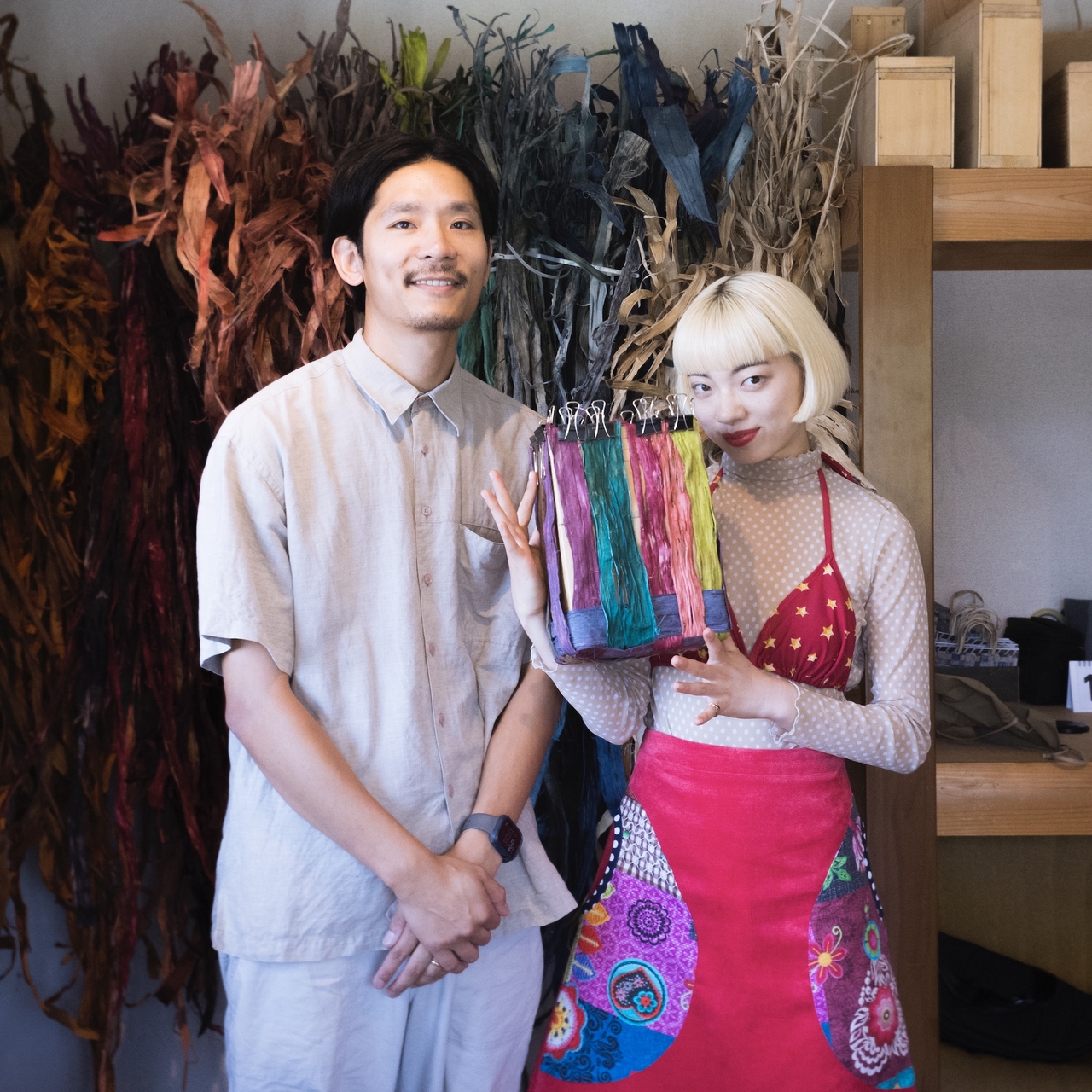
As Sosaku and Saki waved with warm smiles, their figures grew smaller in the distance. “I wish I had taken a picture of this view,” Aoi murmured softly, as if savoring the moment. Watching her, I thought that perhaps these very scenes she longed to remember would, in time, be woven into her own forms of expression.
Sōsaku Kōbō Akutsu, a family-run studio: The works of Tadao Akutsu and Masato Akutsu
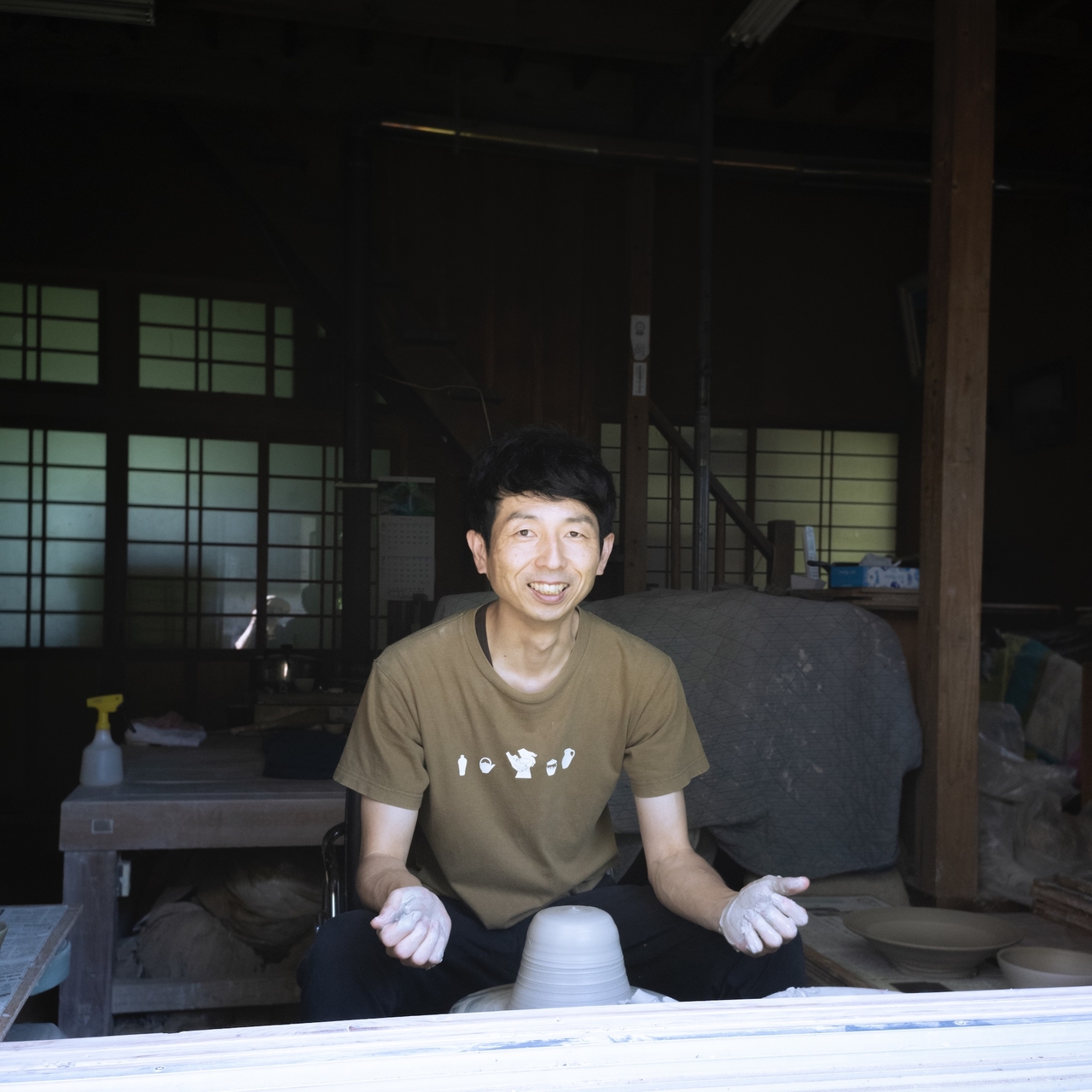
After a ten-minute drive, the car climbed up to a gentle hill. The next visit was to “Sōsaku Kōbō Akutsu,” a family pottery studio run by father and son Tadao Akutsu and Masato Akutsu. They were joined in welcoming us by Tadao’s wife, Kumiko, who herself once painted pottery.
“It’s been a while!”
This was Aoi’s first time meeting Tadao again since last year’s Ginza Handcraft Market. Before anything else, everyone sat down to enjoy lunch: the Geshi Bento (summer solstice bento) from WATANE, a farm in neighboring Ichikai Town that grows seasonal produce throughout the year. Miyamako turnips, spring-sown go-sun carrots, Misaki cabbage, shima okra… Just reading the menu was enough to make one’s mouth water, and once tasted, the flavors lingered on the tongue as though too precious to swallow. Curious, we later learned that in early summer, fireflies dance over WATANE’s fields, and during the day pheasants run about with their chicks.
“This is my first time trying it, too. I’m glad you’re enjoying it,” said Tadao, his constant smile leaving a strong impression. Now 75 years old, he first came to Mashiko when he was around 22 or 23—meaning he has been here for 54 or 55 years. His work is distinguished by the striking depth and luster of his ruri glaze.
“My wife Kumiko and I decided to set out on our own, so we looked for a place. We chose this spot in the mountains, and I went independent at about 25. In my first year, I exhibited in a group show at the Tokyo Central Museum. Mr. Sōshin Kuroda, who curated ceramics exhibitions and wrote extensively, introduced my ruri glaze in various magazines. I myself wasn’t sure what was good about it, but thanks to that, I kept going.”
Aoi asked him, “I’ve always wondered why you chose blue. Earlier, Mr. Sosaku of SOSAKUBAG was saying that ‘the preferred colors differ depending on the region’ and that ‘people are drawn to colors they don’t already have around them.’”
“Well, I don’t know exactly why. For example, this isn’t blue, but there’s a glass bowl from Persia called the ‘White Ruri Bowl’ in the Shōsōin treasures. Hamada Shōji’s salt-glazed works, and Kanjiro Kawai’s large dish called ‘Beethoven,’ also used ruri hues. All of those influences made me grow fond of ruri glaze… As for Masato, he first thought he’d work for someone else, but in the end, he too chose to become a potter.”
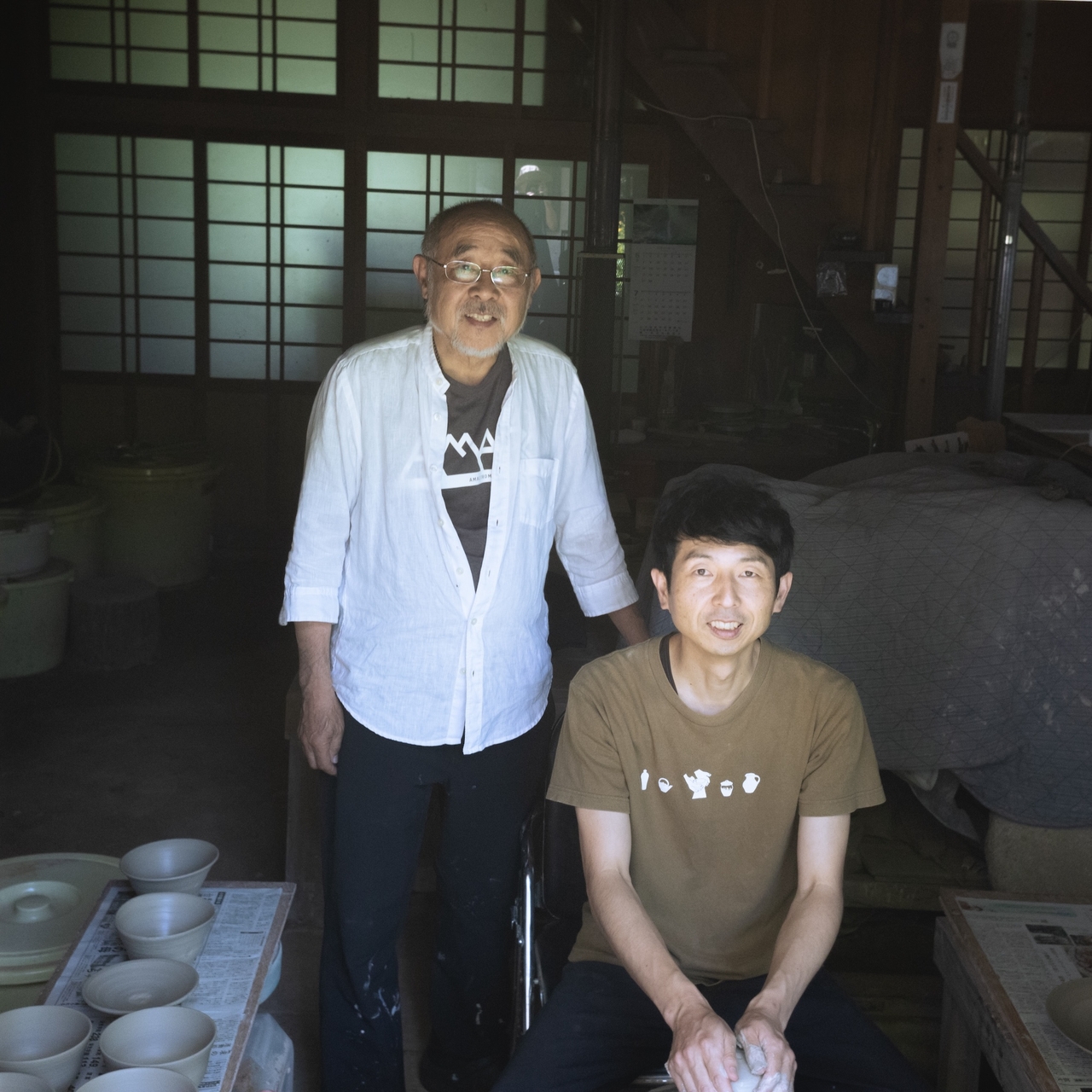
From left: Tadao Akutsu and Masato Akutsu
“Do the two of you have different styles?”
“I work mainly with ruri glaze. Masato uses a variety of colors.”
Masato’s ceramics feature soft blues and greens, and grays reminiscent of the sky. Their smooth, gentle textures seem pleasant to the touch. He had once considered studying in western Japan, the heartland of ceramics, but in the end, he wanted to start creating right away—and with such an environment already around him, he chose to begin his work in Mashiko. Both father and son entered the Tochigi Prefecture Ceramic Technical Support Center, where Tadao studied for a year and Masato for an additional year to focus on glazes.
“At first we fought a lot—it was tough.”
“But lately, not so much anymore.”
Masato added, “We both use the wheel to make tableware for everyday use, so in that sense, the basics are the same. Originally, my father specialized in ruri blue, while my mother did painted decoration. At that time, painted ware was more glamorous, so it was more popular. I liked ruri as well, but I felt there was no point in simply copying my father and doing the same thing. When I was at the training center, I realized how much fun it was to create different expressions through glazes, and I began to explore that for myself. That’s become my theme.”
Masato has studied glazes through tens of thousands of test pieces. Neither of them interferes in the other’s choices, nor fully understands the other’s glaze work. Listening to the two of them speak this way, one feels the richness of the time they have clearly shared, influencing one another along the way.
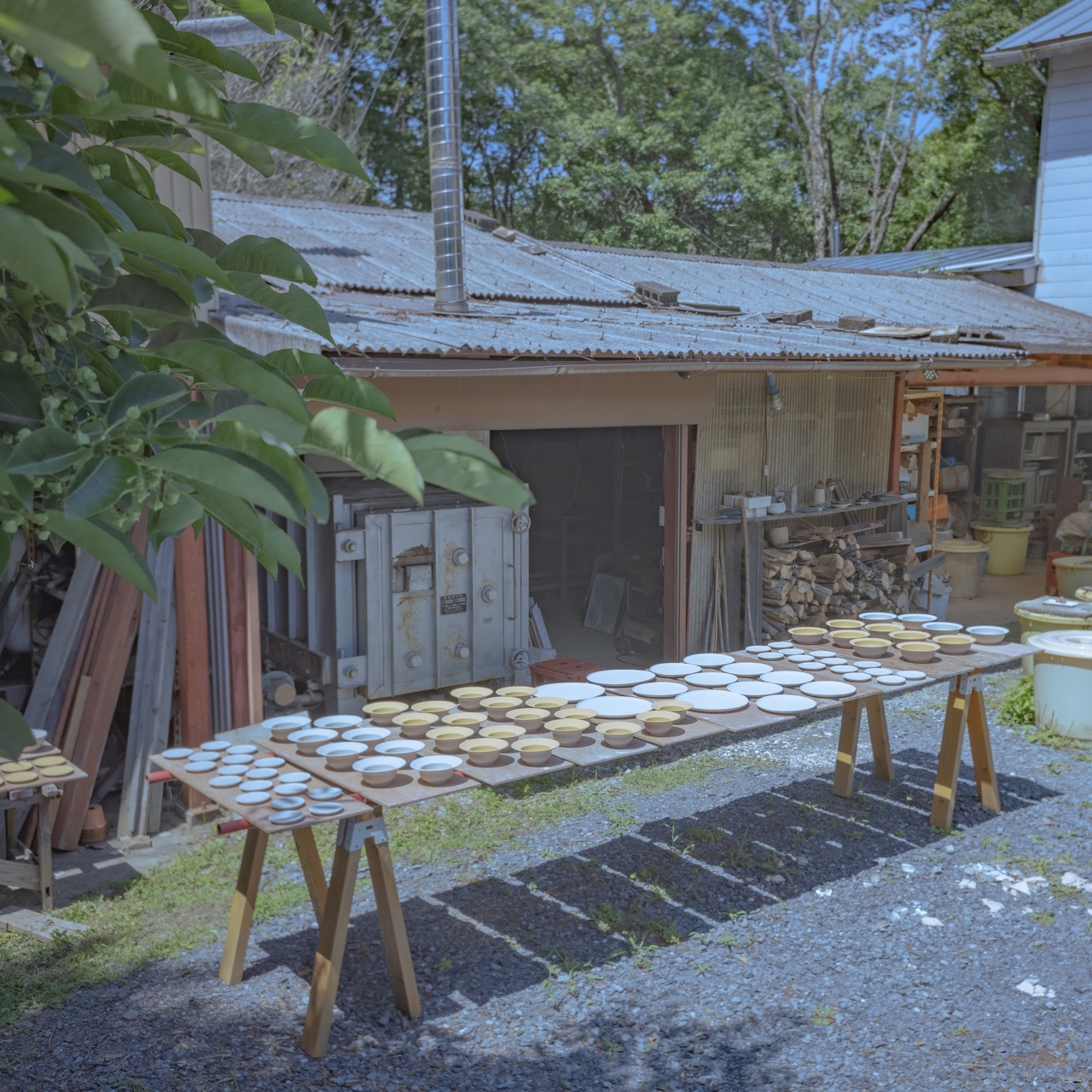
Next, Aoi headed to the workshop to try the potter’s wheel herself. In the yard, she stood gazing with great interest at the many large buckets lined up—Masato’s collection for his glaze work.
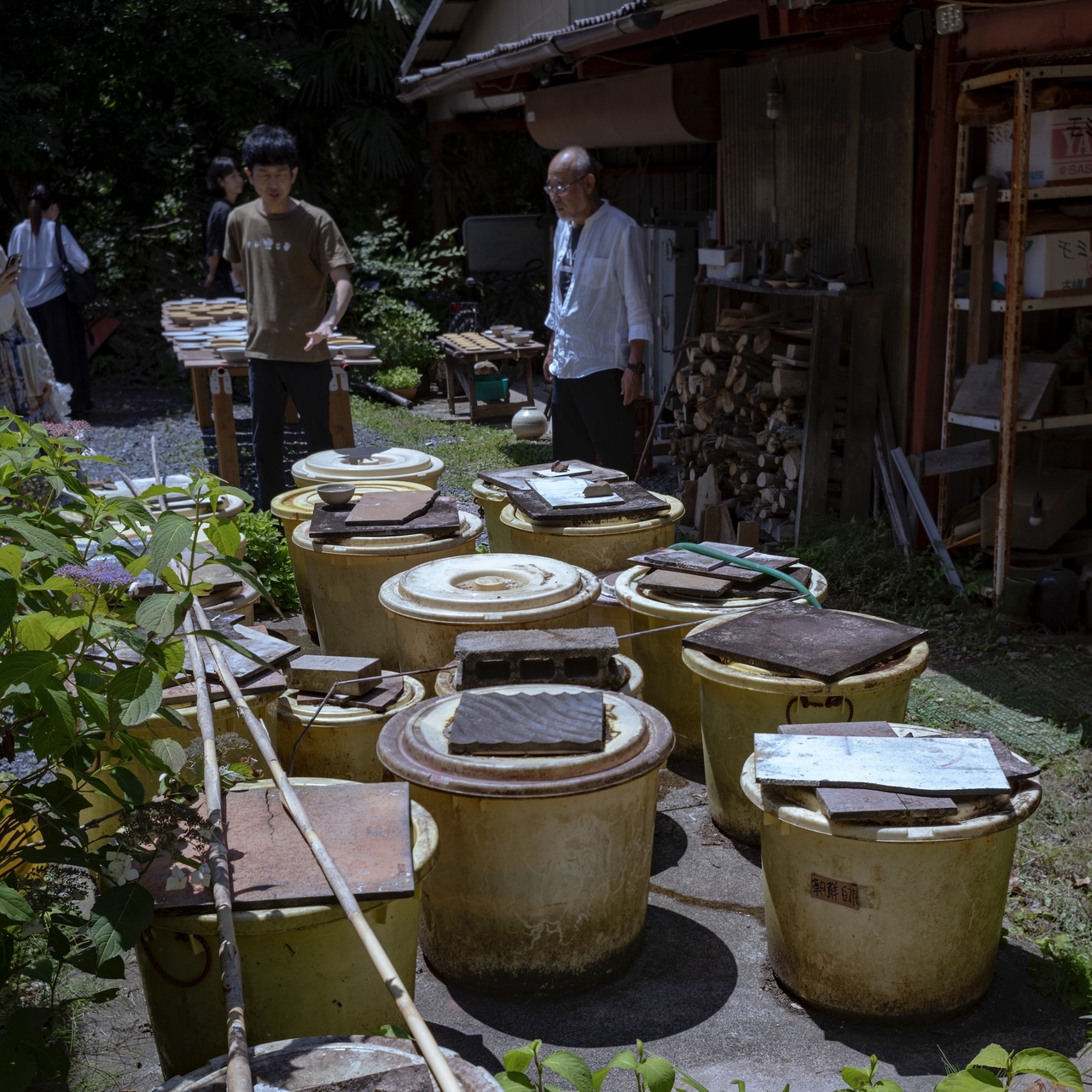
“What is this?”
“These are test pieces where I’ve tried out different glazes. I’ve just left them here as they are… it looks a bit like they’ve been abandoned. With ceramics, in the end you entrust everything to the kiln. Until you open it, you’re always nervous. And as time passes, the components of the glaze keep changing. Since they’re natural materials, you can’t fully control them. I usually have a rough idea of the color I want to achieve, but often, when it comes out of the kiln, it’s completely different.”
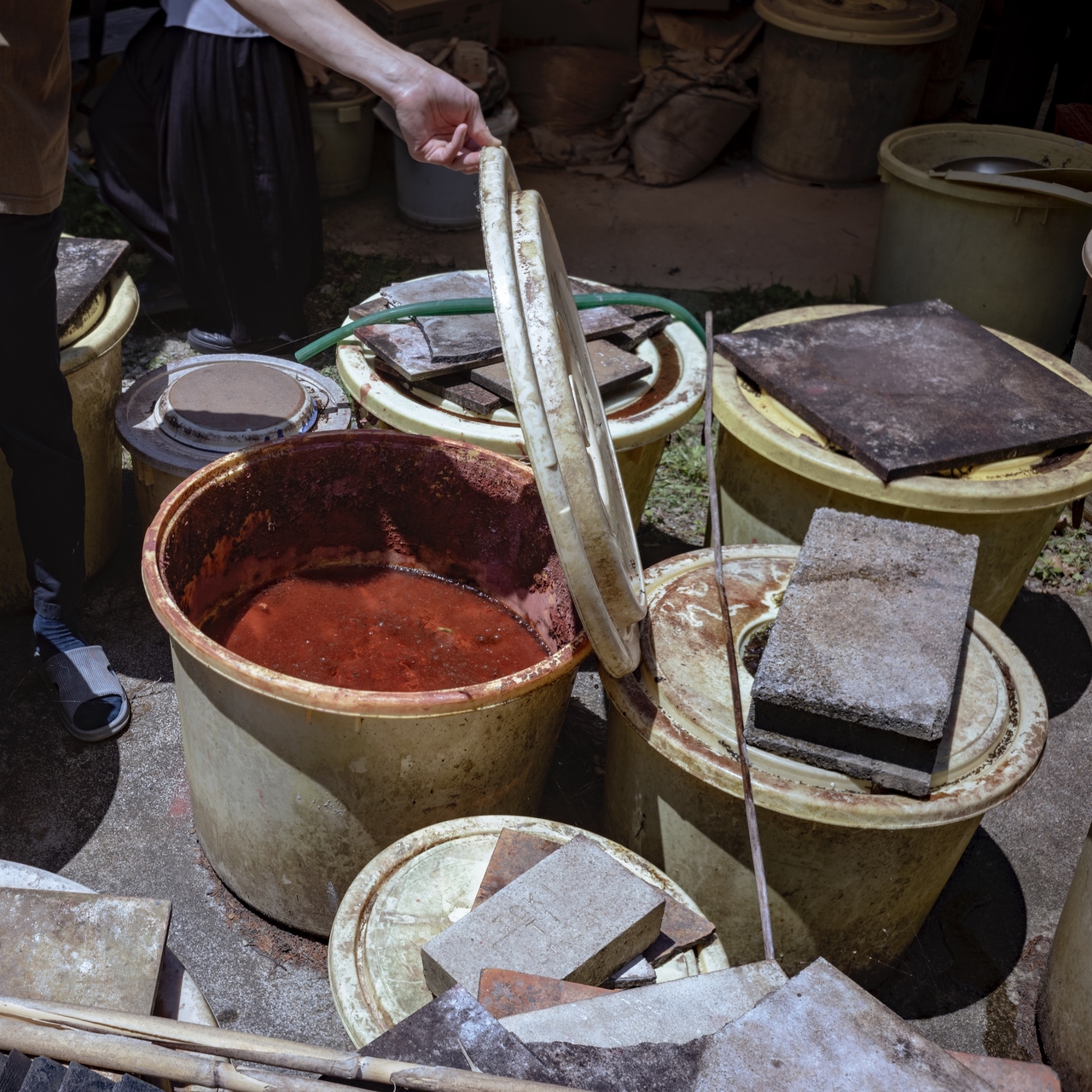
“Is it kind of like an experiment? I felt that Masato’s palette of glazes here in the garden might be similar to something inside me when I perform. They’re not neatly organized, and at first glance they look as if they’ve just been left there. They’re things that have no reason to be used, but also no reason to be thrown away. Yet they remain, piling up within me, forming my own kind of palette.
Even if I can’t become a professional who devotes themselves to mastering a single color, I think there’s meaning in the experience of creating while thinking, ‘It would be nice if I could bring out this kind of shade,’ and letting those small efforts accumulate one by one.
Just as you only truly know what kind of vessel has been made once it comes out of the kiln, in performance too, there are moments when I discover sides of myself I didn’t know existed. And most of the time, that turns out to be something positive for me. I always thought ceramics and performance were completely different, but in that moment, I felt they overlapped.”
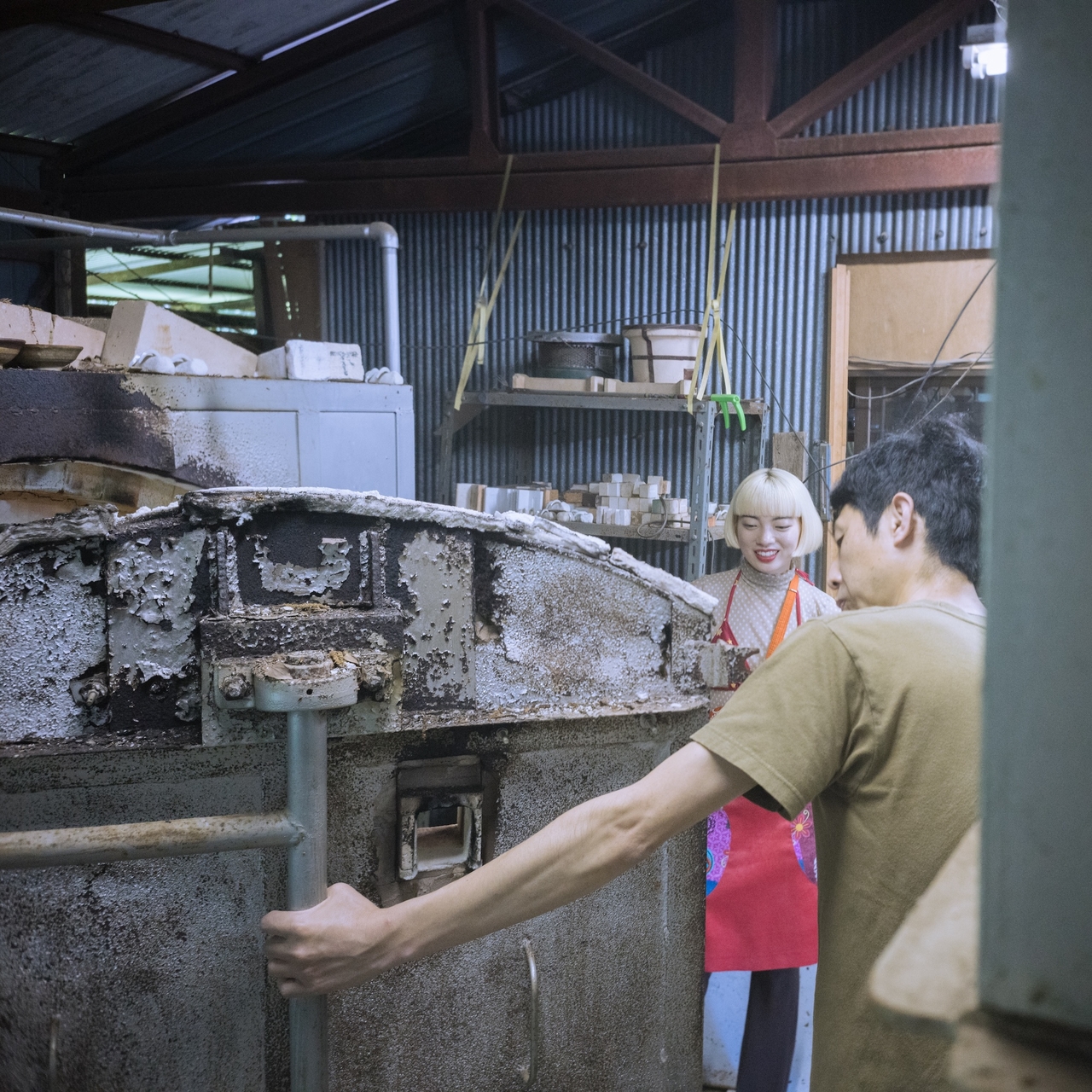
Tadao kneaded the clay as he prepared the potter’s wheel. “The clay’s a bit firm today… it might be a little tricky,” he said.
“I’ve tried the potter’s wheel once before with Arita ware, but I couldn’t manage it at all…”
“Porcelain is difficult, you know. All right, it’s ready. Please, go ahead.”
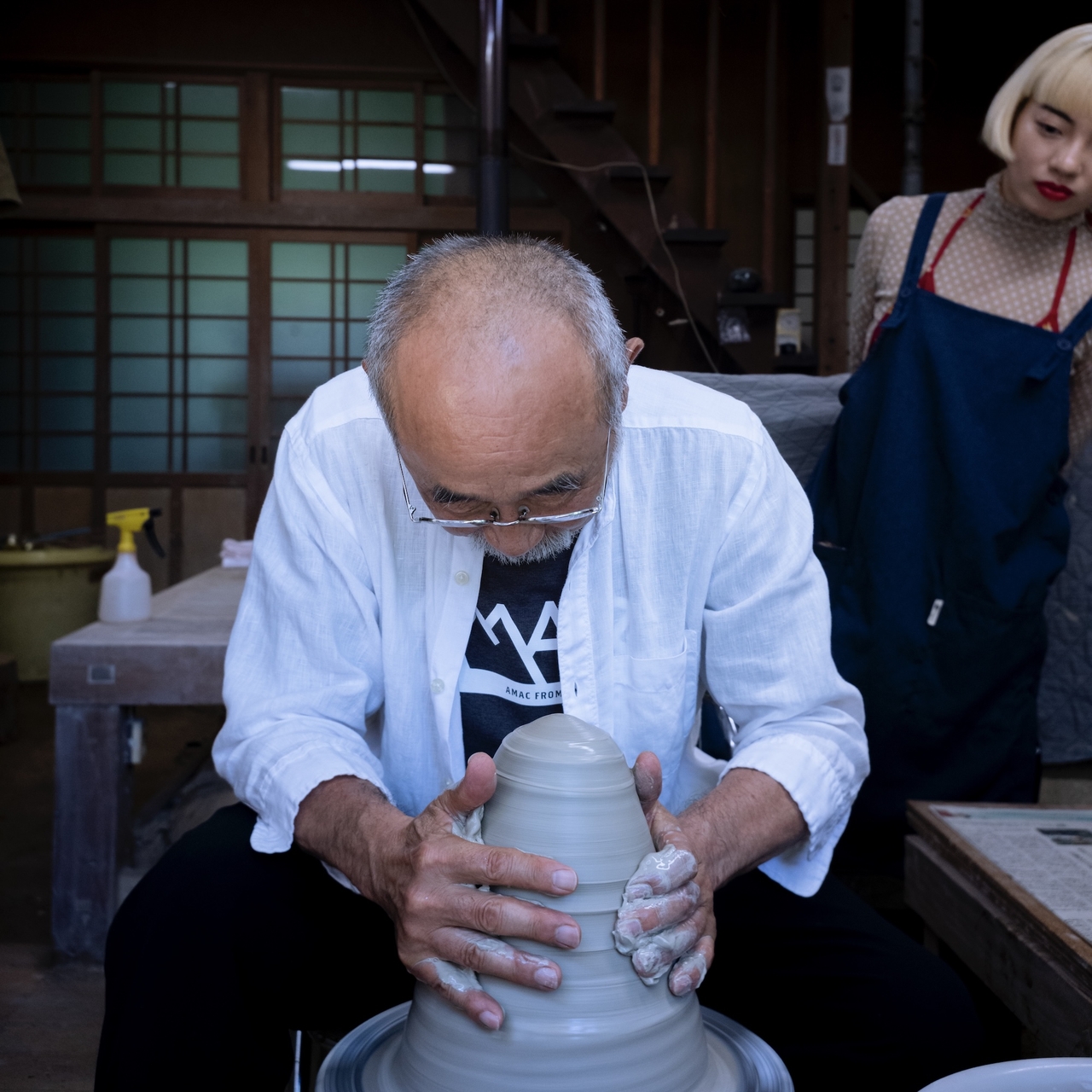
The well-kneaded clay gave off a muted, quiet glow. As Aoi pressed the pedal with her foot, the wheel began to turn slowly. With her hands—so attentive down to the fingertips—she touched the clay with such delicacy it was hard to tell whether she was truly making contact or not.
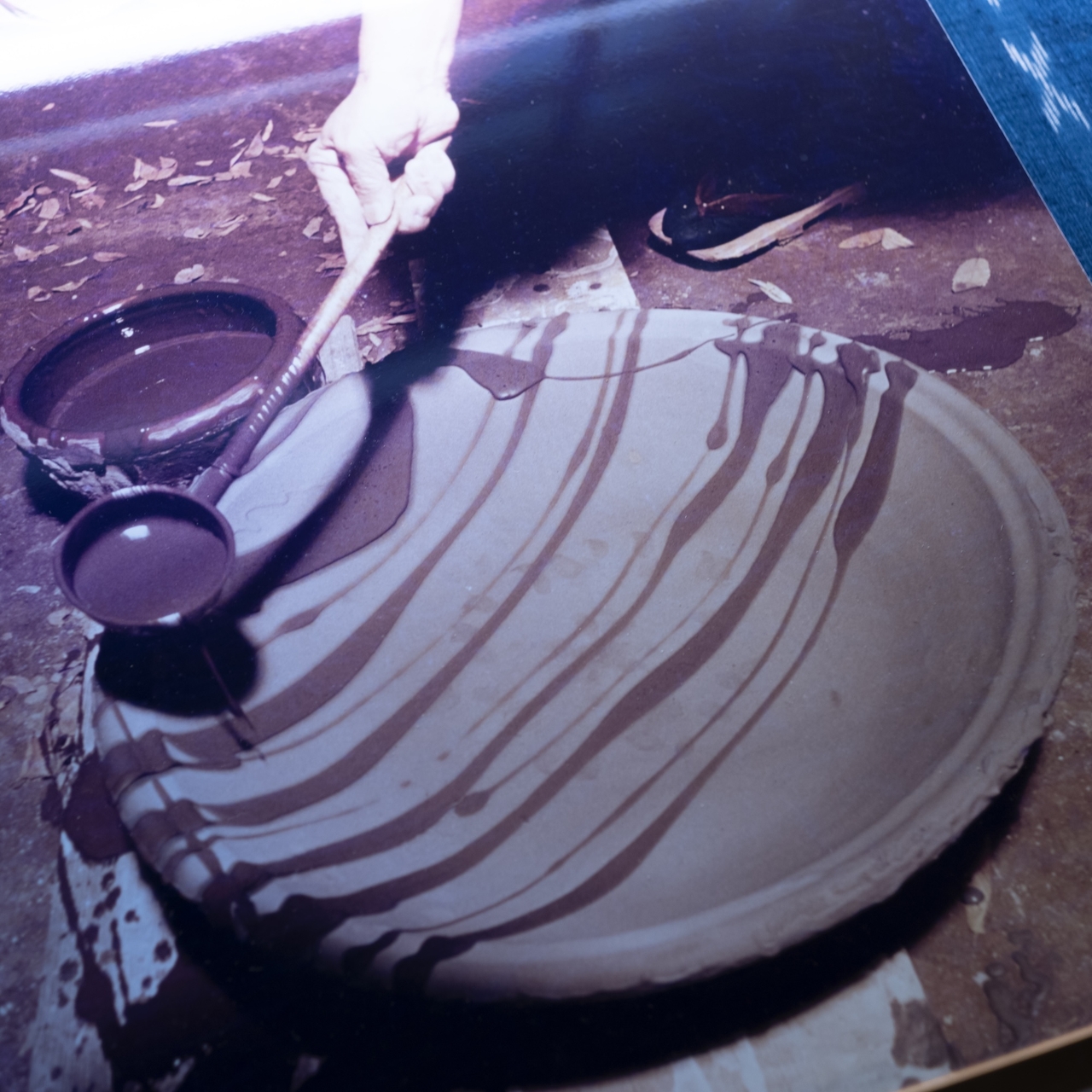
To aid in shaping, she was lent a gyūbera, a wooden spatula from Karatsu. Within that single small tool lay a rich cultural heritage. To create a deep dish, one must apply slightly more pressure with the supporting hand or spatula inside the vessel. That was where the difficulty lay.
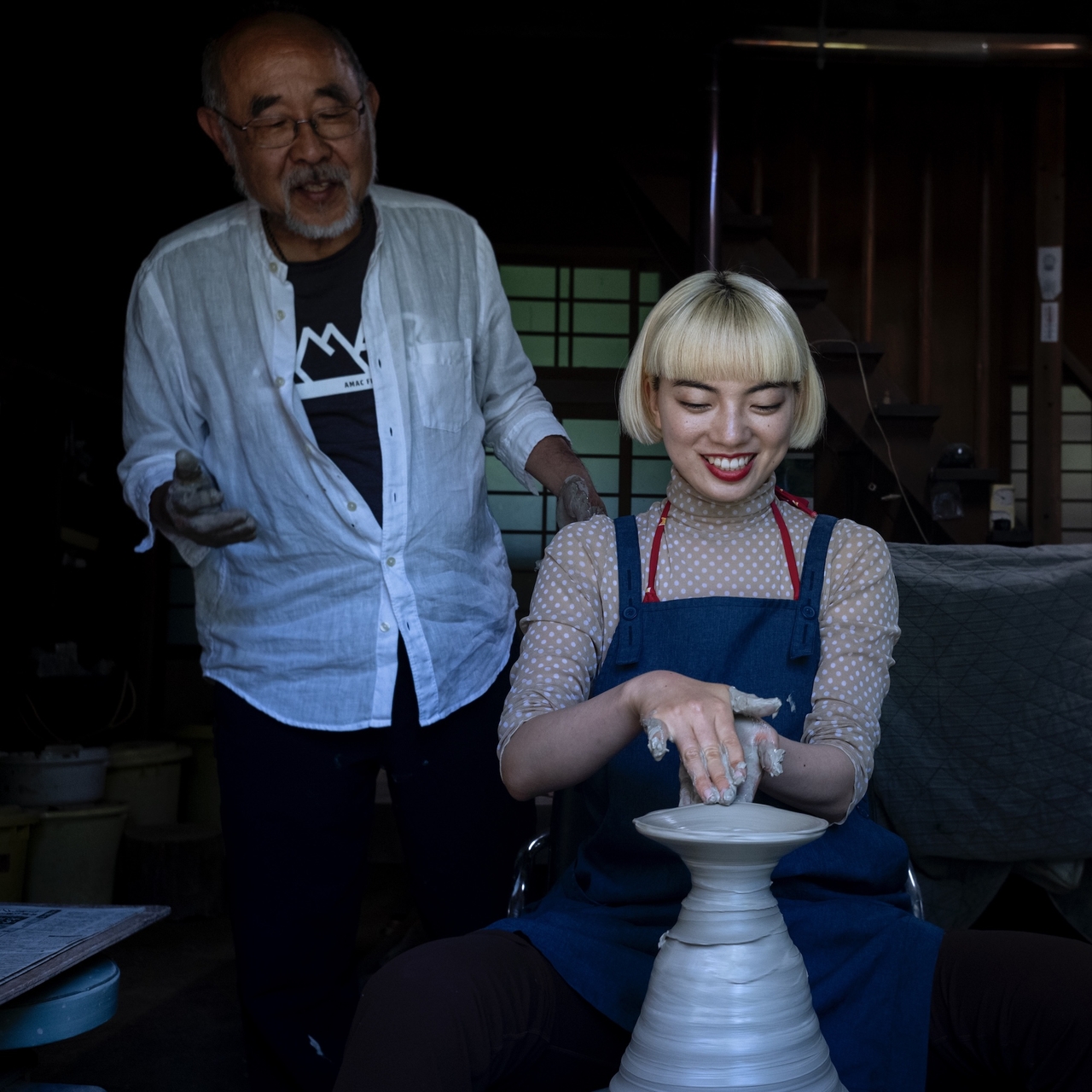
“Try pulling upward a little.”
“This is difficult.”
“No, you’re doing well. Seems like you don’t even need much instruction.”
Once the vessel had taken the desired shape, a thread was slipped beneath the base while the wheel still spun, separating it cleanly from the wheel. That marked the end of the forming process.
Tadao, who usually chatted cheerfully with a smile, grew quiet for a moment and said, “When I’m working at the wheel, I feel at peace.” Hearing those words felt like being entrusted with something essential about how to live one’s life.
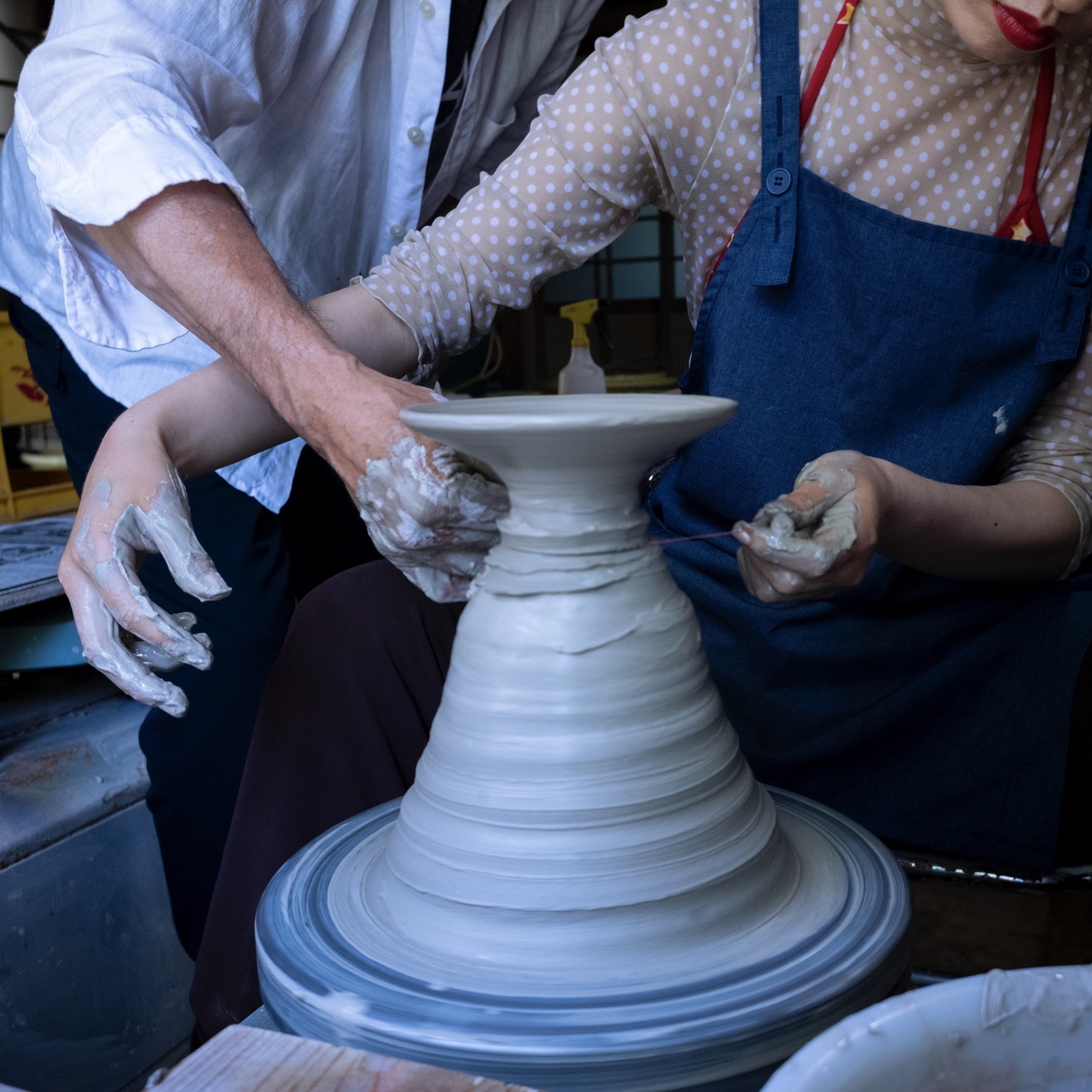
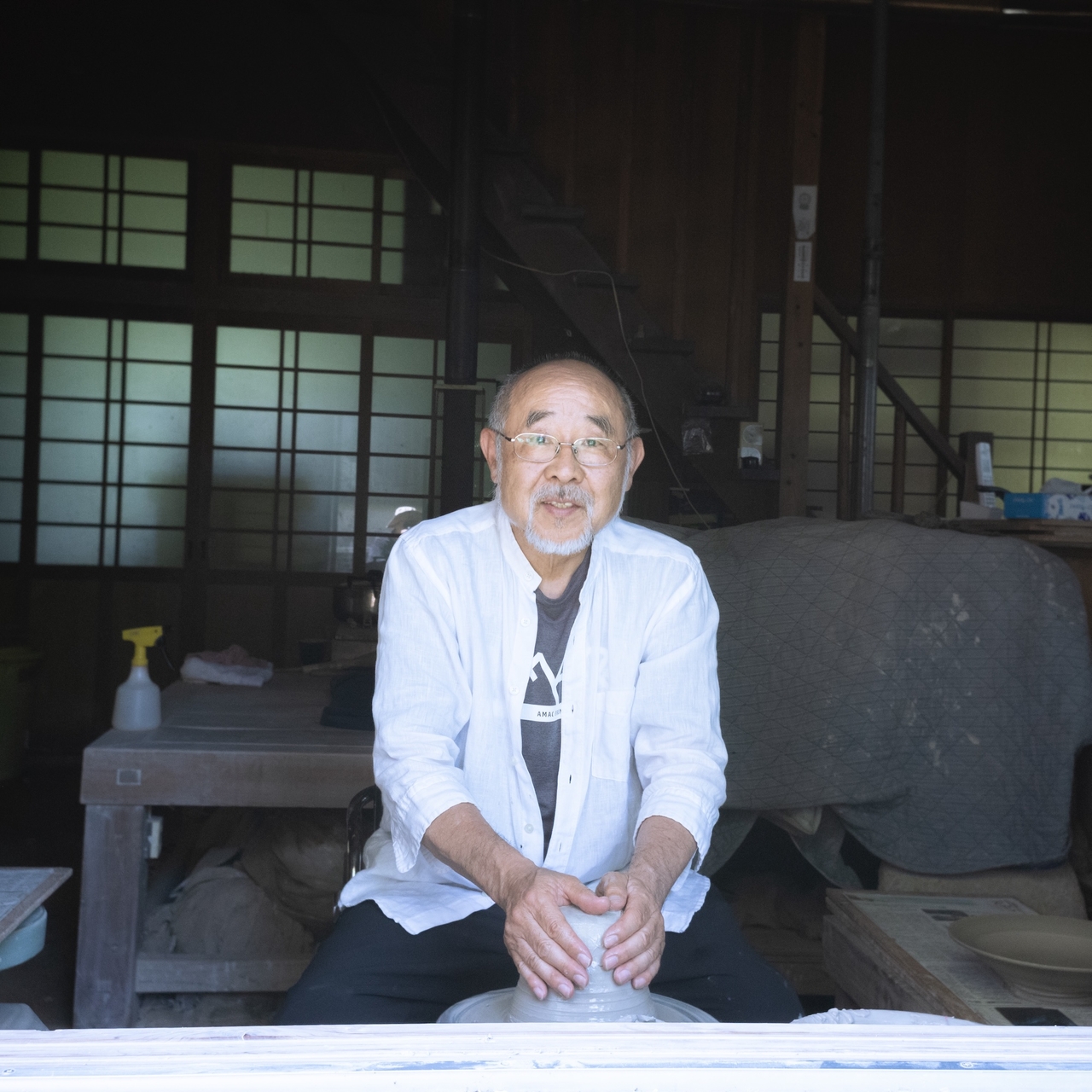
The piece Aoi shaped on the wheel, once glazed and fired, would be delivered to her around the time of the Ginza Handcraft Market.
Aoi reflected on the moment she touched the wheel:
“The feeling in my hands came back to me. It was as if I was touching the clay, but also as if the clay was touching me. As Masato mentioned, I realized just how much I usually try to control everything myself. When I was a child, I was the kind who loved making mud dumplings. I think it reminded me how much fun it is to play with your hands—how wonderful it feels just to use them.”
Because clay and fire are both elements of nature, it is difficult to bend them completely to human will. And yet, that is precisely why Tadao and Masato’s vessels hold such a fresh charm in their unexpected colors and textures. They are pieces that seem to bring the landscapes of soil, forest, and living creatures into our everyday dining table.
A “wheel dance” at the Shoji Hamada Memorial Mashiko Reference Collection
When you hear the words “Mashiko ware,” what kind of vessels come to mind? Many might think of pottery with a rustic, warm character. Yet Masako Hamada—wife of Tomoo Hamada, Shoji Hamada’s grandson, and co-director of the Shoji Hamada Memorial Mashiko Reference Collection—says that looking at its history, there is no single fixed definition of Mashiko ware.
“In the beginning, the style resembled copies of Shigaraki ware and other production areas, and the name ‘Mashiko ware’ itself didn’t even exist. When Shoji established his base in Mashiko and began introducing the works produced here, that helped bring recognition once again to Mashiko as a pottery region, which had first begun in the late Edo period.”
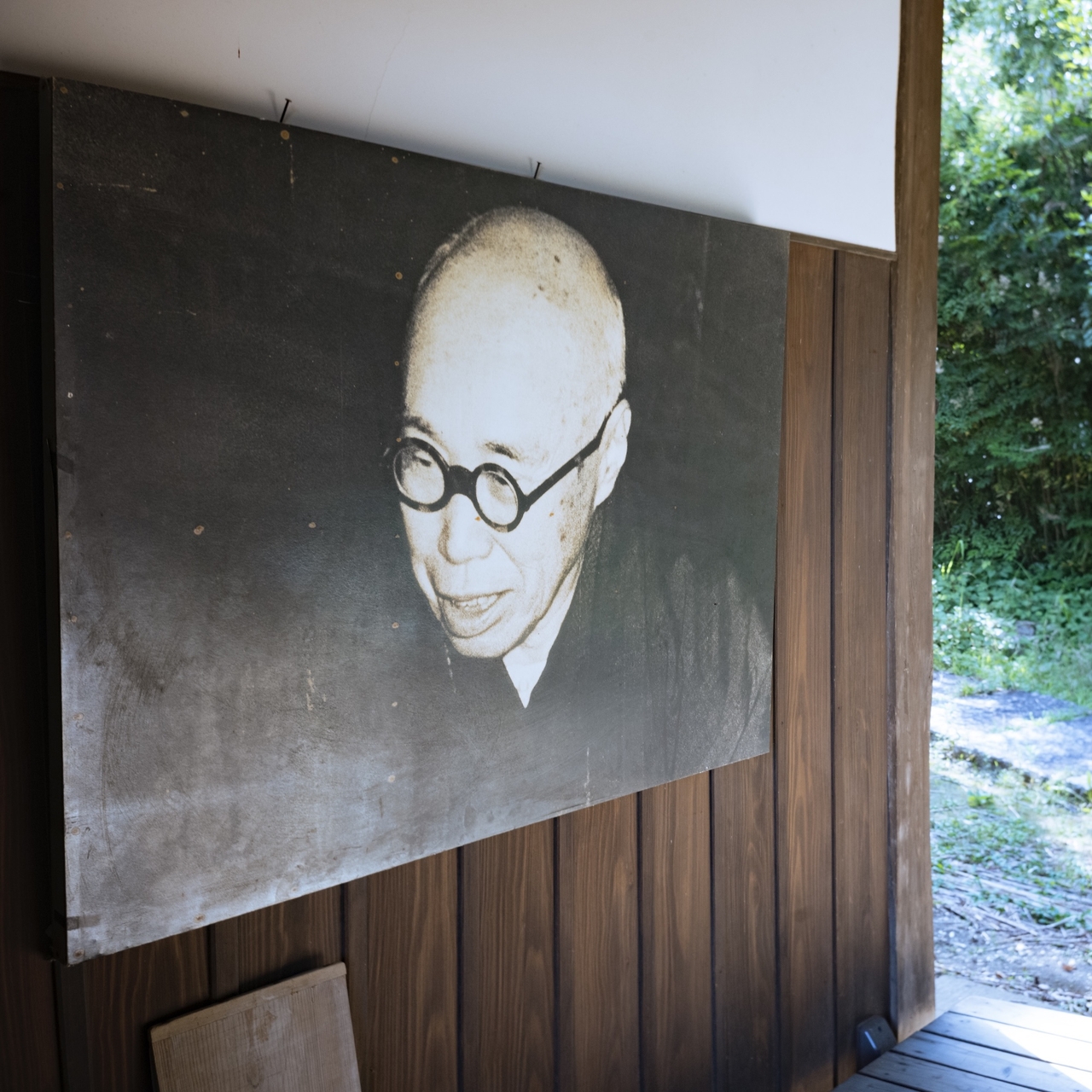
As its name suggests, the Reference Collection exhibits works that Shoji Hamada himself gathered as references for his own pottery. His oft-quoted words—“I found my path in Kyoto, began in England, learned in Okinawa, and grew in Mashiko”—convey how he drew upon the cultures and arts of many places, as well as the practices of others, allowing them to flow into his own style. This museum shines a light on that richness and on what he learned from them. It reminds us that Shoji Hamada was not only a creator, but also a mediator who connected different worlds.

In 1934, when Shoji Hamada invited Bernard Leach, the building that served as his workshop and residence was constructed, and it still remains on the grounds today.
The grounds are spacious. One exhibition hall makes use of a stone storehouse built from Ōya stone. Another, called “Uwandai,” features a splendid thatched roof that was recently rethatched; it is actually Hamada’s former villa, now repurposed as an exhibition building. There are also the old workshop where craftsmen once turned the potter’s wheel, along with a salt-glaze kiln, a red-painted kiln, and a climbing kiln.
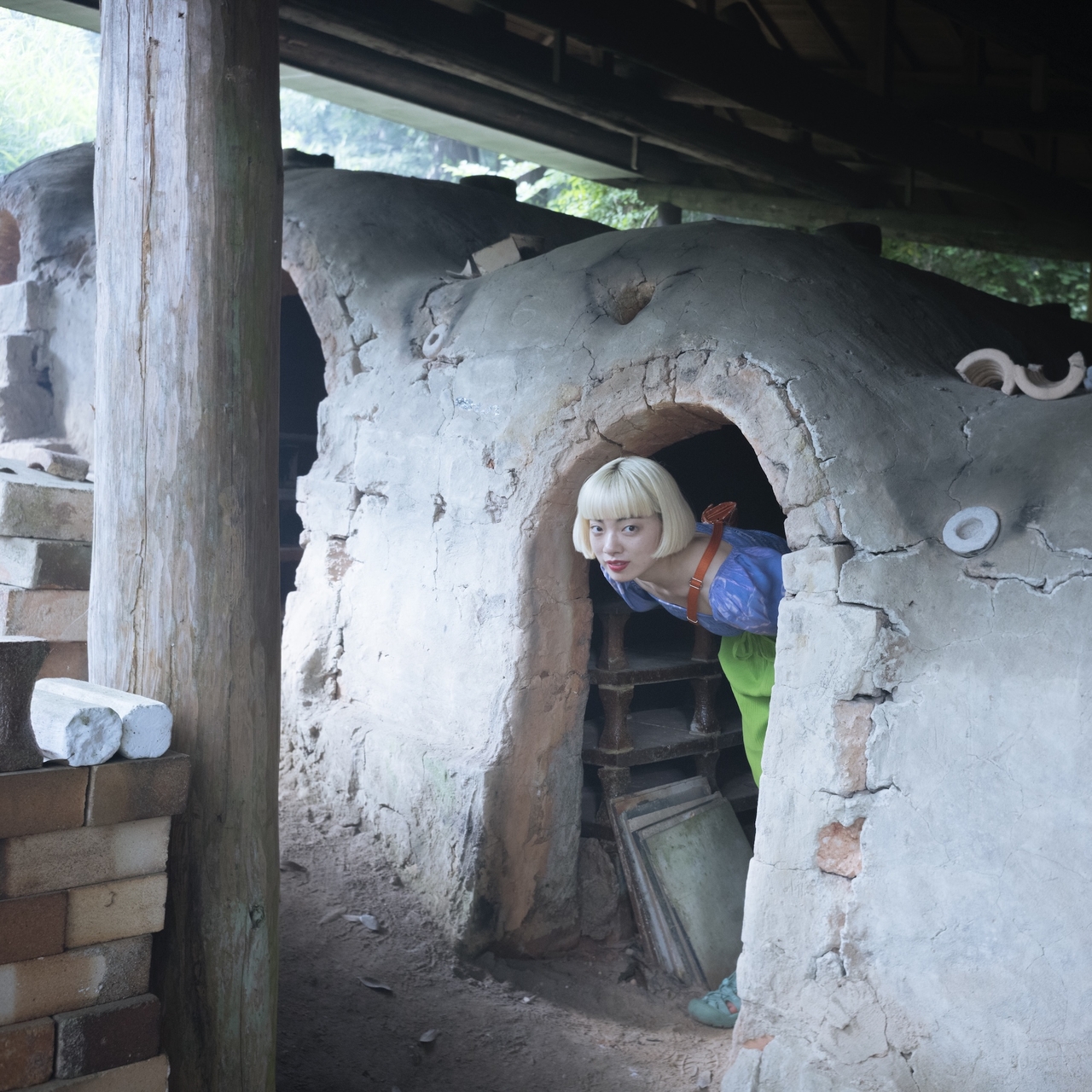
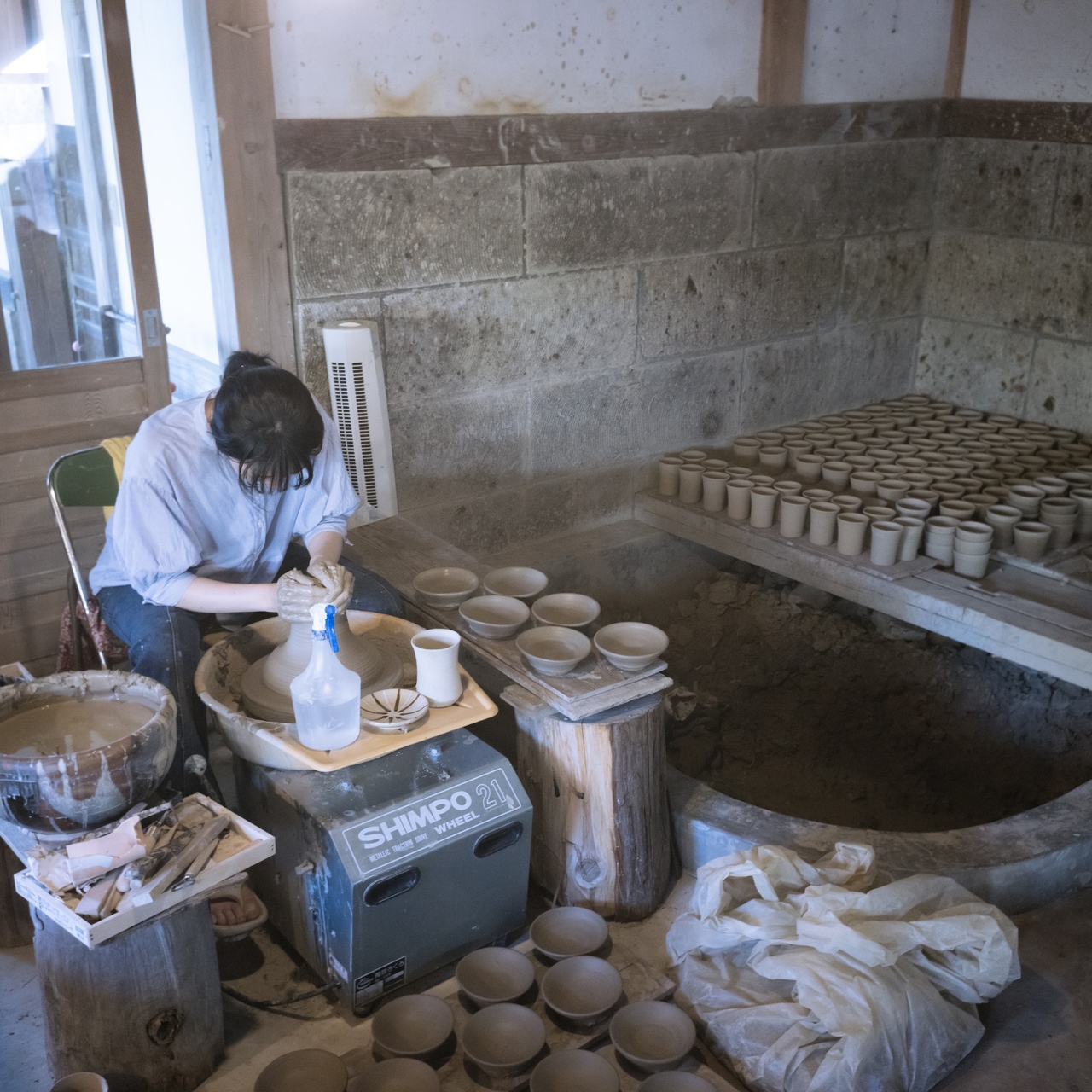
From this spring, the daughter of Tomoo and Masako Hamada has also begun her path in ceramics. As she continues her practice, she says, “I often think about how I would like to approach painted decoration if I were to do it myself.”
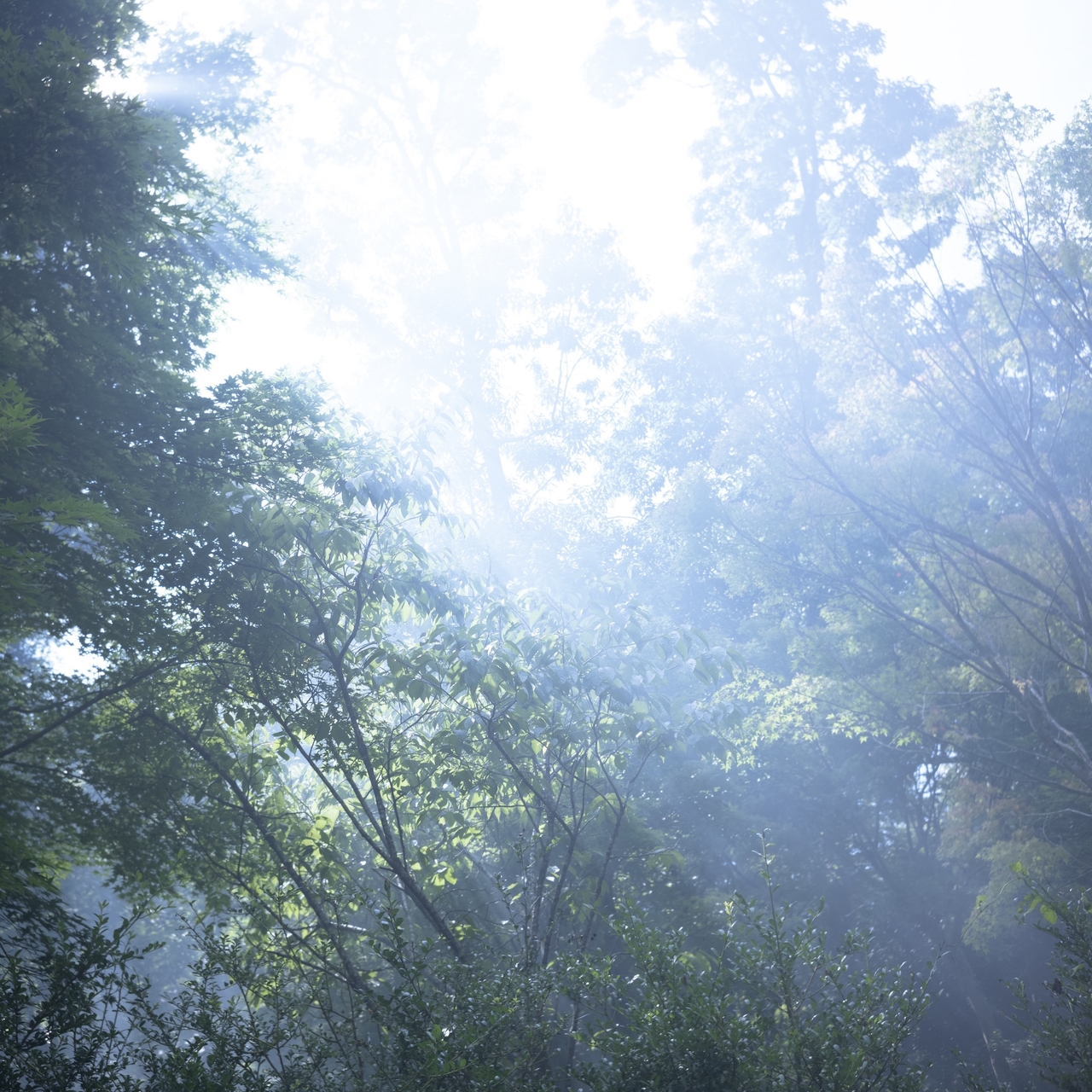
That day, a veil of smoke drifted across the grounds, like a milky aurora rising from the forest that has been maintained in recent years. Within it, Aoi began to dance. Her body’s axis held steady as her arms and legs turned fluidly. At moments she seemed to become the potter’s wheel itself; at others, she looked like the person turning it. Was she spinning it? Was it spinning her? Or were they simply spinning together?
The perspective from which one views things has a profound effect on life. All the same, I want to remain someone who can see from as many angles as possible. Masako mentioned that even the Mashiko Ondo folk dance includes gestures that imitate the turning of a wheel.
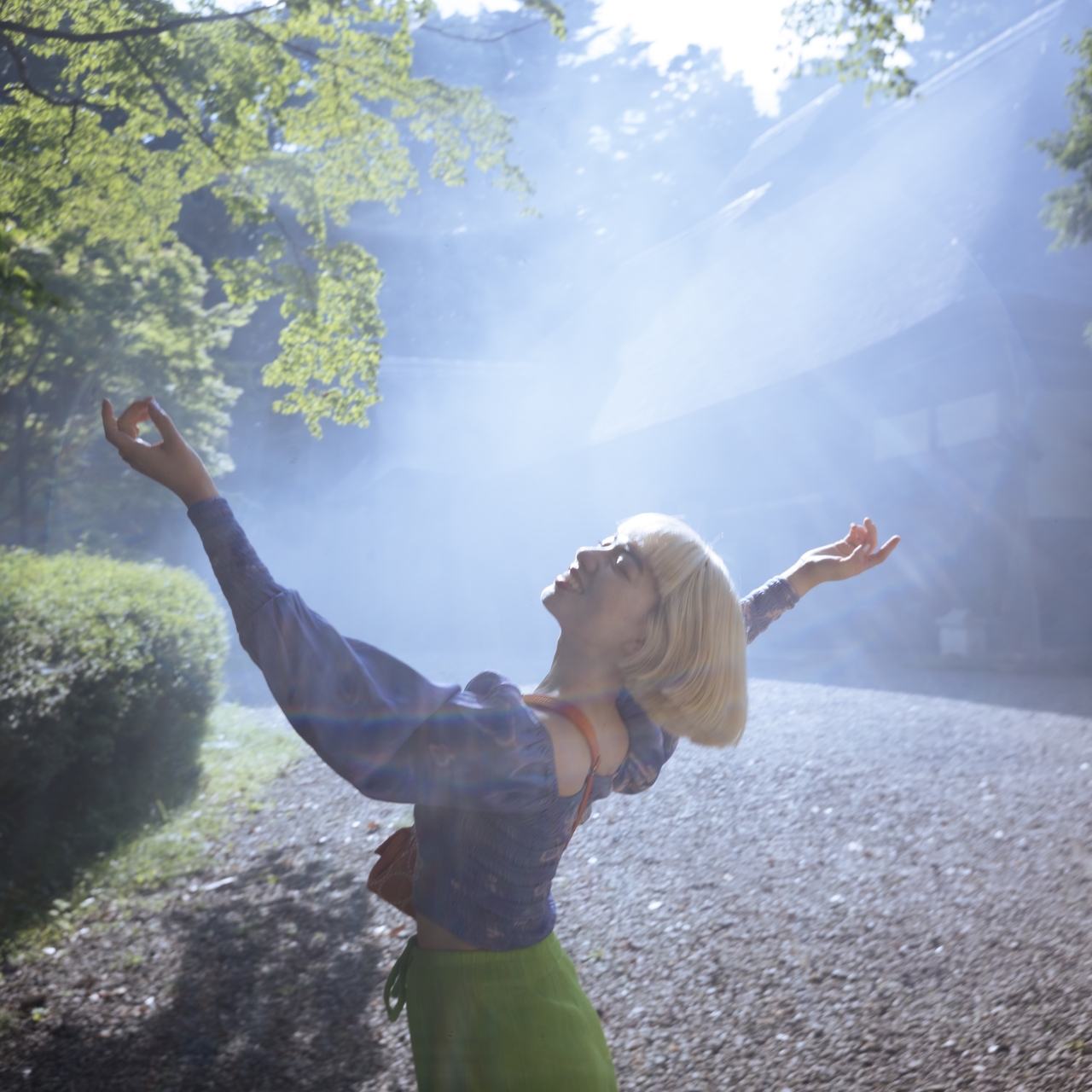
Tomoo Hamada once remarked about his grandfather’s work: “Shoji’s pieces may appear still, yet they have an axis that makes them seem as if they are moving.” On this day, Aoi too said at one point, “Change is important, but having an axis within that change is just as vital.”
Looking back, it feels as though this “wheel dance” became a fleeting moment where Shoji Hamada’s spirit of pottery and Aoi’s spirit of dance met across time, their gazes crossing. I cannot help but feel that something of that essence was truly present in that instant.
Repairing and loving the old: The select shop pejite
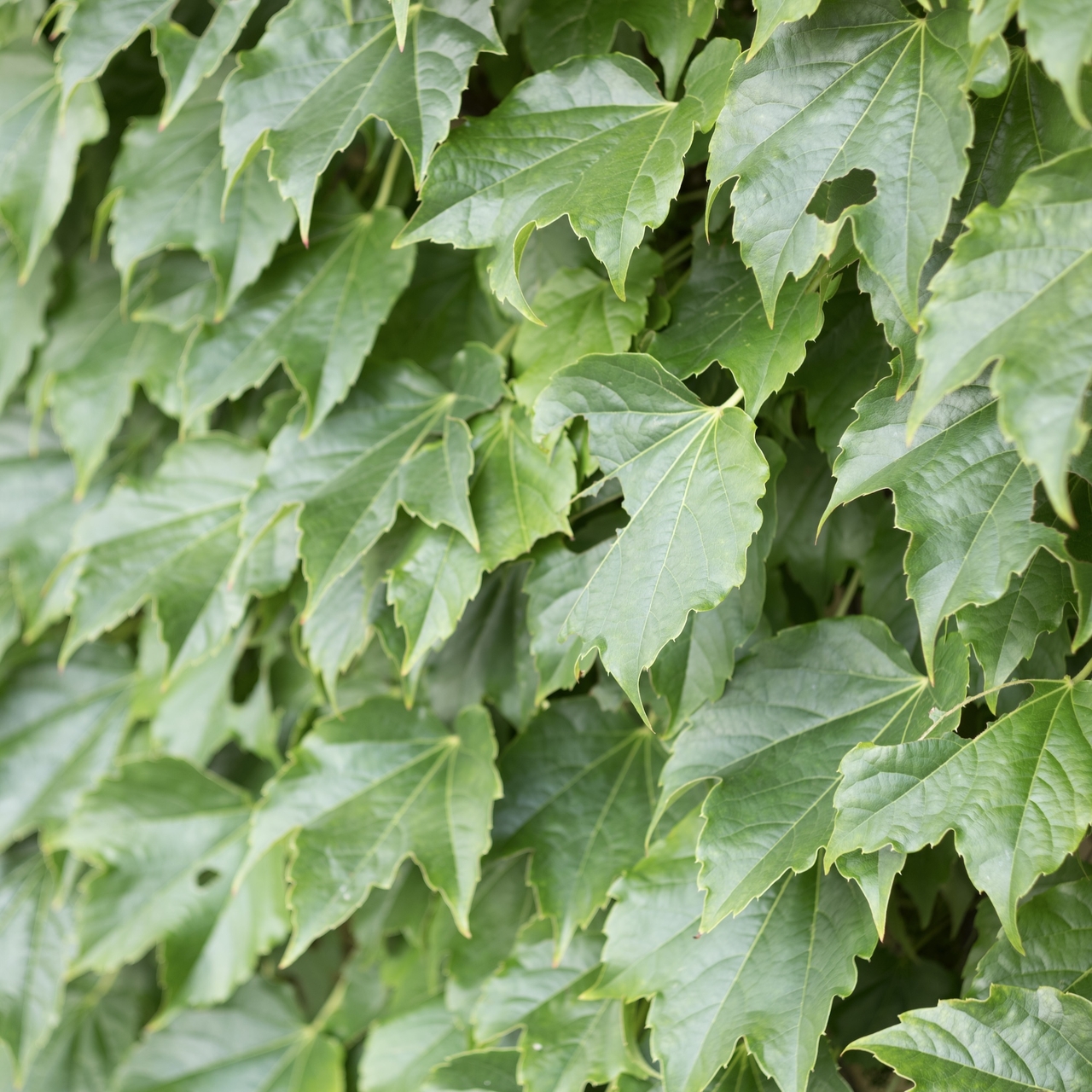
The exterior of the shop is densely covered with leaves, each the size of a palm—or perhaps even larger. For a moment it seemed like a living creature in motion, and then I remembered: plants are, without question, living beings. Accustomed as I am to seeing only neatly managed greenery, I felt as though my eyes were being cleansed. These very leaves, I was told, turn a brilliant red in autumn.
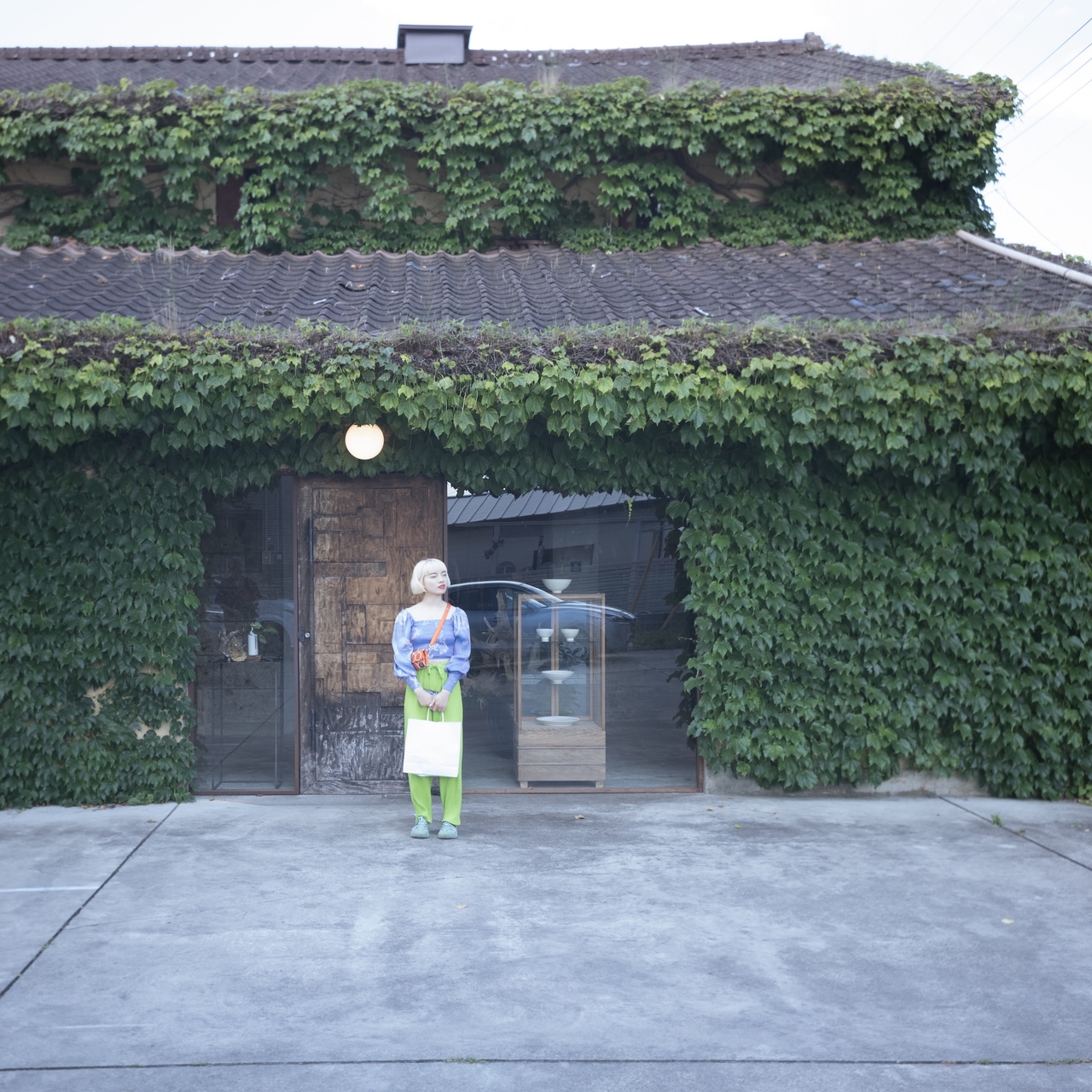
Inside the shop, a renovated rice storehouse, the ceiling rises strikingly high, while the walls, with patches of peeling plaster, carry a certain charm. Accents of Ōya stone, quarried locally in Tochigi Prefecture, are used to striking effect.
Opened in 2014 by Tōru Nihei, who also runs the Nihei Antique Furniture Store, pejite is a select shop dedicated to showcasing handcrafts. Its shelves display the works of Mashiko-based artisans, original ceramics fired in its own workshop, carefully restored high-quality antique furniture, as well as clothing and sundries.
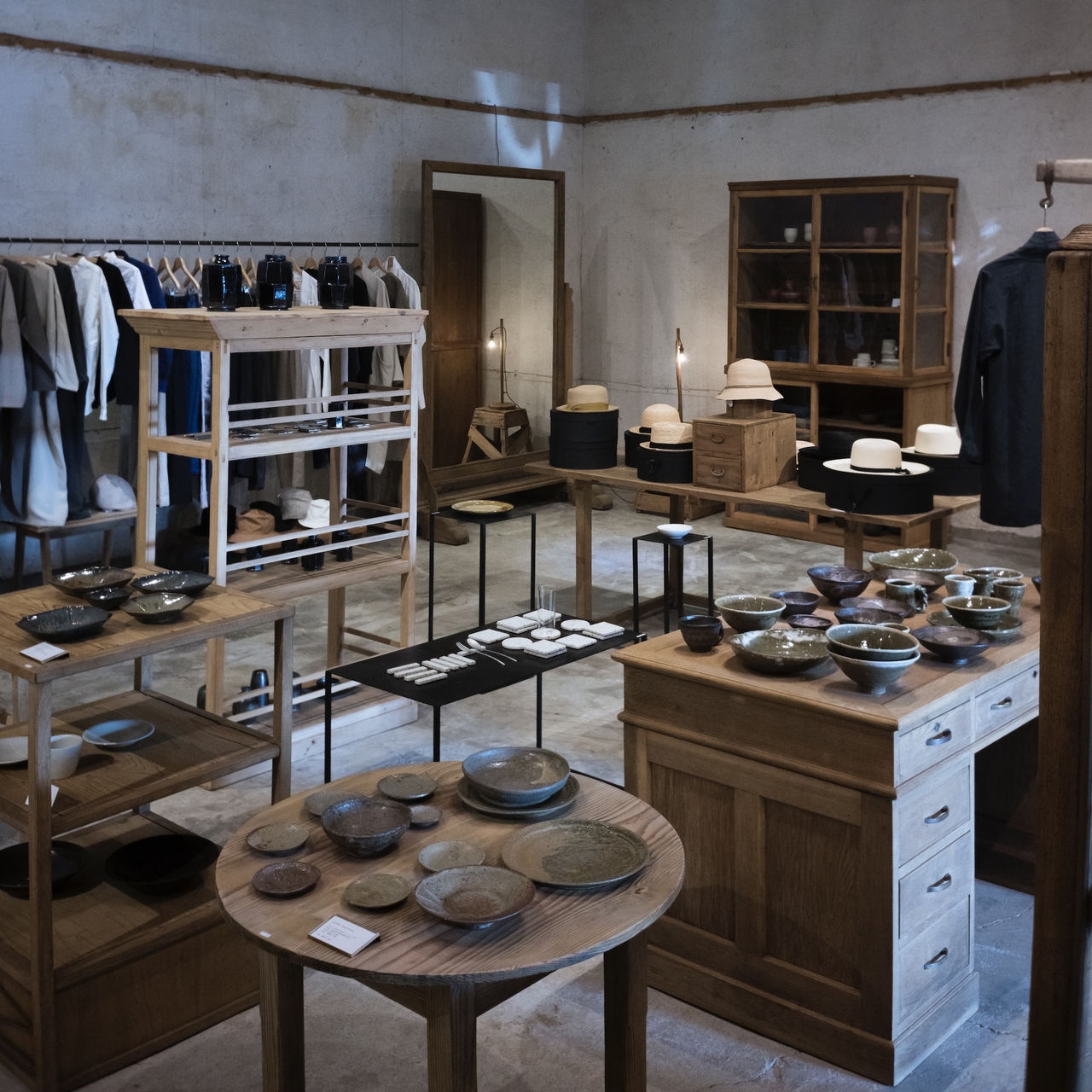
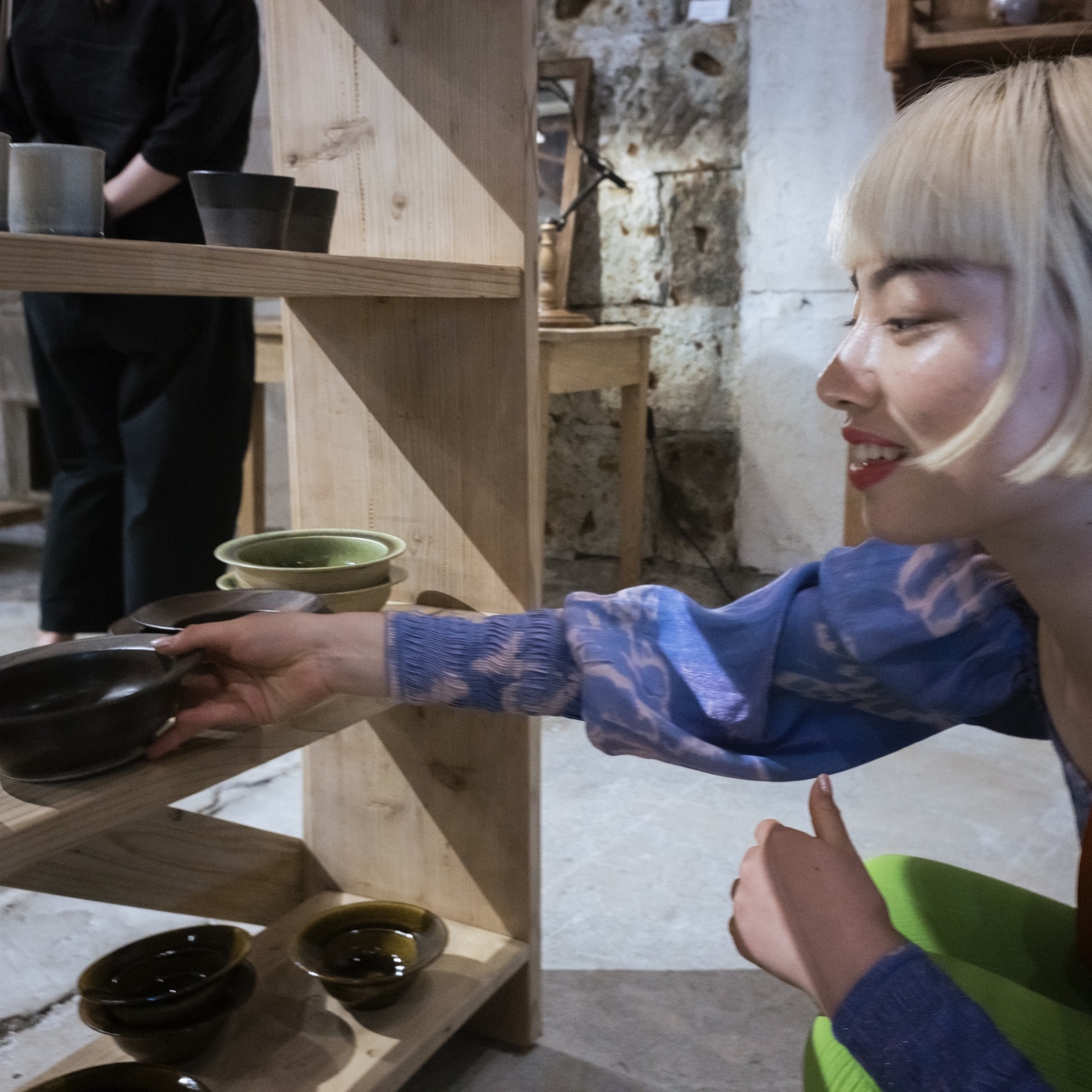
Aoi chose a bowl-like dish made by Masato Akutsu, whom she had visited earlier at his workshop.
“It wasn’t that I picked it up knowing right away it was Masato’s work. But using a dish when you can picture the face of the person who made it feels completely different from using one when you can’t.”
Suddenly I recalled the patchwork bag Aoi had been carrying the last time we met. She had told me it was handmade by an 88-year-old woman with whom she had, by chance, begun exchanging letters. What struck me was not that she recounted the story in any particularly special way, but the ease and lightness with which she simply carried it as part of her everyday life.
Handcrafts are often described as “warm.” But what does that warmth truly mean? Perhaps it is the unique textures, the irregularities, the individuality that only human hands can impart. Or perhaps it also carries the maker’s thoughts, even a kind of love. What matters is that each person who receives a handmade piece feels it in their own way and gives it their own meaning.
With that in mind, I would like to add this: one of the things that sustains the warmth of handcrafts is “the bridge of imagination that forms between oneself and the maker.” In the rush of daily life, when our perspective so easily narrows, imagining the life of someone else or the distant landscape where they live seems to widen the space and the viewpoints we share, allowing people in different places to live more richly together.
Not far from pejite, preparations for a festival seemed to be reaching their peak. Offering a small prayer that those in their happi coats would enjoy a good evening, we took our leave of the town of Mashiko.
On the way back, it was Aoi who drove the car all the way to Tokyo. We had spent the day soaking up the sun, talking at length, and taking photographs. Even if there was a satisfying sense of fulfillment, it did not necessarily mean she wasn’t tired. I felt sorry that I couldn’t take the wheel in her place, and worried a little, but it seemed that for Aoi, driving, preparing bento, and traveling with loved ones are continuous with dancing and performing. She doesn’t neglect everyday life for the sake of expression or creation. Rather, she knows that grounding herself in daily living, opening her senses fully within it, sharpening her awareness without rushing—this is what makes for a sincere attitude toward herself and others, and a way of staying connected to the world.
“A little while ago, I used to feel afraid, as though my dance was cut off from society. That’s why I sometimes envied handmade objects—things that are needed simply by being there. I admired how they remain in space.
But recently, more people have come to see my performances. Sometimes someone even says, ‘I still remember a dance you did four or five years ago.’ Hearing that, I realized: if it stays in someone’s memory, then I can give the gift of memory itself.
Rather than being like an artwork displayed in a museum, I want to be more like a flower casually placed in a home, or like the everyday bowls and tools we saw today, used again and again. When I think of it that way… maybe it’s close to mingei after all. Something I once thought distant, handcrafts, now feel connected in a full circle. How fascinating.”
Aoi’s dance and performances, and the handmade bags and ceramics of the Mashiko artisans she met today, may differ in whether they remain in visible form or not. Yet both seem to be like letters, carrying the spirit of the land, of nature, of landscape. They add new colors to daily life and kindle lights of connection.
“Maybe I’ll use Masato’s dish I bought at pejite for soup? Or even just slice some tomatoes into it—that would be nice too.”
Each encounter with a new piece of handcraft becomes a new memory that brightens daily life. And in most cases, that is surely a good thing.
Model:Aoi Yamada
Text:Yume Nomura(me and you)
Photography:ITO
