


/)
100 Years of Matsuya Ginza
Ginza 3-Chome Centennial Chronicle
Episode 1
Thanks to your continued support, Matsuya Ginza celebrates its 100th anniversary in 2025.
In this special series, we revisit the unique stories and moments that have unfolded in Ginza 3-Chome, as we explore the spirit and identity of Matsuya Ginza.
1925: Opening After the Great Kanto Earthquake
Matsuya Ginza officially opened its doors on May 1, 1925 (Taisho 14).
At the time, the company was known as Matsuya Gofukuten Co., Ltd. Although the store opened in Ginza that year, the registration to designate it as the company's new "head store" — replacing the original location at Imagawa-bashi in Kanda — wasn't completed until March of the following year.
Matsuya's origins trace back to 1869 (Meiji 2), when its founder, Tokubei Furuya I, opened a store called Tsuruyа on the outskirts of Yokohama, then a bustling international port. The shop initially sold fabric remnants and bolts of cloth. Eventually, Furuya acquired a shop called Imagawa-bashi Matsuya in Kanda, Tokyo — marking the long-awaited expansion into the capital. As the business grew, Matsuya evolved from a kimono store into a department store. But as sales increased, the Kanda location became too cramped. The company then set its sights on Ginza, which had already become the most vibrant shopping district in Japan.
The current Matsuya Ginza site (facing the main entrance) was once home to the combined residence, factory, and shop of Matsuhei Iwaya, who called himself the "Tobacco King of the East" and ran the Tengu Tobacco brand (Iwaya Trading Company) in the Meiji era. In the Taisho period, the land was put up for auction. It was purchased by Chōhei Insurance Co. (later Toho Life Insurance), who began construction in spring 1921 on what was, for its time, a groundbreaking eight-story office building. Matsuya’s second-generation leader, Tokubei Furuya II, made the bold decision to lease this new building and enter Ginza — a move that would define the company’s future. After intensive negotiations and the efforts of many involved, Matsuya secured the lease and even modified the interior design to suit department store operations.
This led to the creation of one of Matsuya Ginza’s most iconic features: the central atrium, which still exists today.
/)
/)
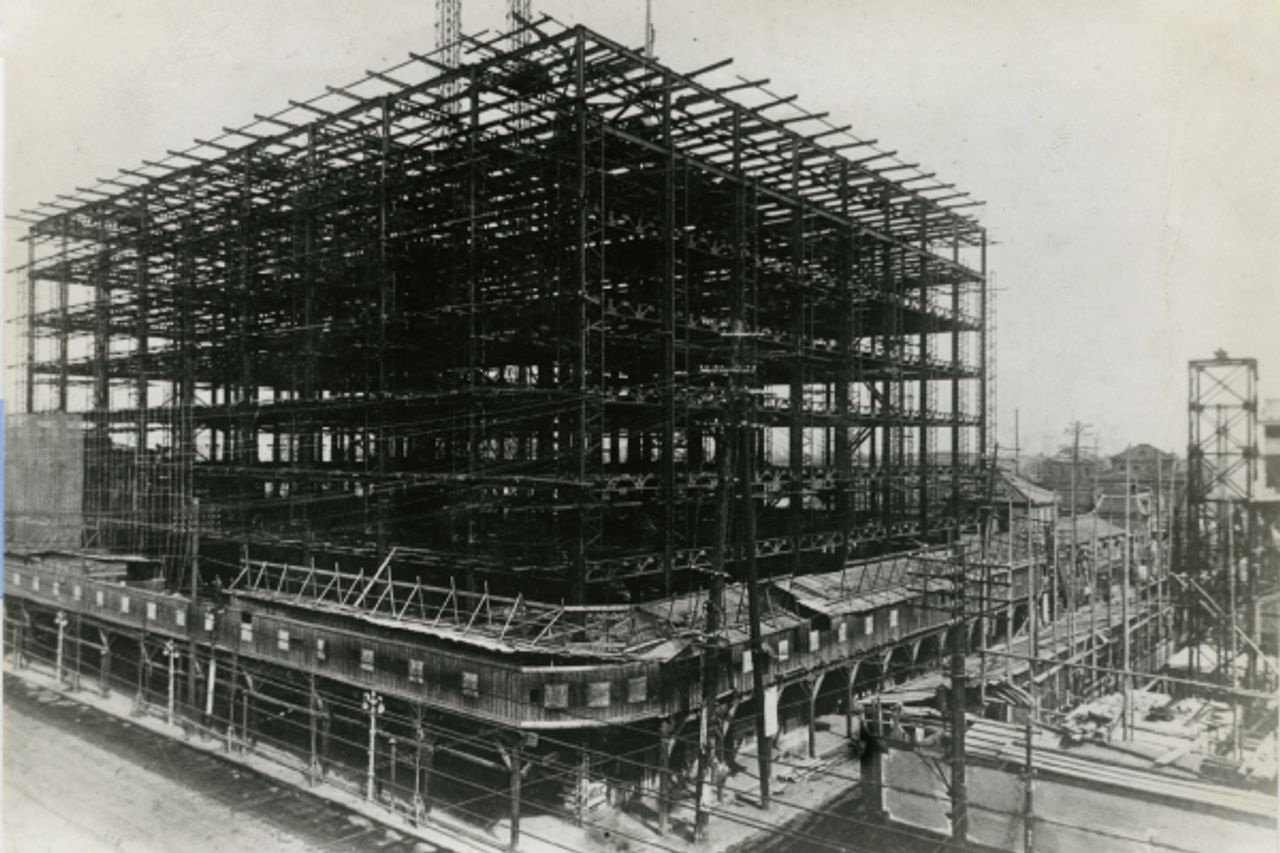
Under Construction (Redesigned from Office Building to Department Store)
However, on September 1, 1923 (Taisho 12), while construction was still underway, the Great Kanto Earthquake struck the building. Although the reinforced concrete framework withstood the quake, the structure was engulfed in flames. Still, with only minor repairs needed, construction continued. (Later on, some would half-jokingly claim, “The fire tempered the steel—this building is stronger because of it.”)
After overcoming such adversity, the building was completed following a full four years of construction.
The store finally opened one year and eight months after the earthquake. It was about six months later than the opening of Matsuzakaya in Ginza 6-Chome (the current site of GINZA SIX), but five years earlier than Mitsukoshi in 4-Chome.
The building had eight stories above ground. Floors 1 to 6 were used as retail space, while the 7th and 8th floors housed administrative offices. The two basement levels were dedicated to mechanical systems such as boilers and power equipment, as well as storage.
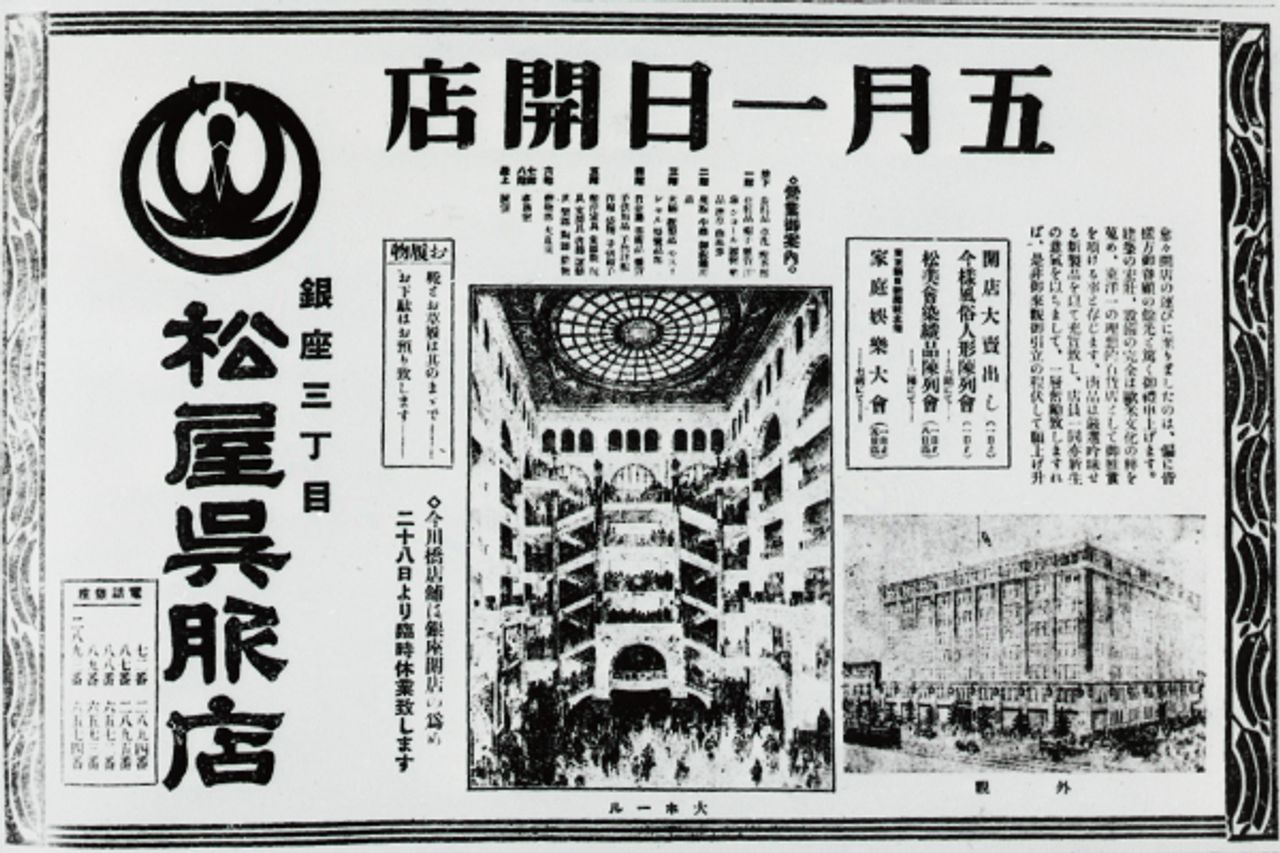/)
On the day of the grand opening, an airplane named “The Matsuya” flew over Tokyo, dropping leaflets to announce the event. The turnout far exceeded expectations, and the store was quickly overwhelmed with visitors.
At that time, department stores typically prohibited outdoor shoes. Customers would switch to store-provided sandals upon entry. Matsuya had prepared 5,000 pairs, but they were gone within just over two hours. As a result, a directive was issued to suspend the shoe exchange, and customers were allowed to walk through the store in their own footwear. (Similar changes occurred at other department stores around the same time, signaling a shift toward modern retail practices.)
During the first few days, the store welcomed an average of 200,000 visitors per day — an astonishing number, especially considering that the original Ginza location was less than half the size of today’s store.
For comparison, even during the busy New Year’s sale period, the current Matsuya Ginza sees around 50,000 visitors in a single day. Back then, the crowd was so dense that it became difficult to move inside the store. Entry was restricted by closing the large front doors every hour to manage the flow of people.
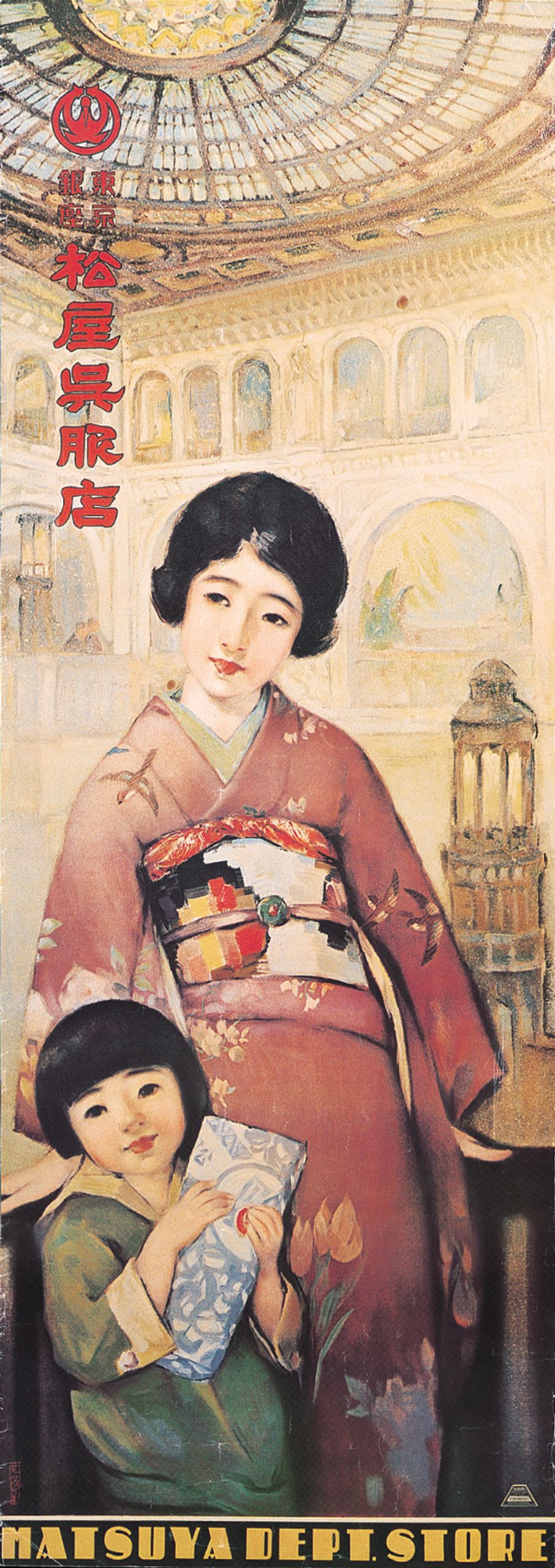/)
In this way, Matsuya gained immense popularity among the people of Tokyo — especially the “mobo” and “moga” (short for modern boys and modern girls), who were the trendsetters of the 1920s.
And so began Matsuya’s journey alongside Ginza itself.
Written by: Ken Tashiro
Principal of the Tokyo Fashion College, part of the Matsuya Group.
With over 40 years of experience dedicated to the group, he has served in various roles including Deputy Editor of The 150-Year History of Matsuya.
/)
Next issues available here
/)
/)
/)
/)
/)
/)
/)
/)
/)
/)
/)
