

100 Years of Matsuya Ginza
Ginza 3-Chome Centennial Chronicle
Episode 4
Thanks to your continued support, Matsuya Ginza celebrates its 100th anniversary in 2025.
In this special series, we revisit the unique stories and moments that have unfolded in Ginza 3-Chome, as we explore the spirit and identity of Matsuya Ginza.
The PX Era
“PX” refers to the stores established by the occupying U.S. forces after World War II to sell food, daily necessities, and other goods to American soldiers and their families (“Post Exchange”). Shortly after the war ended, on August 30, 1945 (Shōwa 20), Matsuya’s Yoshidabashi Yokohama branch was requisitioned by the U.S. military.
The building was first used as quarters for the landing troops, then later repurposed as an army hospital. In September of the same year, the first to third floors of the Isezakichō Yokohama branch were also requisitioned, with the entire building taken over by March of the following year.
At the Ginza store, the basement and parts of the first and second floors were seized on November 10, 1945, for use as a PX for U.S. military officers. By April of the following year, the entire building had been requisitioned.
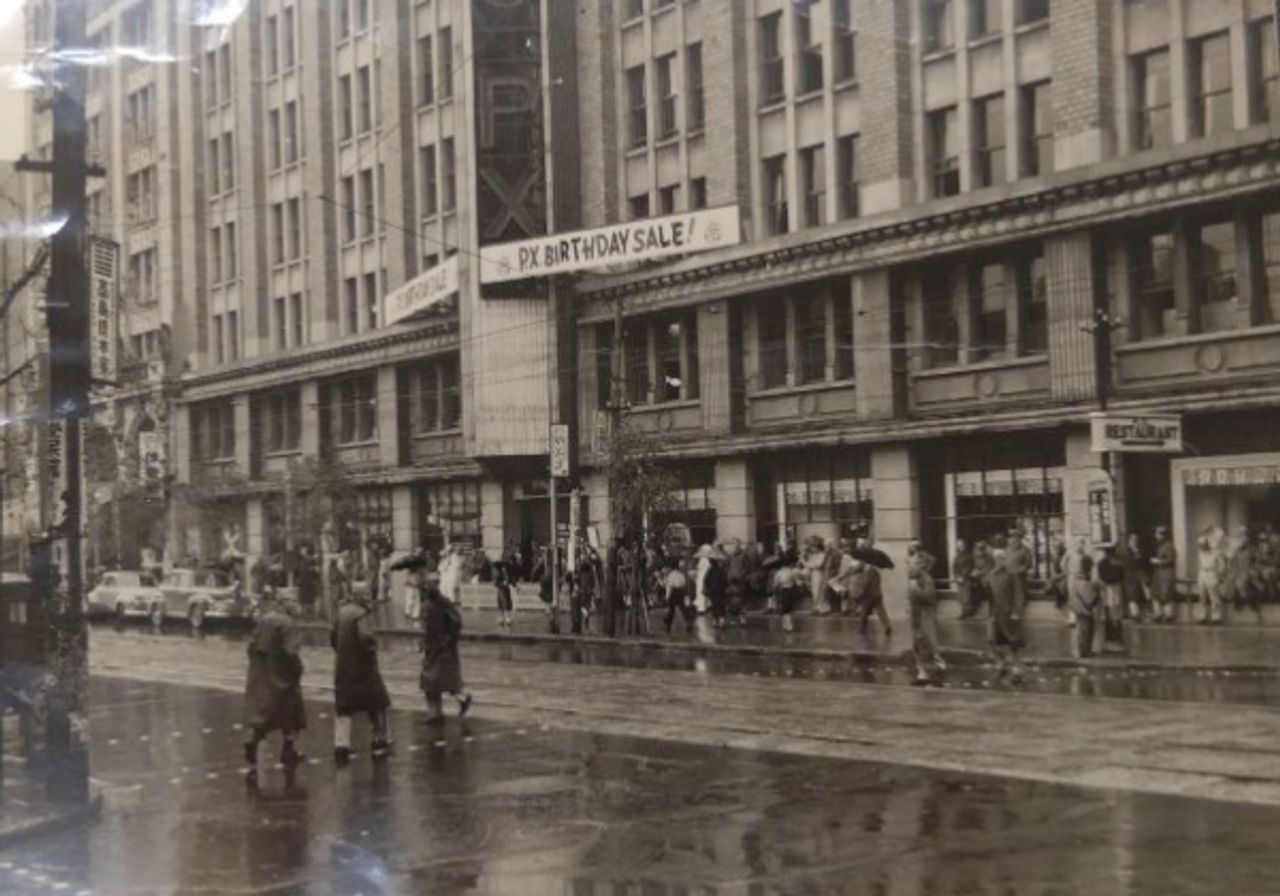
The executives, led by the third-generation president Tokubei Furuya, made every effort to have the GHQ (General Headquarters of the Allied Forces) revoke the requisition order, but to no avail—the order was carried out as planned.
Of the four Matsuya stores at the time, three were requisitioned, excluding the Asakusa store, which had been damaged in the war. In Ginza, besides Matsuya, the Hattori Clock Store (now known as Wako) was also used as a PX, though its requisition period was about nine months shorter than Matsuya’s.
The return of the buildings was delayed because “Matsuya was the main PX with a large scale, and no substitute buildings were available.”
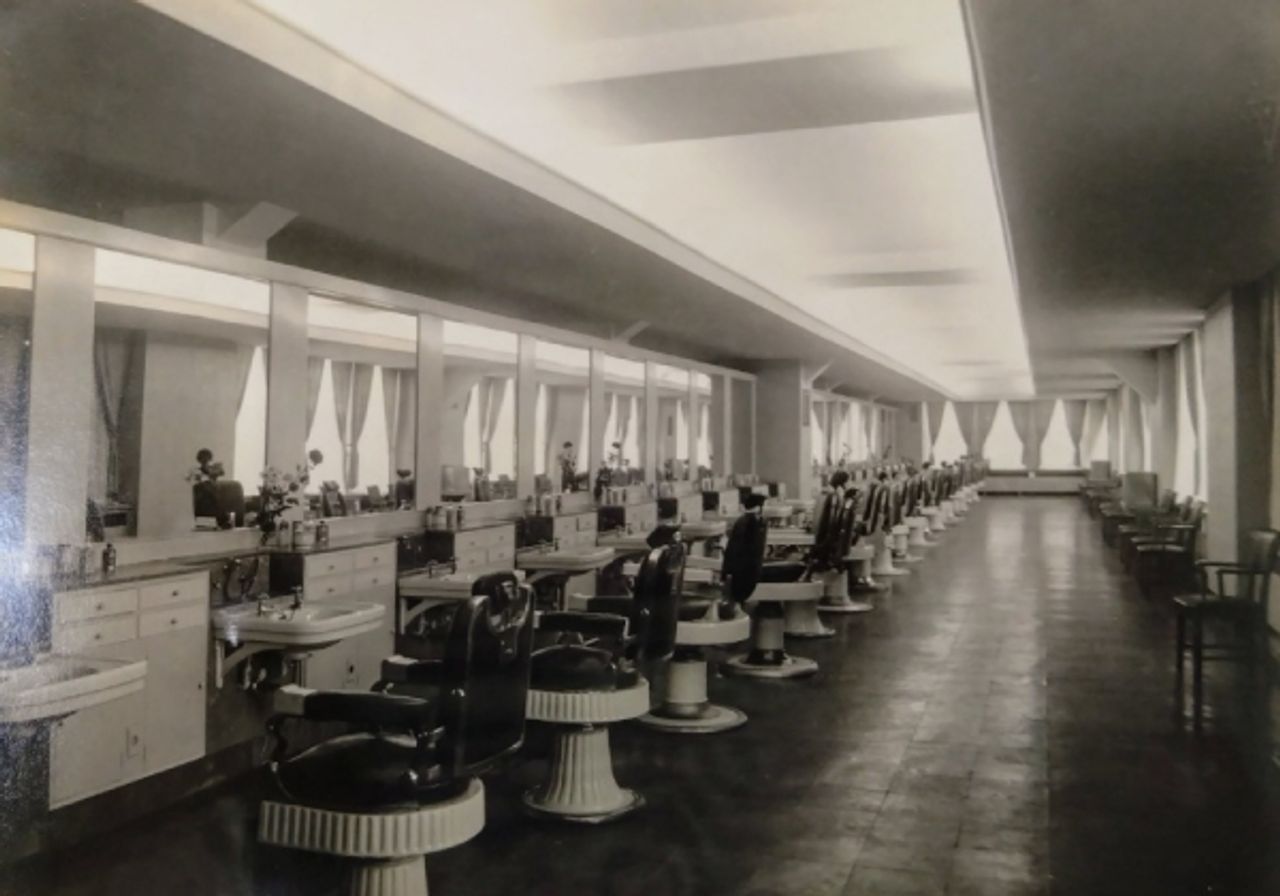
Japanese people other than store employees were not allowed inside the PX, which underwent significant renovations. Photos from the period show a spacious and well-organized layout. For example, on the 5th floor, there was an elegant lounge (rest area), and during the Christmas season, a Christmas tree was displayed.
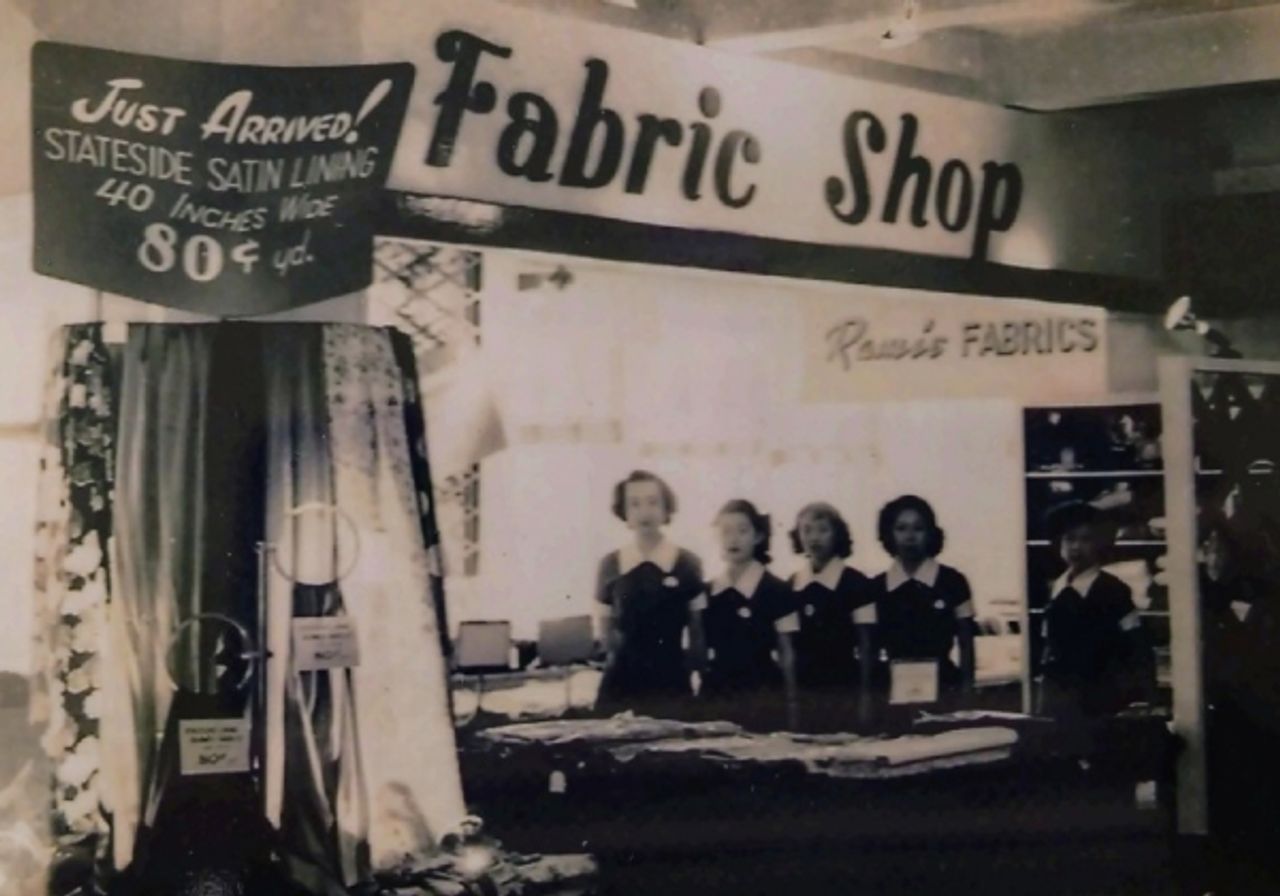
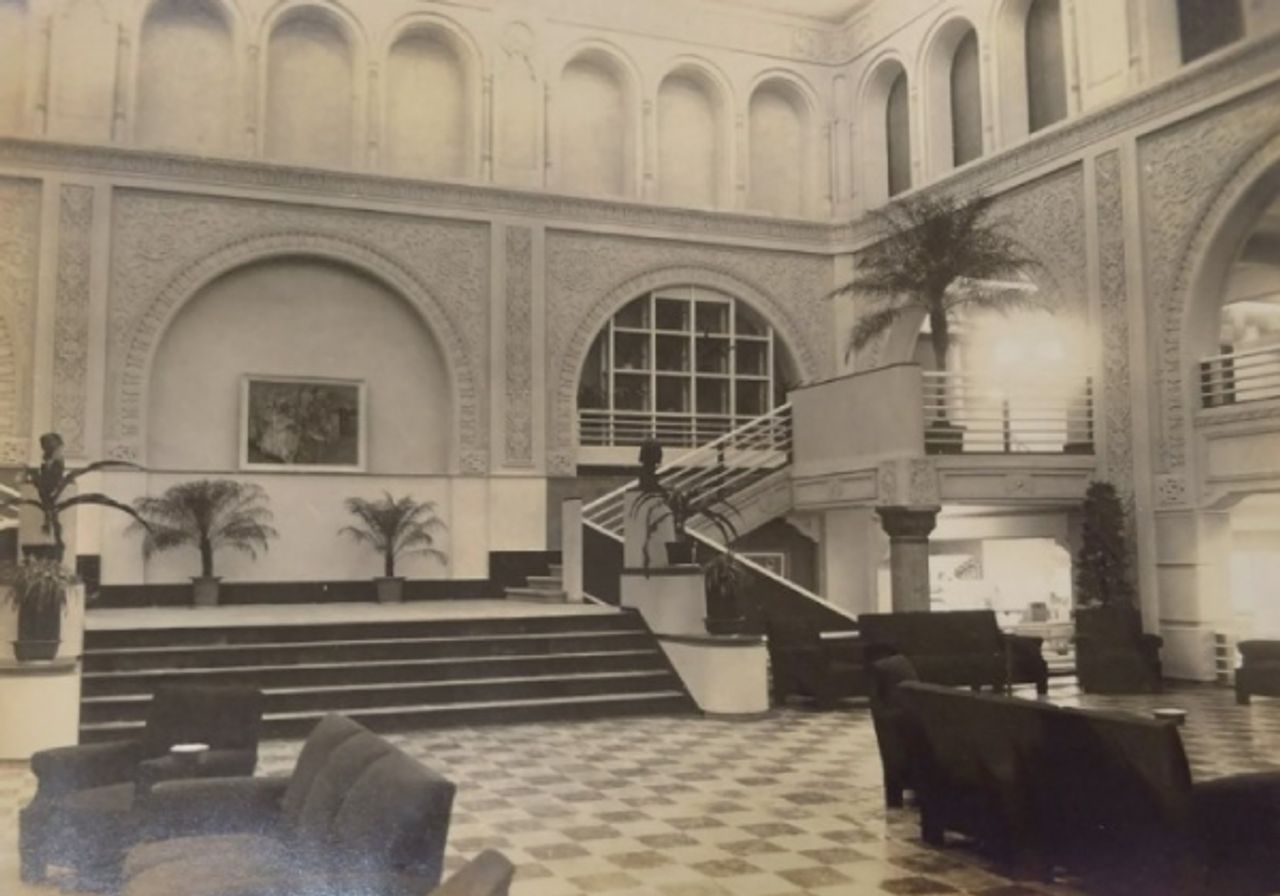
There was also a dedicated section for officers’ clothing, a corner for Japanese souvenirs, a mailing area for sending purchased goods back to the United States, and a foreign currency exchange booth.
Additionally, the PX housed barbershops and beauty salons lined with rows of chairs. The luxurious atmosphere of these facilities, juxtaposed with the harsh realities of postwar life in Japan, is truly striking.
The seven-year-long requisition was a significant blow to Matsuya. The Ginza store resumed operations with a reduced staff, first reopening a small shop in the 4-chome area, then establishing a modest two-story wooden sales office adjacent to the PX site in 3-chome (which was later expanded), striving to continue functioning as a department store.
During this period, in April 1948 (Shōwa 23), the company changed its traditional name from “Matsuya Gofukuten” to simply “Matsuya.”
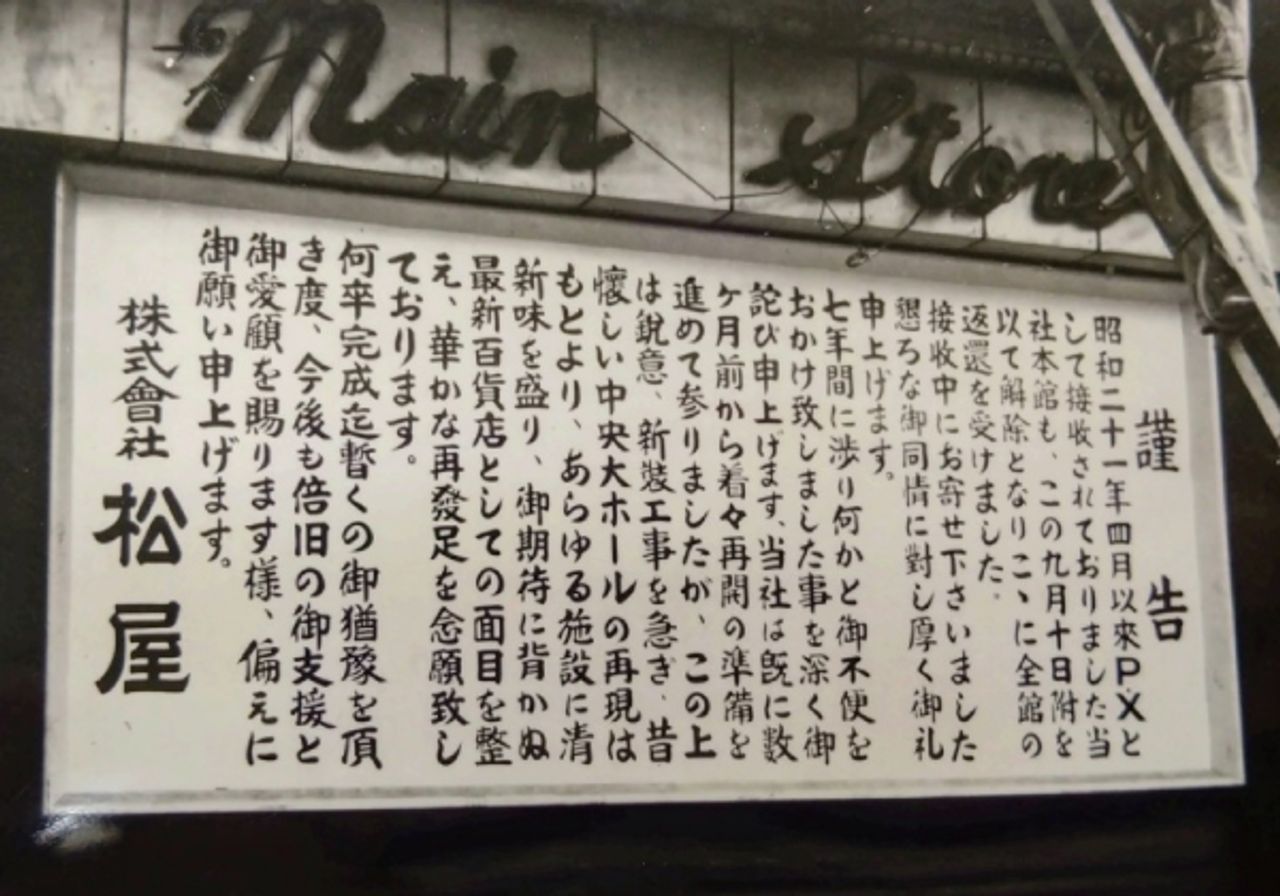
The requisition of the Ginza store lasted nearly seven years. The PX closed in August 1952 (Shōwa 27), and the requisition was lifted on September 10. The PX operations previously at Matsuya were relocated to the U.S. military’s Camp Zama in Kanagawa Prefecture.
After renovating the store, replenishing staff, and preparing merchandise, the Ginza store finally reopened on May 20, 1953 (Shōwa 28).
During Japan’s postwar economic recovery, Matsuya was only allowed to operate in a limited and incomplete capacity for an extended period. However, this restriction prevented rapid expansion into multiple stores and instead focused their efforts on revitalizing the Ginza store. This dedication may well have contributed to shaping Matsuya into the unique department store it is today.
Writer: Ken Tashiro
Principal of the Tokyo Fashion College of the Matsuya Group. With a career spanning over 40 years devoted exclusively to the Matsuya Group, he has served in roles including Deputy Editor-in-Chief of the "150-Year History of Matsuya."

Previous and next issues available here