

100 Years of Matsuya Ginza
Ginza 3-Chome Centennial Chronicle
Episode 6
Thanks to your continued support, Matsuya Ginza celebrates its 100th anniversary in 2025.
In this special series, we revisit the unique stories and moments that have unfolded in Ginza 3-Chome, as we explore the spirit and identity of Matsuya Ginza.
Ryuko Fudoson on the Rooftop
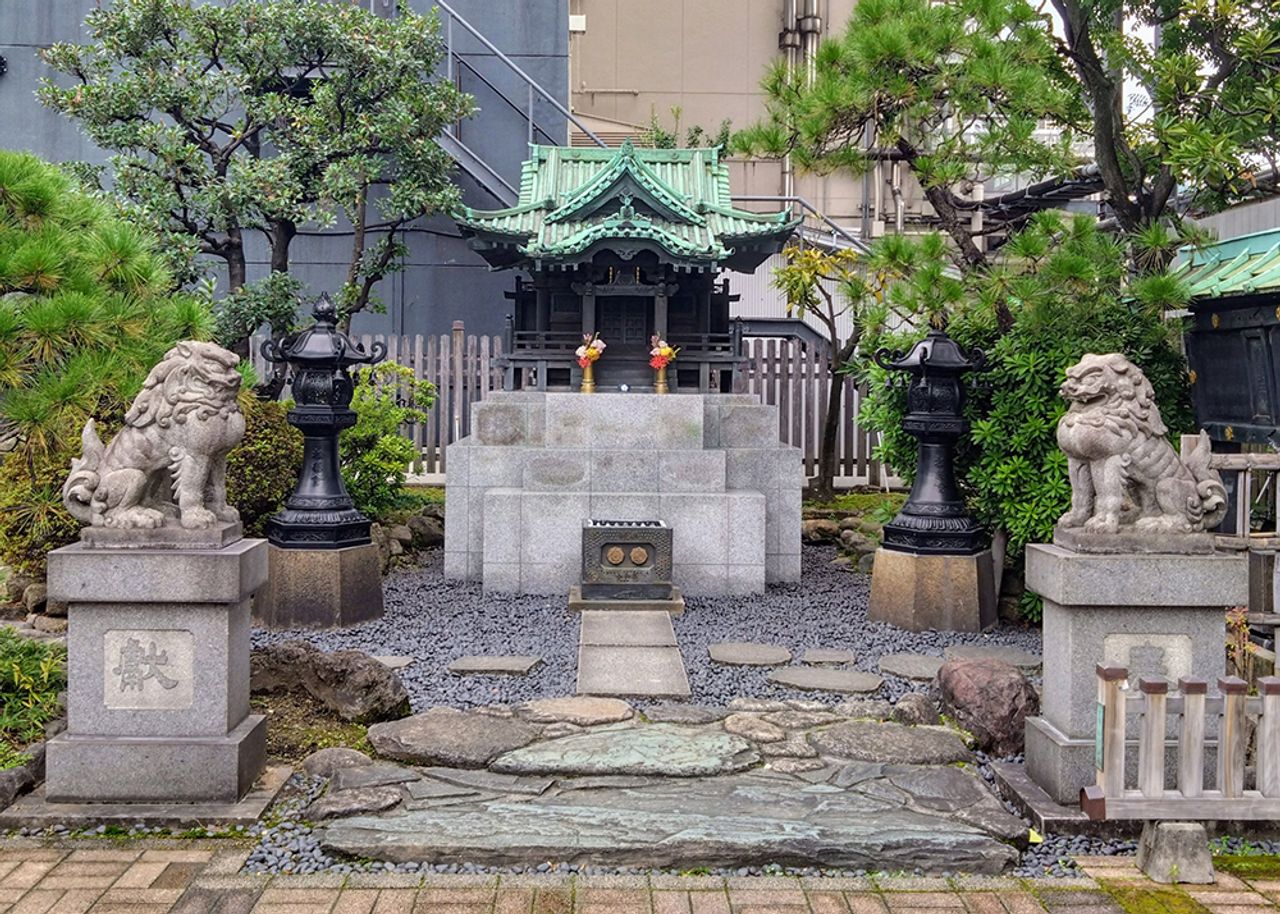
The “Ryuko Fudoson” on the rooftop of the Ginza store, as its name suggests, enshrines “Fudo Myo-o” (Acala), a revered Buddhist deity. Although it is often mistakenly thought to be a shrine because it is included in the annual “Ginza Hatcho Shrine Tour” event held each autumn, it is not a Shinto shrine. Fudo Myo-o is said to be an incarnation of Dainichi Nyorai, the cosmic Buddha regarded as the highest deity in the universe within Buddhist belief, and is therefore worshipped in temples.
The “Ryuko Fudoson” traces its origins to Ryuko-in Temple on Mount Koya. After the opening of Matsuya’s Ginza store in 1925 (Taisho 14), it was enshrined on the rooftop in 1929 (Showa 4) as the store’s guardian deity. The treasure hall housing Fudoson was designed by Yataro Aoiike, who worked in the Imperial Household Agency’s carpentry bureau at the time. Aoiike was an authority on temple and shrine architecture and also designed notable sites such as Heian Shrine and Kanda Myojin.
The term "Fudo" (不動) means "an unwavering determination to save people." That is why Fudo Myo-o is depicted with an angry expression, symbolizing the punishment of evil. Generally, it is believed that “O-Fudo-sama” brings blessings such as warding off evil, success in career advancement, prosperity in business, and victory in competitions. In the case of the “Ryuko Fudoson,” in addition to these blessings, the word “Ryuko” (龍光) is a homophone for “trend” or “fashion” (流行), making it considered a shrine with special benefits for the fashion industry.
The guardian lion-dogs (komainu) flanking the entrance were donated in 1969 (Showa 44) to commemorate the 100th anniversary of Matsuya’s founding. The left-side komainu was donated by a group of senior executives in service at the time, and the right-side one by volunteers from the Shoin-kai (the former employees’ association).
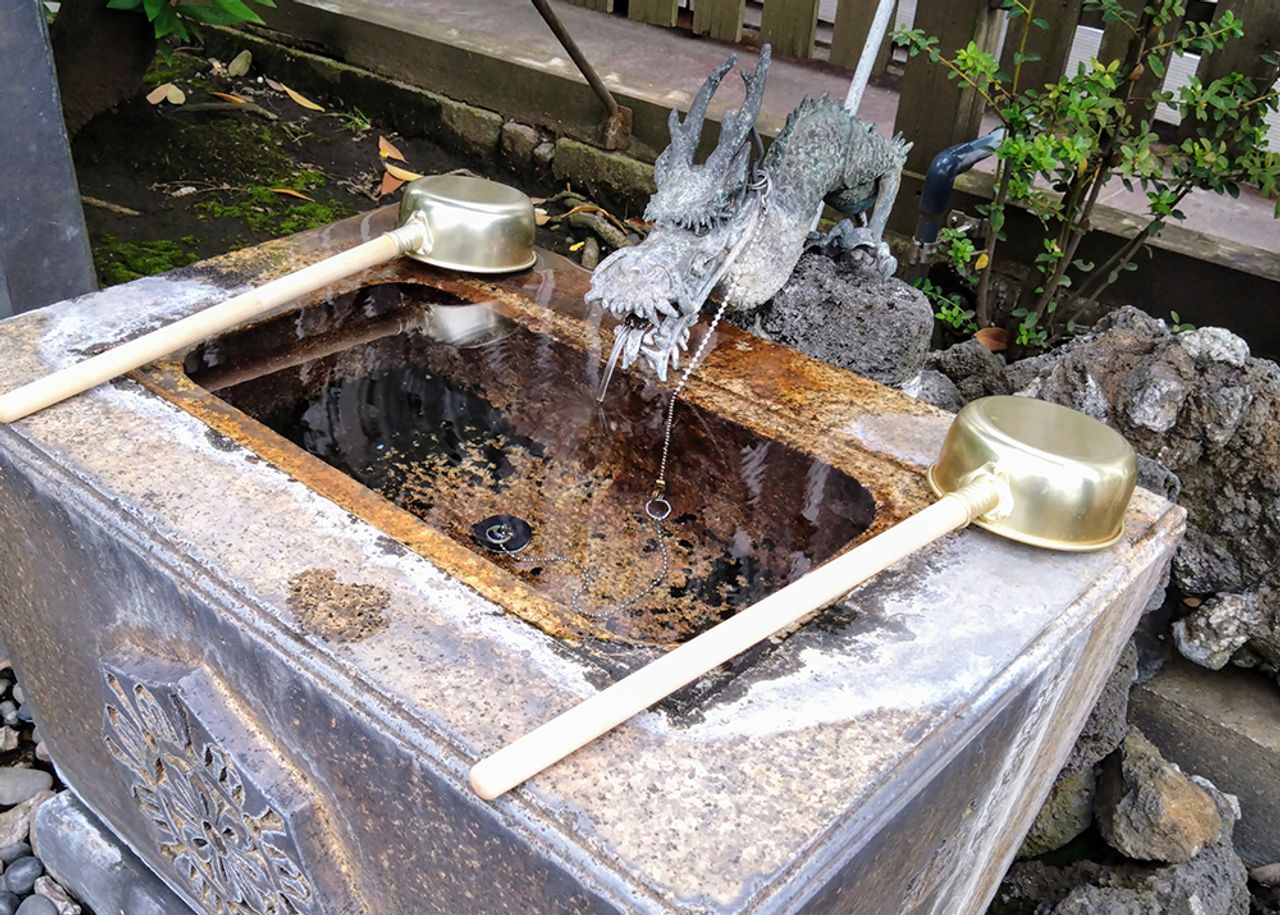
The guideboard on the premises states:
“The revered statue of Ryuko Fudo Myo-o enshrined here is the work of a master craftsman from the Kamakura period. It has been revered for over seven centuries at Ryuko-in Temple on Mount Koya. In May of 1929 (Showa 4), it was welcomed as the guardian Buddha of Matsuya, enshrined in the treasure hall on the rooftop, and honored as Ryuko Fudoson, serving as the protector of Matsuya.”
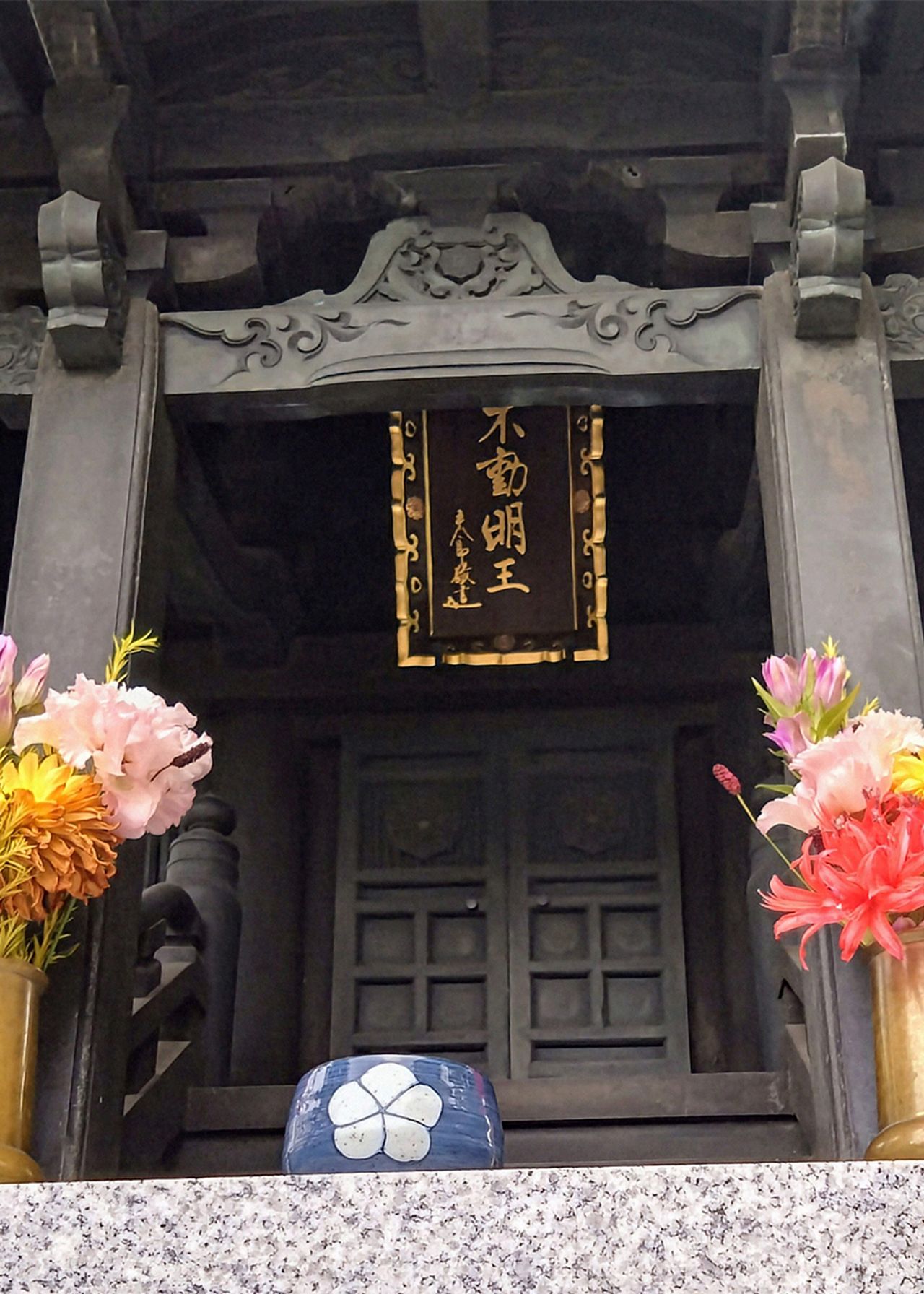
Every year on January 28th, May 28th, and September 28th, a regular festival is held. Visitors are told that praying here will turn misfortune into good fortune, grant wishes, and bring about family safety and business prosperity. According to records, the enshrinement ceremony was held on April 30, 1929 (Showa 4), and the statue was placed on the rooftop as Matsuya’s guardian deity.
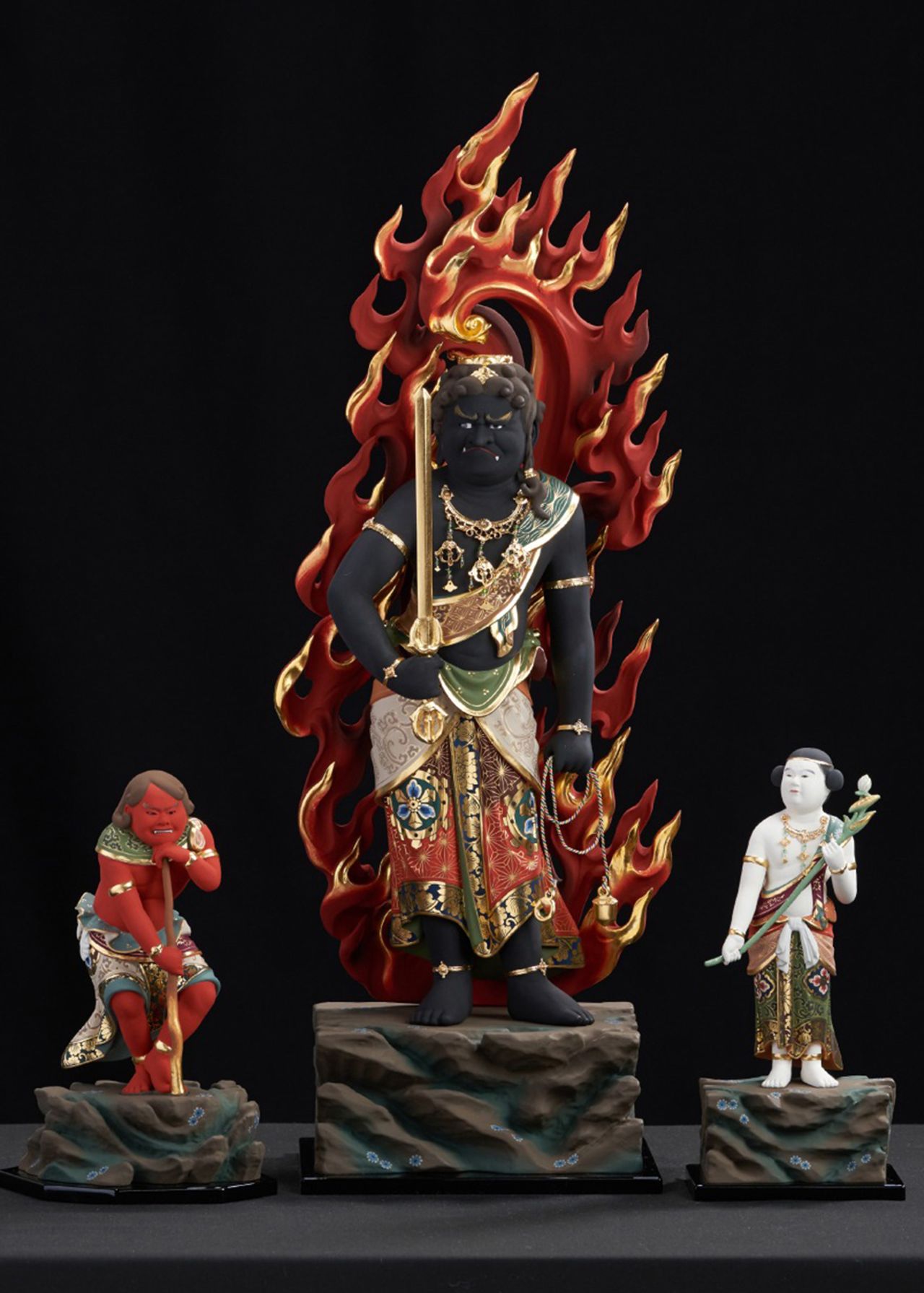
During the Great East Japan Earthquake in 2011 (Heisei 23), the stone lanterns on the premises were toppled but were promptly restored. In 2020 (Reiwa 2), due to aging and fading, the main statue and the two attendant statues were restored. A new enshrinement ceremony was held, reviving the beautiful colors of the statues.
By the way, on the rooftop of Ginza Mitsukoshi, there are the “Ginza Shusse Jizo” and the “Mitsui Shrine” (the guardian deity of the Mitsui family). On the rooftop of GINZA SIX (formerly Ginza Matsuzakaya), the “Kakugo Inari Shrine” (the deity of fire prevention) is enshrined. It seems that commerce serving customers and the worship of gods and Buddha have a deep connection.
Author: Ken Tashiro
Principal of the Tokyo Fashion College of the Matsuya Group. With a career spanning over 40 years dedicated to the Matsuya Group, he has served as deputy editor for the "150-Year History of Matsuya" and held various other key roles.

Previous and next issues available here