


100 Years of Matsuya Ginza
Ginza 3-Chome Centennial Chronicle
Episode 10
Thanks to your continued support, Matsuya Ginza celebrates its 100th anniversary in 2025.
In this special series, we revisit the unique stories and moments that have unfolded in Ginza 3-Chome, as we explore the spirit and identity of Matsuya Ginza.
Stories of Ginza

This poster reads “Ginza Monogatari.” How do you pronounce it? Yes, it is pronounced “Ginza Monogatari.” This was created in 1984 (Showa 59) as part of the promotion for the 60th anniversary of Matsuya Ginza’s opening. Since the Ginza store opened in 1925 (Taisho 14), it was not a “60th anniversary” but a promotion marking the 60th year.
That year was a crucial “battle year” for the Ginza store. In April, Printemps Ginza opened, and in October, Seibu Department Store and Hankyu Department Store opened at Yurakucho Marion, sparking the so-called “Ginza-Yurakucho Department Store War.” As a countermeasure, the annual promotional theme was “Ginza Monogatari.” As a department store, the focus was on telling a story through “things.” To emphasize this, they deliberately wrote “もの語” (mono-gatari) instead of the usual “物語” (monogatari), prompting curiosity about the meaning.
The advertising copy said things like: “Now, once again, we want to look back at the origin of Ginza. We have decided to create a space that exudes high culture and a sense of fulfilled art,” and “While introducing fresh products and events, we will present a wonderful ‘Ginza Monogatari’.”
The visual shows a woman in traditional kimono riding a rickshaw along Ginza Street, as if she has time-slipped from the store’s opening days. This photo is not a composite. It was taken early in the morning around 4 to 5 a.m. in Ginza 1-chome (near Kyobashi). The staff stayed up all night until dawn, avoiding cars passing by during the shoot. A nearby police officer kindly helped operate the traffic lights, allowing them to safely capture several shots. Those were truly good times.

Actually, the year before “Ginza Monogatari,” there was a midyear gift promotion called “Tokyo Monogatari.” This was a play on the title of the internationally acclaimed director Yasujirō Ozu’s 1953 film Tokyo Story. The mixed use of hiragana in “もの語” (mono-gatari) was first used here. The model woman is Sayoko Yamaguchi, who was a sensation as an international model, including at Paris Fashion Week. She is wearing an original furoshiki (wrapping cloth) made specifically for this midyear gift promotion.
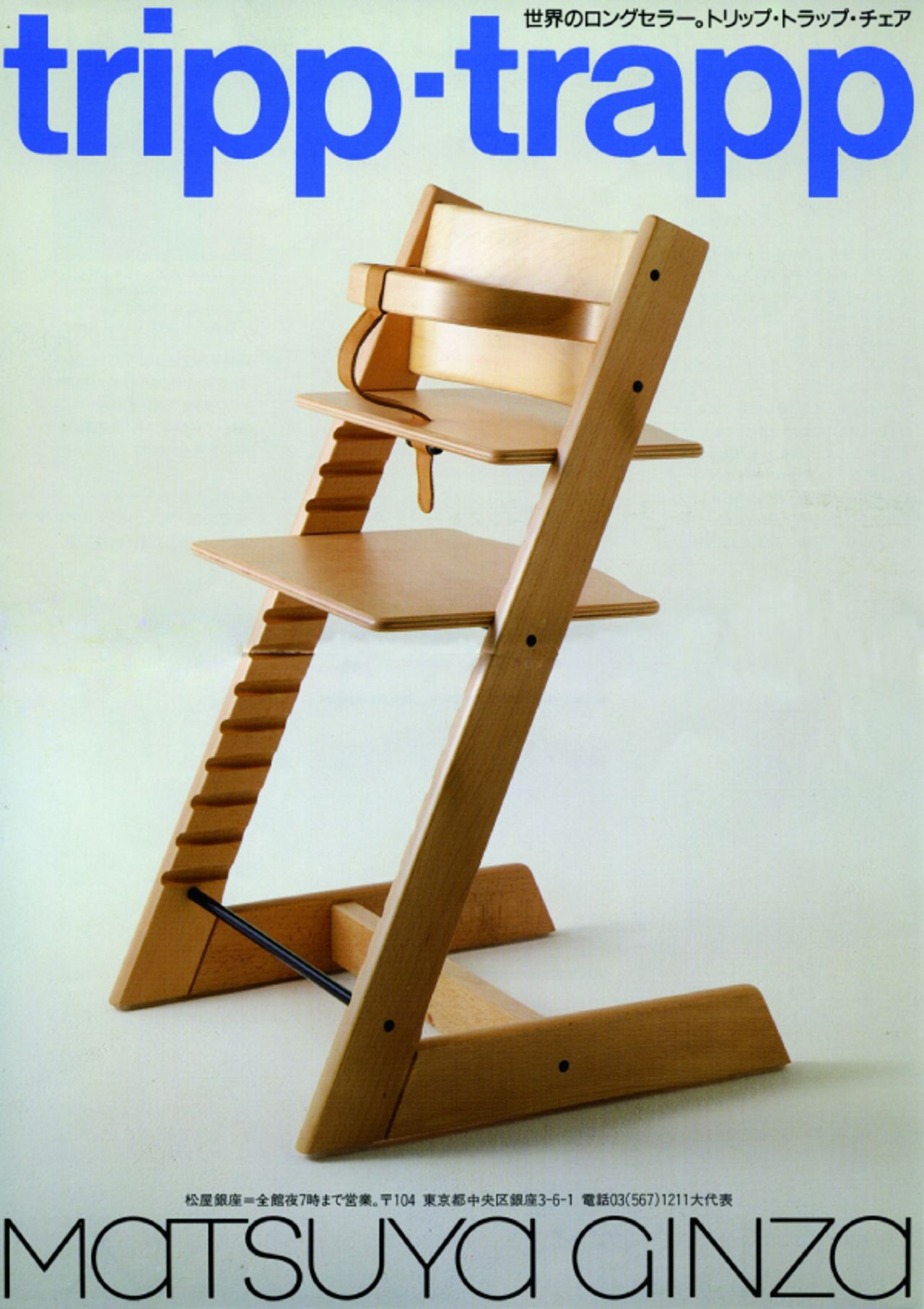
This is a flyer from around 1990 for “Trip Trap,” a Norwegian long-selling children's chair that Matsuya had exclusive sales rights for at the time. It is truly an advertisement that “speaks through things.” While prominently featuring a single product, the selection, visual design, and the Matsuya Ginza logo all communicate the store’s sense of style and elevate the Matsuya Ginza brand. By confidently presenting a recommended product, it conveys the taste and philosophy of the department store “Matsuya Ginza.” This is precisely what “Monogatari” (“things storytelling”) is all about.
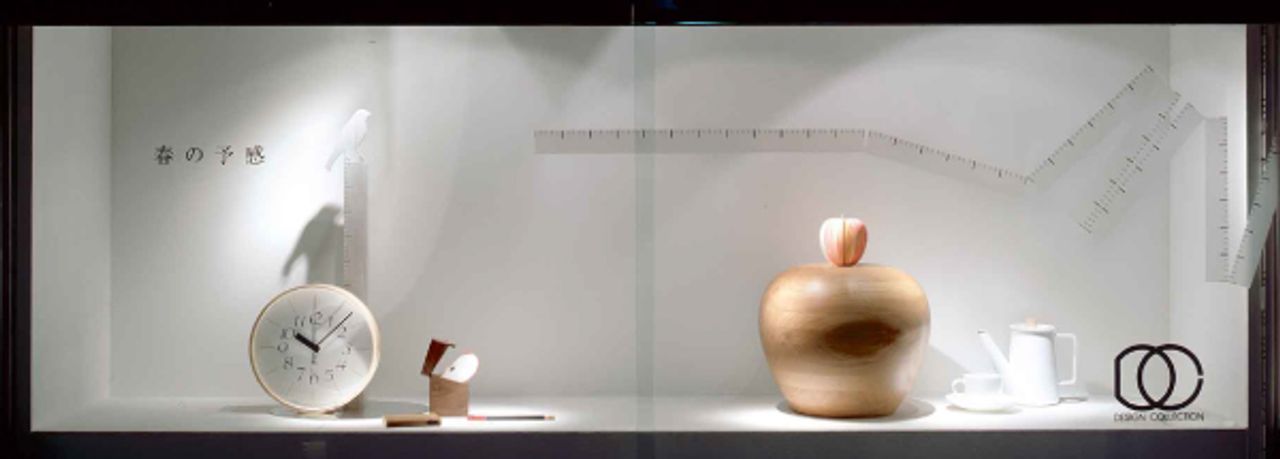
When it comes to “speaking through things,” show windows are a perfect example. Through the various products handled by the department store—fashion, home goods, food—they convey messages from Matsuya to passersby.
Focusing on Tokyo and Ginza, Matsuya’s branding is expressed through carefully selected “things” chosen with discerning expertise. This, indeed, embodies the very essence of “Matsuya’s style.”
Author: Ken Tashiro
Principal of the Tokyo Fashion College of the Matsuya Group. With a career spanning over 40 years dedicated to the Matsuya Group, he has served as deputy editor for the "150-Year History of Matsuya" and held various other key roles.

Previous and next issues available here