


/)
100 Years of Matsuya Ginza
Ginza 3-Chome Centennial Chronicle
Episode 5
Thanks to your continued support, Matsuya Ginza celebrates its 100th anniversary in 2025.
In this special series, we revisit the unique stories and moments that have unfolded in Ginza 3-Chome, as we explore the spirit and identity of Matsuya Ginza.
Ginza Street and Matsuya Street
Chuo-dori, which runs north to south through Ginza, is one of the world’s premier shopping streets, alongside New York’s Fifth Avenue and Paris’s Champs-Élysées. The section of Chuo-dori within the Ginza district is commonly called “Ginza Street.” The distance from Ginza 1-chome to 8-chome is approximately 1,100 meters.
In 1919 (Taisho 8), under the Urban Buildings Act, building heights were restricted to 100 shaku (31 meters). This regulation continued even after World War II, resulting in buildings around 31 meters tall lining Ginza. Examples include the former Mitsukoshi building, Wako, and Matsuya. Consequently, the skyline along Ginza Street was uniformly aligned at 31 meters.
Later, revisions to the law allowed for taller buildings. However, the people of Ginza negotiated with Chuo Ward and in 1998 (Heisei 10) established new rules regarding buildings in Ginza. These “Ginza Rules” were created to protect Ginza’s unique landscape, walkability, and the dignity of the area. Under these rules, building heights are allowed up to 56 meters, with an additional 10 meters permitted for rooftop structures. As a result, the current skyline along Ginza Street features a mix of heights, including the original 31 meters and taller buildings reaching up to 66 meters.
/)
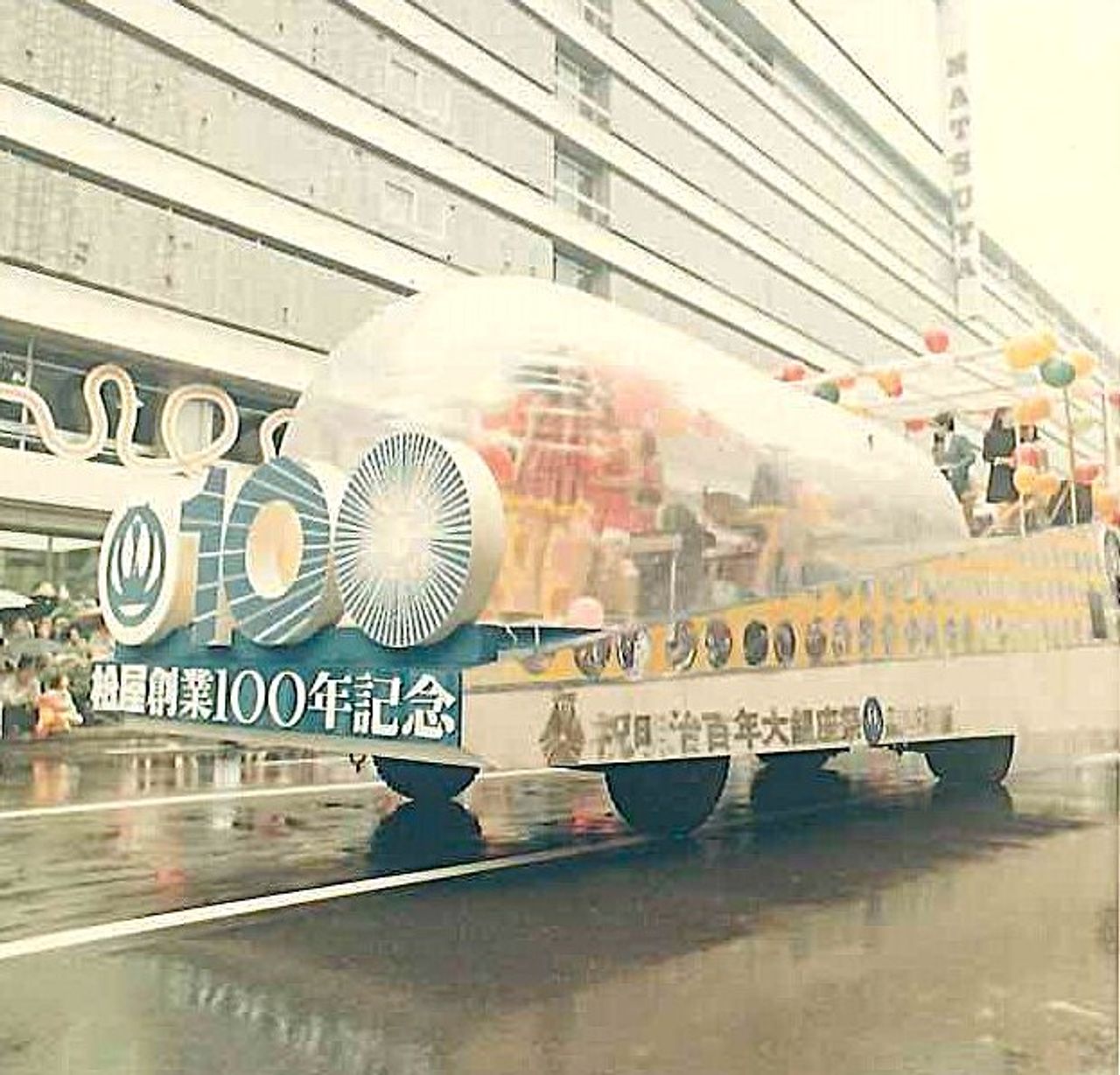/)
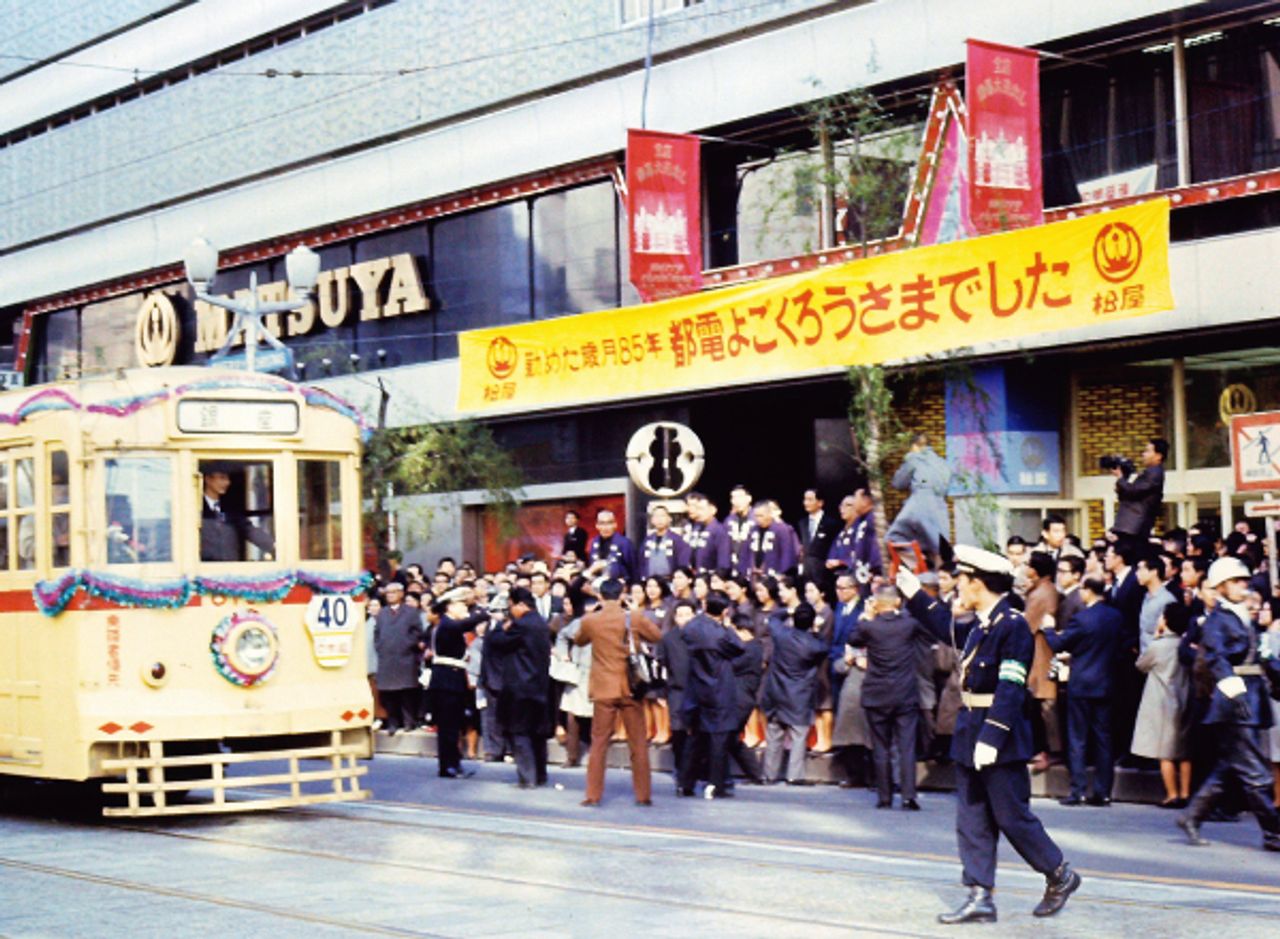
The Tokyo streetcar “Hondōri Line,” which once ran along Ginza Street, opened in 1903 (Meiji 36) and was beloved by locals for over 60 years. However, due to traffic congestion and other factors, it was discontinued on December 10, 1967 (Showa 42). Additionally, as part of the “Great Ginza Festival,” the “Parade of Sound and Light” was held annually from 1968 (Showa 43) to 1999 (Heisei 11). Matsuya Ginza’s floral float appeared every year, delighting the crowds gathered along Ginza Street with its spectacle. Mr. Katsuhiko Furuya, Honorary Advisor of Matsuya, served as the 10th president of the Ginza Street Association from 2007 to 2016 (Heisei 19–28), dedicating himself to the development of Ginza Street.
On the other hand, “Matsuya Street” is a roughly 630-meter-long street between Ginza 3-chome and 4-chome. It runs from in front of Ginza Church, which faces Sotobori Street to the west, to Iwai Bridge over the site of the former Tsukiji River to the east. In the Ginza area, streets named after companies are rare, with only “Sony Street” and “Matsuya Street” as examples. This attests to Matsuya’s enduring status as a beloved local landmark.
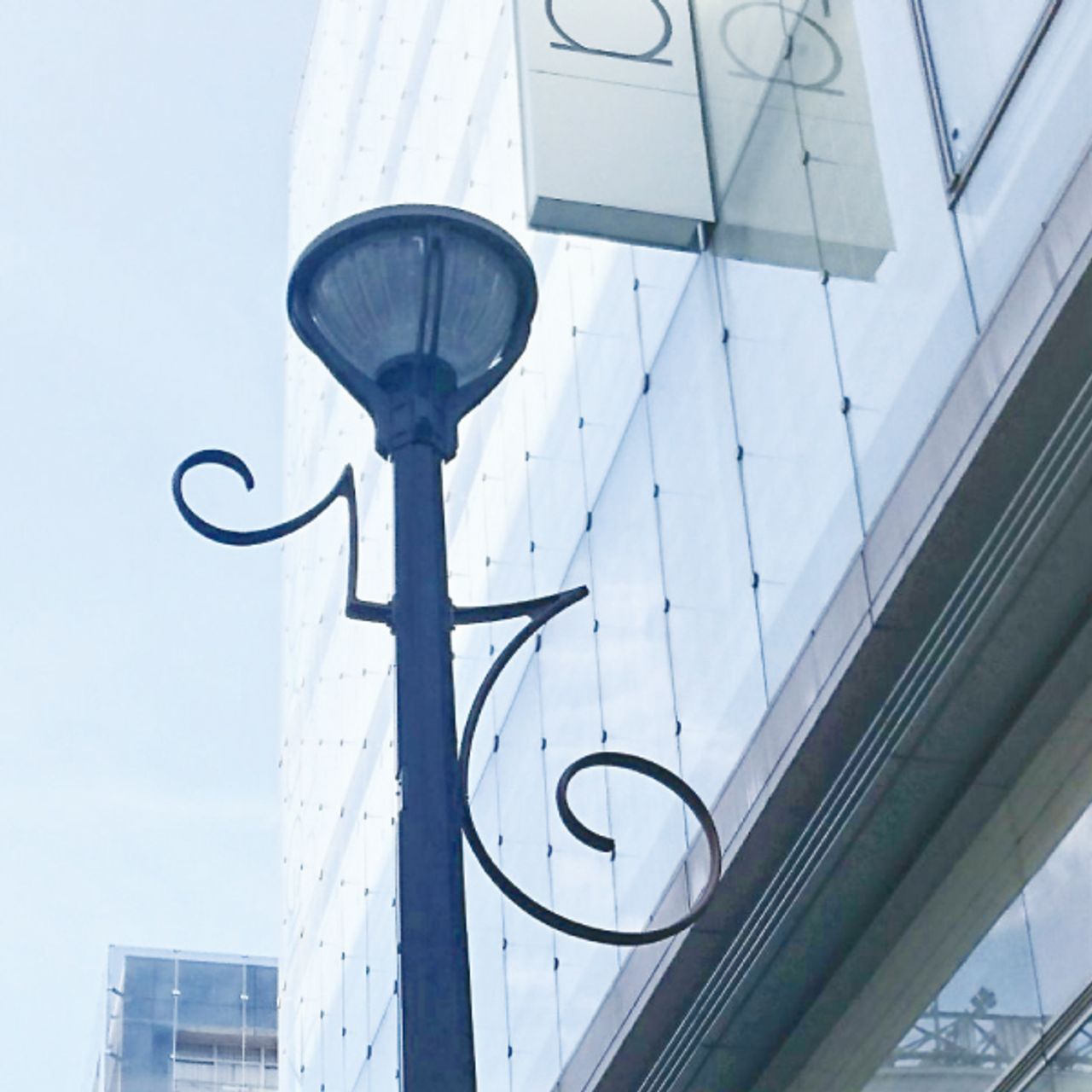
Matsuya Street was established in 1957 (Showa 32), coinciding with the opening of Ginza Station on the Marunouchi Subway Line. At the end of that year, the Marunouchi Line, in its fourth year of operation, was extended to Ginza (then called “Nishi-Ginza” Station). Local residents gathered in the conference room of Ginza Church, where the name “Matsuya Street” was unanimously approved at the general meeting. It was also decided to install 32 streetlights along the sidewalks on both sides of the street. Of the total cost of 2.5 million yen, Matsuya contributed 2 million yen, while the local community covered 500,000 yen.
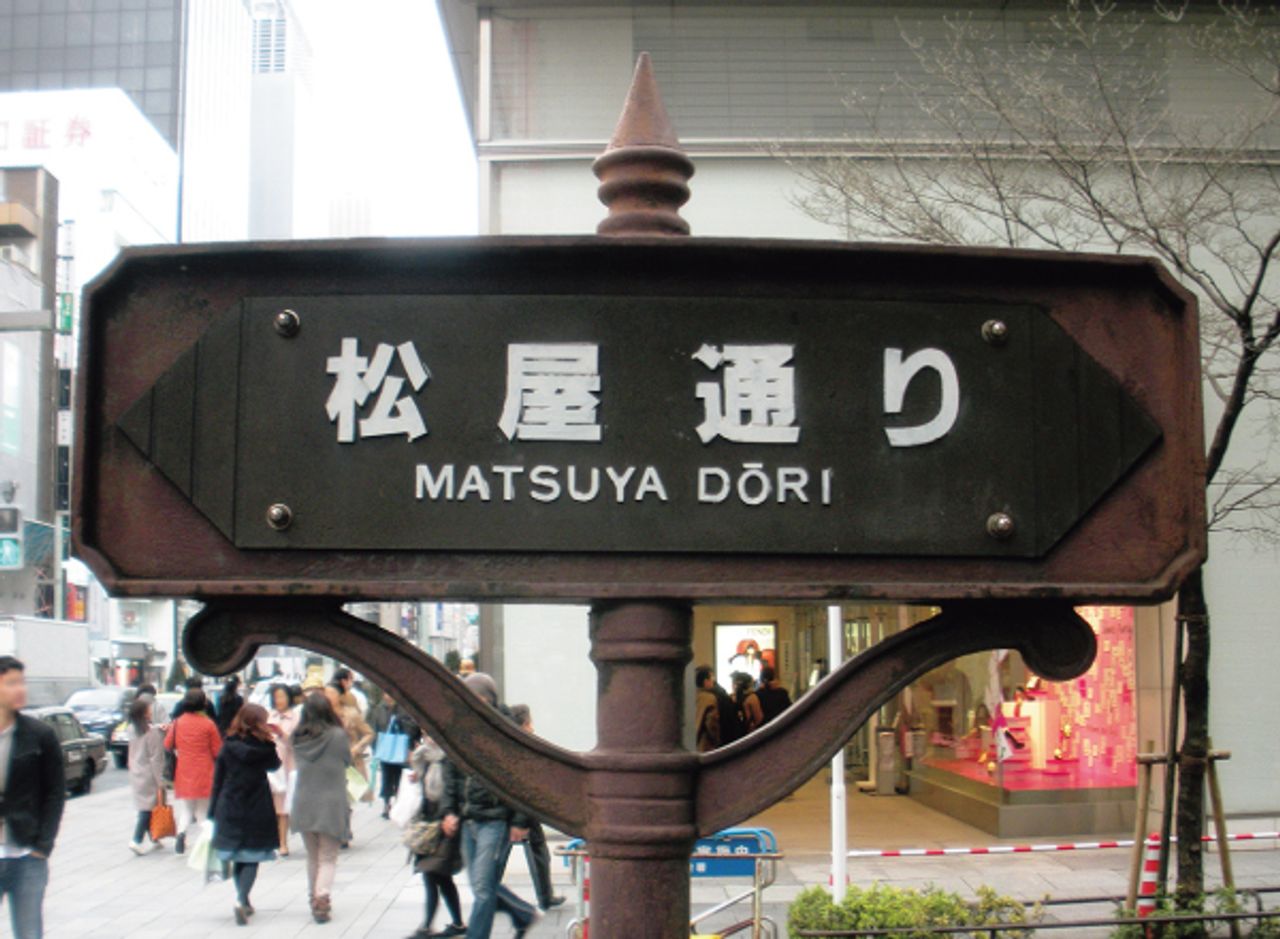/)
The 1962 (Showa 37) Nikkatsu film “A Love Story in Ginza” prominently features the streetlights of Matsuya Street. At that time, the signs were written in Japanese characters, but they were renewed in 2000 (Heisei 12) with decorative “M”-shaped fixtures—of course, representing Matsuya’s “M.” These signs had a charming design that looked distinctive from both front and back. However, due to aging and safety concerns, they were removed in November 2023. Additionally, there are six other signs along the street displaying the name “松屋通り” in kanji.
By the way, the “Starbucks Coffee Ginza Matsuya Street Store,” located behind Matsuya Ginza, opened on August 2, 1996 (Heisei 8), as the very first Starbucks store in Japan. In fact, it was the first Starbucks outside the United States, marking a significant milestone for the company.
In recent years, cosmetics shops such as Neals Yard Remedies, Kiehl’s, and Sabon have opened one after another under Matsuya’s leadership, showing that Matsuya Street continues to evolve.
/)
Author: Ken Tashiro
Principal of the Tokyo Fashion College of the Matsuya Group. With a career spanning over 40 years dedicated to the Matsuya Group, he has served as deputy editor for the "150-Year History of Matsuya" and held various other key roles.
/)
Previous and next issues available here
/)
/)
/)
/)
/)
/)
/)
/)
/)
/)
/)
